Category: Temp Mail

  • How Temp Email Helps Avoid Spam

    How Temp Email Helps Avoid Spam

    Your primary email address is a magnet for spam, data harvesting, and unwanted marketing. A temporary email service provides a disposable, anonymous address you can use for sign-ups, downloads, and any online interaction where you don’t fully trust the recipient. By using a temp mail for these low-stakes activities, you create a critical barrier, ensuring your real inbox remains private, organized, and secure. It’s a simple, free, and highly effective tool for taking back control of your digital footprint.

    Think about your primary email address for a second. It’s probably tied to your bank accounts, your family, your work, and your most important online identities. It’s a digital key to your life. Now, think about the last time you simply wanted to download a free PDF guide, read an article, or sign up for a one-time discount. Did you hesitate, knowing you were about to hand over that precious key to a website you barely trust? That hesitation is the problem. The solution? A brilliant, simple tool called temporary email, or “temp mail.” This article will completely unpack how temp email helps avoid spam and fundamentally changes your approach to online privacy.

    Spam isn’t just annoying; it’s a constant drain on your time and a vector for scams. Every time you use your real email for a sketchy sign-up, you’re adding fuel to the spam fire. Temporary email services provide a clean, disposable alternative. They give you a random inbox that lives for a short, defined period—often just 10 minutes to an hour. You use it, you get what you need, and then it vanishes into the digital ether, taking all the associated spam with it. It’s like using a burner phone for a single call, but for your email. Let’s dive deep into how this works and why you should start using it today.

    Key Takeaways

    • Primary Inbox Protection: Temp email acts as a sacrificial layer, absorbing spam and promotional emails meant for your primary address.
    • Enhanced Privacy: It prevents websites and services from linking your online activity to your real identity and personal email.
    • No Long-Term Commitment: These addresses self-destruct after a short period (often 10 minutes to 1 hour), eliminating long-term clutter.
    • Simple & Accessible: No registration, no password, and no personal details are required to generate a temporary inbox instantly.
    • Ideal for Testing & Verification: Perfect for one-time account verifications, downloading gated content, or testing website sign-up flows.
    • Not for Critical Accounts: Should never be used for banking, primary social media, or any service requiring ongoing access and password recovery.
    • Risk Mitigation: Significantly reduces the risk of your primary email being involved in a data breach or sold on the dark web.

    The Spam Problem: Why Your Inbox is a Target

    To understand the solution, we must first stare directly at the problem. Spam emails are the digital equivalent of junk mail stuffed into your physical mailbox, but far more pervasive and potentially dangerous. They arrive because your email address has been harvested, sold, or leaked. But how does it get harvested in the first place? Often, it’s through our own actions.

    Every Click and Sign-Up is a Risk

    Consider the modern web experience. You’re reading a great blog post, and a pop-up offers a “free checklist” if you enter your email. You see a “limited-time offer” for a discount. You want to comment on a forum. Each of these interactions typically requires an email address. Many of these sites, especially smaller blogs, niche forums, or one-off e-commerce stores, have weak data security. Their email lists are often poorly protected. When they get hacked (and they often do), your email is exposed. Worse, many of these sites have pre-checked boxes consenting to share your data with “partners.” That’s how your address gets sold to the highest bidder in the murky world of data brokers.

    The Domino Effect of a Single Leak

    Once your primary email is out there, it’s nearly impossible to contain. Spammers use automated bots to scan websites, social media profiles, and data breaches for email patterns. A single leak can trigger a cascade. You might start getting offers for pharmaceuticals you never searched for, phishing emails pretending to be your bank, or “ Nigerian prince” scams. The volume increases, and the sophistication of the scams often follows. Your inbox, once a place of productivity and personal communication, becomes a minefield. The time spent deleting spam and the anxiety of spotting a real phishing attempt among the clutter is a real cost.

    What is Temporary Email? A Digital Disposable Shield

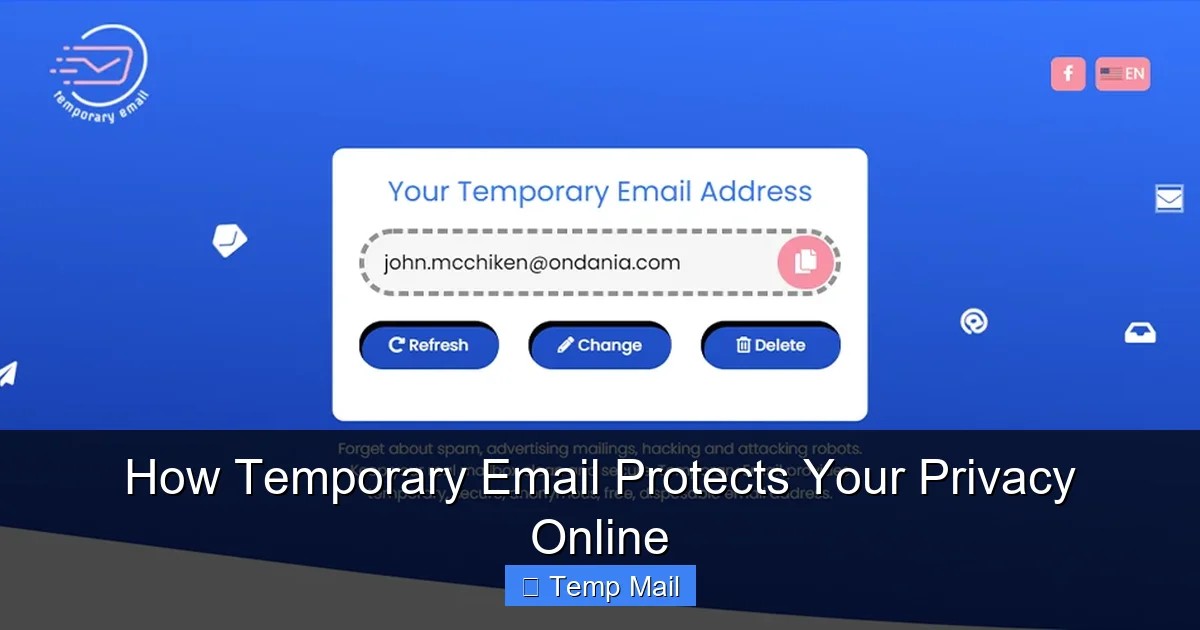
    Temporary email services are web-based platforms that generate a random, unique email address for you on the spot. This address is completely anonymous and not linked to your identity. You can visit a site like Temp-Mail.org, Guerrilla Mail, or 10MinuteMail, and instantly see an inbox address like “[email protected].” You then use that address wherever you need a placeholder.
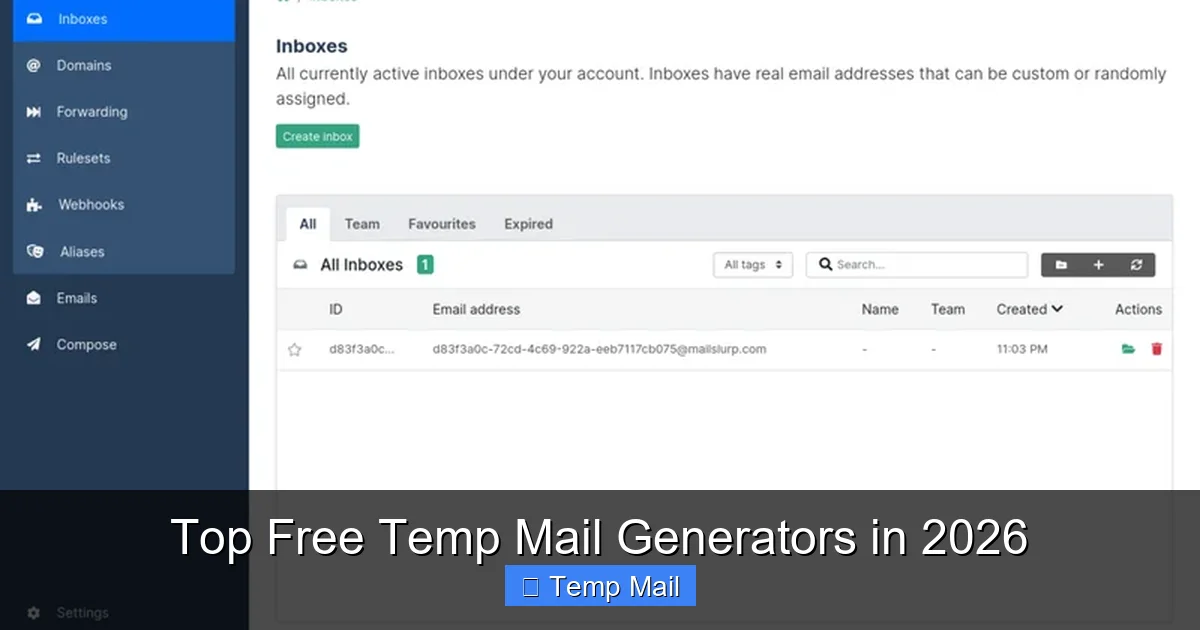
    How Temp Email Helps Avoid Spam

    Visual guide about How Temp Email Helps Avoid Spam

    Image source: gridinsoft.com

    How It Works: The Mechanics of Anonymity

    The process is beautifully simple, designed for maximum convenience and zero friction:

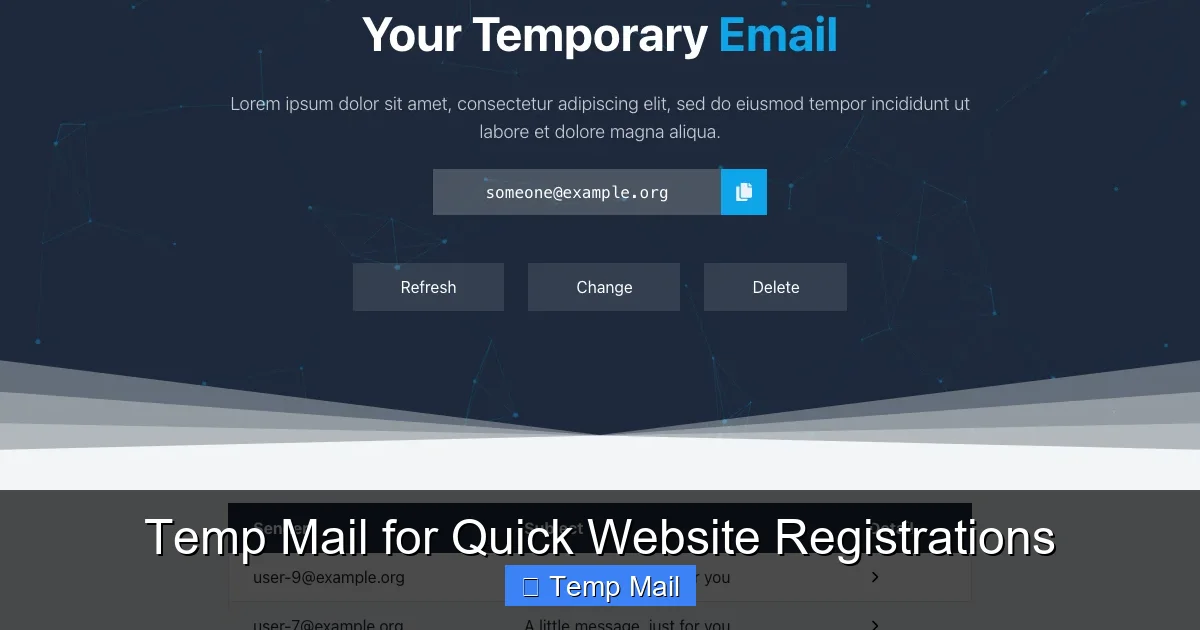
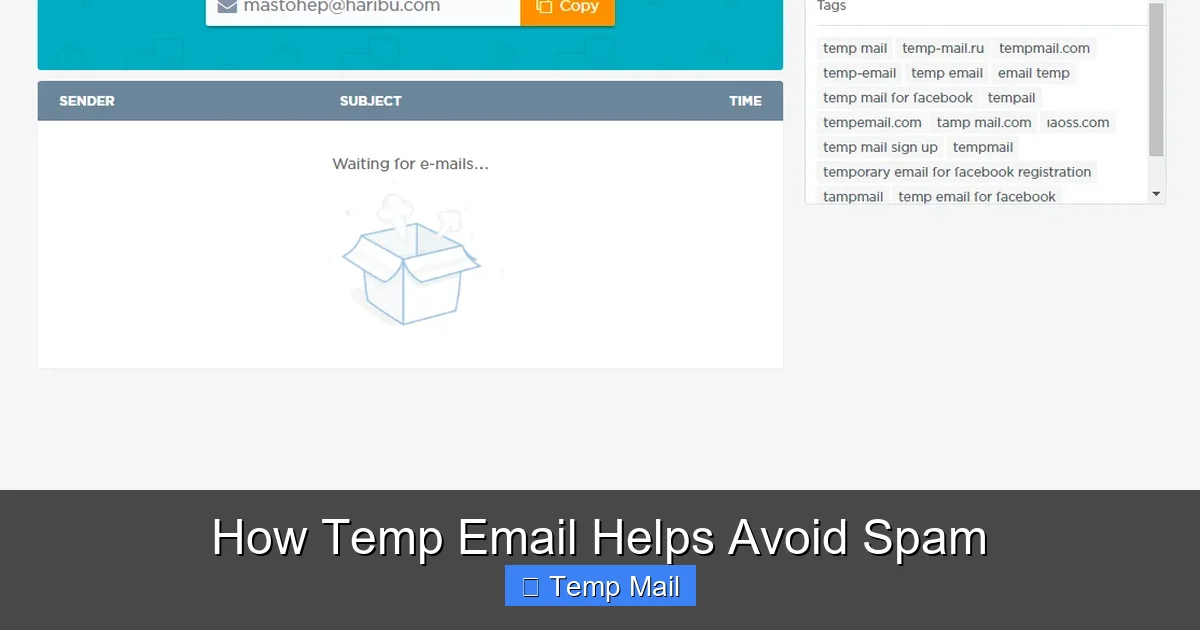
    1. Generation: You visit a temp mail website. The server instantly creates a new, random email address and displays it to you, along with a pre-loaded inbox interface.
    2. Usage: You copy that address and paste it into any online form that requests an email. You might use it to get a download link, verify an account for a trial, or access a gated article.
    3. Reception: Any email sent to that disposable address is routed to the temp mail service’s servers and appears in the web-based inbox they provided you.
    4. Access: You refresh the inbox page to see if the verification email or download link has arrived. You click the link or copy the code.
    5. Disposal: After a predetermined time (the timer is usually visible), the email address and all its messages are permanently deleted from the server. The address is then recycled and given to a future user.

    There is no sign-up, no password, and no personal information required from you. The anonymity is inherent in the system’s design.

    Key Features That Make It Effective

    What separates a good temp mail service from a mediocre one? Look for these features:

    • Auto-Refresh Inbox: The inbox automatically checks for new messages, so you don’t have to manually reload.
    • Replies Capability: Some advanced services allow you to reply from the temp address, useful for brief, one-off communications.
    • Domain Variety: Services offering multiple domain options (e.g., @tempmail.com, @guerrillamail.com) can help if a site blocks a known temp mail domain.
    • No Captcha or Friction: The best services don’t make you solve puzzles to view your inbox.
    • Clear Countdown Timer: A visible timer shows exactly how long you have left before the address expires.

    Now, let’s connect the dots. How does using a disposable address directly translate to less spam? It’s about breaking the chain of association between your online activity and your permanent identity.
    How Temp Email Helps Avoid Spam

    Visual guide about How Temp Email Helps Avoid Spam

    Image source: tempail.com

    1. It Creates a Firewall for Your Primary Address

    This is the most immediate and tangible benefit. When you use your real email to sign up for a free webinar from a company you’re casually interested in, you’re allowing that company to add you to its marketing list. Even if they have a “unsubscribe” link (which they legally must), that’s just one list. Your email might be shared with subsidiaries, advertisers, or sold. By using a temp address, that promotional stream is directed to an inbox that will self-destruct in 60 minutes. You get the webinar link, you attend, and the marketing emails have nowhere to go. The spam never reaches your primary inbox because your primary address was never given.

    2. It Severs the Data Broker Chain

    Data brokers are companies that collect personal information, including email addresses, and compile it into profiles to sell to advertisers, insurers, and other entities. They are a primary source of spam. When you use your real email on a website with a weak privacy policy, you are implicitly consenting (often via obscure terms) to that data being aggregated and sold. A temporary email is a dead end for data brokers. The address is transient, not tied to a real person, and becomes useless within an hour. It pollutes the data stream with garbage information, making the profiles they build less accurate and less valuable, while protecting your real contact details.

    3. It Prevents Credential Stuffing Attacks

    Here’s a more technical but crucial point. When a website you use (say, a small online forum) suffers a data breach, hackers steal usernames, passwords, and email addresses. They then use these stolen credentials to try and log into *other* popular services like your email, social media, or bank—a tactic called “credential stuffing.” If you used your primary email address for that breached forum, your email is now in the hands of criminals, making you a target for sophisticated phishing and account takeover attempts. By using a unique temp email for that forum, even if it gets breached, the stolen credential is useless for attacking your *real* accounts because it points to an inbox that no longer exists.

    Practical Scenarios: When and How to Use Temp Mail

    Knowing the theory is one thing; knowing when to apply it is what makes the tool powerful. Here are concrete, everyday situations where temp email is your best friend.
    How Temp Email Helps Avoid Spam

    Visual guide about How Temp Email Helps Avoid Spam

    Image source: supertechman.com.au

    Scenario 1: Downloading Gated Content

    You find an excellent e-book or research paper that requires an email address. You want the content, but you don’t want to join the author’s newsletter (or you’re not sure about their email practices). Use a temp address. Get the download link, save the file, and walk away. The subsequent “value-packed” newsletter series goes to an inbox that vanishes.

    Scenario 2: Signing Up for Trials or Freemium Services

    You want to try a new SaaS tool, app, or streaming service for a 7-day trial. The catch? They need an email. If you use your primary, you’ll get bombarded with “your trial is ending!” and “upgrade now!” emails for months, even if you unsubscribe. Use a temp address for the trial verification. Enjoy the trial. When the trial ends, the service has no way to email you because the address is gone. You’ve avoided a long-term marketing funnel.

    Scenario 3: Accessing Public Wi-Fi or Forums

    Many coffee shops, airports, or hotel Wi-Fi networks require you to “register” with an email to get the password. Is the network operator trustworthy? Probably, but why take the risk? Use a temp address. Similarly, if you’re making a single, anonymous post on a public forum or comment section that forces email verification, a temp mail is perfect.

    Scenario 4: Testing Website Forms and Development

    If you’re a developer, marketer, or QA tester, you often need to test email sign-up flows, password reset functions, or notification systems. Using your real email for this floods your inbox with test messages. Creating a dedicated temp address for testing purposes keeps your professional and personal communications clean.

    Scenario 5: Avoiding “Email for Discount” Traps

    Retail websites are famous for offering a 10% discount in exchange for your email. This is a high-value transaction for them—they’re buying your contact info. Use the temp mail, get the discount code, complete your purchase. The relentless stream of promotional emails about “new arrivals” and “flash sales” is directed to the disposable void.

    Limitations and Crucial Best Practices

    Temp email is a powerful tool, but it’s not a magic shield for everything. Using it incorrectly can backfire. Understanding its limitations is key to using it safely and effectively.

    What Temp Mail CANNOT Do

    • Secure Sensitive Communications: Never use it for banking, medical records, legal documents, or any communication requiring confidentiality and a verifiable sender/receiver chain. The emails are not encrypted end-to-end and are accessible by the service provider during their brief lifetime.
    • Recover Lost Accounts: If you use a temp email to sign up for an important service (like a social media account or cloud storage) and then forget your password, you are locked out forever. The recovery email will not exist.
    • Build Long-Term Relationships: You cannot use it for newsletters you genuinely want to receive, professional networking, or any ongoing correspondence. Its nature is ephemeral.
    • Guarantee 100% Delivery: Some websites actively block known disposable email domains. If this happens, you’ll need to try a different temp mail service or use a different approach (like a dedicated secondary email).

    Golden Rules for Safe Usage

    Follow these guidelines to maximize benefit and avoid pitfalls:

    Rule 1: The Hierarchy of Emails. Adopt a three-tier system: 1) Your Primary Email (for family, close friends, banking, critical accounts). 2) A Secondary/Professional Email (for work, important subscriptions, LinkedIn). 3) Temp Email (for everything else—one-off sign-ups, downloads, testing). Never mix tiers.

    Rule 2: Never Use for Account Recovery. The moment you use a temp email for a service you might need to log into again, you are creating a future problem. The recovery path must be permanent and accessible to you.

    Rule 3: Check the Service’s Privacy Policy. While most reputable temp mail services don’t log your IP or activity, it’s good practice to glance at their policy. You are trusting them with the content of the temporary emails you receive. Choose services that state they do not monitor or store content.

    Rule 4: Use it Quickly. The inbox is public. While the risk of someone else stumbling upon your specific temp inbox is low (the address is random), it’s not zero. Access your verification email promptly and close the tab. Don’t leave sensitive information sitting in a public inbox, even for a short time.

    The Bigger Picture: Temp Mail and Digital Privacy Hygiene

    Using disposable email isn’t just about avoiding clutter; it’s a fundamental practice of digital hygiene and proactive privacy. In an era of pervasive data collection, every piece of information you surrender has value and creates a permanent digital footprint. Your email address is often the foundational piece of that footprint—it’s the username for countless accounts and the primary key for resetting passwords.

    Minimizing Your Digital Shadow

    By consciously choosing to use a temp mail for non-essential interactions, you are practicing data minimization. You are only giving an entity the absolute minimum information required for the specific transaction. You are not volunteering extra data that will be used to build a profile of your interests, location (via IP), and behavior. This makes you a less valuable target for advertisers and a less juicy target for data thieves. It’s a small action that, when multiplied across hundreds of minor online interactions, dramatically shrinks your “digital shadow.”

    A Complementary Tool in Your Privacy Toolkit

    Temp email works best alongside other privacy tools: a reputable password manager, a VPN for public Wi-Fi, two-factor authentication, and conscious social media sharing habits. It’s the first line of defense for your most vulnerable piece of personal data: your contact information. It’s the bouncer at the door of your digital life, deciding which emails get to meet your primary inbox and which are turned away at the door.

    Conclusion: Take Control, One Disposable Inbox at a Time

    The relentless tide of spam feels inevitable, a tax we pay for using the internet. But it doesn’t have to be this way. Temporary email services prove that a simple shift in behavior can have a profound impact. They provide a pragmatic, no-cost, and highly effective method to segregate your online life. By adopting the disciplined use of a disposable email for anything less than critical, you reclaim your primary inbox as a space for genuine communication and productivity. You cut off the supply lines that feed the spam armies. You protect your real identity from the data broker bazaar. You make yourself a harder, less profitable target for scammers.

    Start today. The next time a website asks for your email for a “free resource” or a “quick account setup,” pause. Open a new tab, go to a temp mail site, copy the generated address, and use it. Experience the quiet satisfaction of never seeing that follow-up promo email. Feel the relief of knowing your primary address is safe. This isn’t about being paranoid; it’s about being prudent. In the digital age, your email address is a valuable asset. Guard it fiercely. For everything else, use a shield that’s designed to break: a temporary email. It’s the smart, simple way to keep spam out and privacy in.

    Frequently Asked Questions

    Is using temporary email legal and safe?

    Yes, using temp mail is completely legal. It is a legitimate tool for privacy protection. However, “safe” depends on context. It is safe for protecting your primary inbox from spam, but it is not safe for confidential communications or important account registrations, as you have no control over or access to the inbox once it expires.

    How long does a temporary email address last?

    It varies by service, but most temporary email addresses are active for a short, predefined period—typically between 10 minutes and 1 hour. Some services allow you to extend the time manually. The countdown timer is always displayed, so you know exactly how long you have to access received emails.

    Can I send emails from a temporary address?

    Some temp mail services offer a limited reply or send function, allowing you to respond to messages received at that address. However, this is not a universal feature. The primary function is to receive emails for verification or one-time access. You should not rely on it for sending important outgoing messages.

    Will websites block my sign-up if I use a temp email?

    Many popular and reputable websites actively block known disposable email domains to prevent abuse and fake accounts. If a site rejects your temp mail, you’ll need to try a different temp mail service (which may have a different domain) or consider using your secondary, permanent email address instead.

    What happens to the emails after the address expires?

    Once the timer runs out, the email address is permanently deactivated and immediately recycled. All emails and inbox data associated with that specific address are irretrievably deleted from the server. The address will eventually be assigned to a completely different user in the future.

    Should I use temp email for online shopping?

    It depends. For a one-time purchase from a site you don’t plan to shop from again, a temp email can be used to avoid marketing spam. However, you should never use it for sites where you need order confirmations, shipping updates, or receipts for returns/warranties. For any recurring purchases or stores you trust, use your primary or secondary email.
  • Top Benefits of Using Temp Mail Services

    Top Benefits of Using Temp Mail Services

    Tired of your primary inbox getting flooded with spam after every online sign-up? Temp mail services offer a simple, powerful solution. They provide disposable email addresses that shield your real identity, prevent unwanted marketing, and add a crucial layer of security to your digital life. By using a temporary inbox for one-time registrations, downloads, or sketchy websites, you keep your personal data safe and your main email clean. It’s a free, essential tool for anyone who values privacy and sanity online.

    Let’s be honest: the internet can be a messy place. You want to download a useful PDF, access a helpful forum, or grab a one-time discount code, but the website demands your email address. You sigh, type in your primary Gmail or Outlook address, and hit submit. A few days later, your inbox is buried under a avalanche of newsletters, promotional offers you never wanted, and the occasional phishing attempt. Sound familiar? There’s a brilliant, simple tool that can break this cycle: temp mail services. Also known as disposable or temporary email services, they are your first line of defense for a cleaner, safer, and more private online experience.

    Think of a temp mail service as a digital bodyguard for your identity. Instead of handing out your real, personal email—the one tied to your bank accounts, social media, and important contacts—you generate a random, throwaway address. You use it for that one interaction, and then you simply walk away. The service automatically deletes the inbox and everything in it after a short time. No passwords, no recovery steps, no long-term obligations. In this comprehensive guide, we’re diving deep into the top benefits of using temp mail services. From reclaiming your inbox peace to safeguarding your data, you’ll discover why this underrated tool is a must-have for savvy internet users in 2024 and beyond.

    Key Takeaways

    • Privacy Shield: Temp mail acts as a barrier, preventing websites and services from linking your online activity to your real identity or primary email address.
    • Spam Annihilation: By routing non-essential sign-ups through a disposable address, you effectively eliminate promotional and phishing emails from cluttering your permanent inbox.
    • Security Enhancement: It reduces the risk of your main email being caught in a data breach, as the temporary address becomes useless once discarded.
    • Cost-Effective & Simple: Most temp mail services are completely free, require no registration, and work instantly in your browser with zero setup.
    • Versatile Use Cases: Ideal for forum registrations, software trials, accessing gated content, one-time discounts, and testing website email flows.
    • No Long-Term Commitment: Inboxes auto-delete after a short period (usually 1-24 hours), ensuring no lingering digital footprint from temporary interactions.

    1. Unparalleled Privacy Protection in the Digital Age

    Every time you enter your email address on a website, you’re providing a key piece of personal identifiable information (PII). That email is often the starting point for building a digital profile about you—your interests, your browsing habits, your approximate location. Companies use this for targeted advertising, and in the worst cases, data brokers compile and sell these profiles. Temp mail services sever this link at the source.

    How It Works: The Anonymity Buffer

    When you visit a site like Temp-Mail.org or 10MinuteMail.com, the service instantly generates a random email address for you, such as [email protected]. This address is not connected to your name, your IP address (in most cases), or any of your other accounts. You use it to receive a confirmation link or a download file. Once your task is complete, the address is retired. The website you visited has no way to trace that activity back to your real-world identity. It’s like using a public, anonymous PO box for a single piece of mail and then burning it.

    Practical Example: Imagine you’re researching a sensitive health topic on a new forum that requires registration. You don’t want that site’s marketing emails or, worse, a potential data leak linking that research to your name. Using a temp mail address allows you to participate anonymously, accessing the information you need without leaving a breadcrumb trail back to your primary identity.

    2. The Ultimate Spam and Junk Email Defense

    This is the most immediately gratifying benefit for most users. Spam isn’t just annoying; it’s a productivity killer and a security hazard. According to recent statistics, spam emails account for over 45% of all global email traffic. Much of this spam originates from legitimate but overzealous marketing lists you never intended to join, acquired when you casually handed over your email for a minor convenience.

    Top Benefits of Using Temp Mail Services

    Visual guide about Top Benefits of Using Temp Mail Services

    Image source: darksms.com

    Contain the Spam at the Source

    By consistently using a disposable email for any sign-up that isn’t critical (like your bank, primary doctor’s office, or close family), you create a firebreak. All the promotional clutter, “special offers,” and unwanted newsletters are funneled into an inbox that self-destructs. Your primary inbox remains a pristine space for emails that actually matter: work communications, personal messages, and essential receipts.

    Tip: Get in the habit of asking yourself before any online form: “Is this email critical for my long-term identity or access?” If the answer is no, reach for the temp mail. This simple mental filter drastically reduces long-term spam accumulation.

    Protection from Malicious Campaigns

    Beyond mere annoyance, spam is the primary delivery vehicle for phishing attacks, malware, and ransomware. These emails are crafted to look legitimate and often bypass basic filters. By never giving your primary address to untrusted or peripheral sites, you dramatically lower the chances of a malicious email ever landing in your main feed where you might accidentally click a link or open an attachment. The disposable inbox acts as a canary in the coal mine; if it gets bombarded with suspicious stuff, you simply delete it and move on, with zero risk to your main account.

    3. A Proactive Layer of Security Against Data Breaches

    Data breaches are not a matter of if, but when. Major companies, from social media giants to retail chains, suffer breaches that leak millions of user records, including email addresses. Once your email is in a hacker’s hands, it becomes a tool for credential stuffing attacks (using that email + common passwords to try and break into your other accounts), targeted phishing, and identity theft.

    Top Benefits of Using Temp Mail Services

    Visual guide about Top Benefits of Using Temp Mail Services

    Image source: darksms.com

    Minimize Your Digital Footprint

    Every account you create with your primary email is a potential point of failure. Using a temp mail service for low-stakes accounts means that even if that specific website is breached, the leaked email address is useless. It points to a disposable inbox that no longer exists or is inaccessible. There is no way for hackers to use that breached data to pivot into your more important digital life because the key—your real email—was never there.

    Real-World Scenario: You sign up for a free trial of a niche software tool using a temp email. Six months later, that small company suffers a ransomware attack and its user database is published online. Your temp address is in the leak, but it’s a dead end. Your LinkedIn, Amazon, and bank accounts remain secure because the attackers have no bridge to your real identity.

    No Password Reuse Required

    This benefit ties into security hygiene. For an account you create with a temp email, you have zero incentive to use a strong, unique password because you’ll likely never log in again after the initial verification. You can use a simple, one-time password or even the site’s generated one. This eliminates the risk of password reuse—a common flaw where people use the same password for a shady forum as they do for their email. If that forum is breached, the breached password can’t be used to attack your primary email.
    4. Cost-Effective and Incredibly Simple to Use

    In a world of complex software and paid privacy tools, temp mail stands out for its sheer simplicity and zero cost. There is no financial barrier to adopting this privacy practice.

    Top Benefits of Using Temp Mail Services

    Visual guide about Top Benefits of Using Temp Mail Services

    Image source: on4t.com

    Zero Setup, Zero Cost

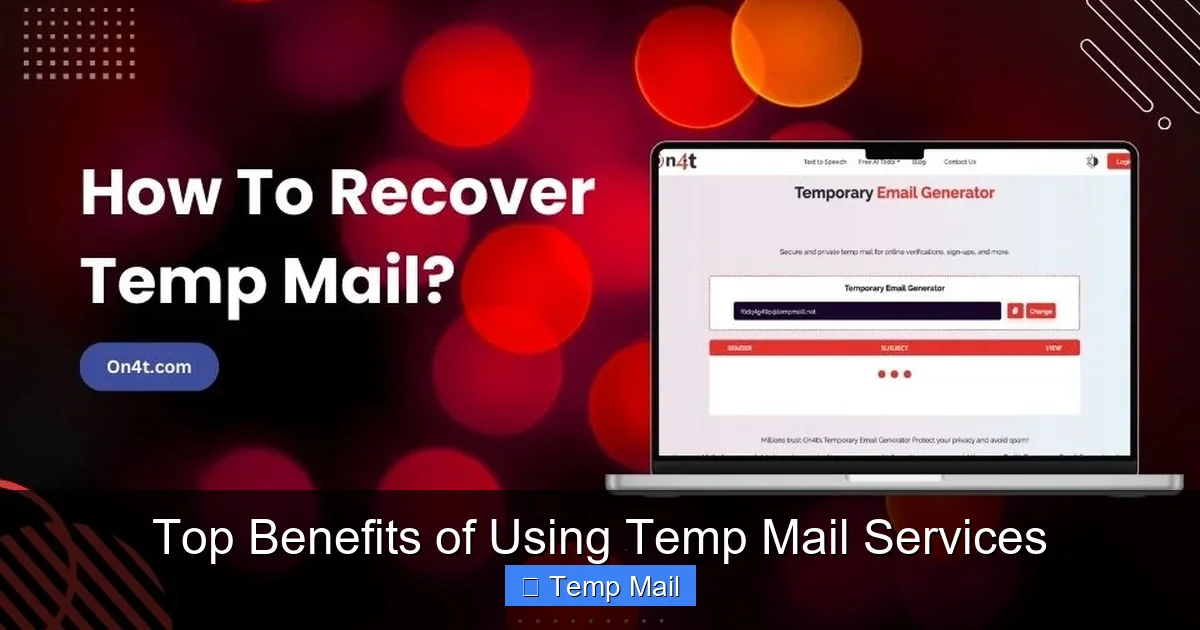
    You don’t need to download an app, create an account, or configure anything. You simply navigate to a temp mail website, and an inbox is ready for you in seconds. The generated email address is displayed prominently. You copy it, paste it into the site you’re visiting, and then refresh the temp mail page to check for incoming messages. That’s it. No credit card, no subscription, no hidden fees. It’s a purely utility-based service, often supported by minimal, non-intrusive advertising on the provider’s site.

    Comparison: Compare this to a dedicated email alias service like SimpleLogin or AnonAddy, which are fantastic but often require a small monthly fee for higher limits and custom domains. Temp mail is the free, no-strings-attached entry point into the world of email privacy.

    Universal Accessibility

    Because it’s web-based, you can access your temporary inbox from any device—a public library computer, a friend’s phone, a hotel business center—without installing anything or leaving traces on that device. The inbox exists only in the browser session (or for the set lifespan), making it perfect for one-off use on shared or trusted computers.

    5. Streamlining Development and Business Testing

    The utility of temp mail extends far beyond individual privacy. For developers, QA testers, and marketers, it’s an indispensable workflow tool.

    Automated Testing and QA

    When building an application that requires email verification (user sign-up, password reset, notification systems), developers need to test these email flows. Creating hundreds of real email accounts is impractical and clutches up production systems. Temp mail services provide a quick way to generate numerous, unique inboxes to test if emails are sent, formatted correctly, and contain the right links. Tools and scripts can be written to poll a temp mail API or inbox to automatically retrieve verification codes during test runs.

    Competitive Analysis and Market Research

    Want to see what kind of welcome email sequence a competitor sends after you sign up? Use a temp mail address to create an account. Need to access a gated piece of content (like an industry report) that requires an email gate? A disposable address gets you in without committing your business email to their nurturing list. For market researchers and business analysts, temp mail is a stealthy way to gather intelligence without polluting primary professional channels.

    6. Navigating the Web Without Long-Term Commitment

    The internet thrives on “engagement” and “retention”—getting you to sign up, stay subscribed, and remain in a platform’s ecosystem. Sometimes, you just need a peek inside without being sucked in.

    Accessing Gated Content and One-Time Bonuses

    How many times have you found a perfect article, template, or tool, only to be stopped by a “Enter your email to download” popup? Using your primary email for this often leads to a weekly newsletter you’ll ignore. A temp mail address is the perfect key. You get the immediate download or access, and you vanish. No guilt, no unsubscribing later (which can be a process in itself), no lingering marketing tags.

    Pro Tip: This is also excellent for claiming one-time discount codes from new customer welcome offers from services you might try once. Use the temp mail, get the code, make your purchase if you want, and then the relationship ends cleanly.

    Testing Website and App Email Flows

    Are you a UX designer or product manager? Before launching a new email-based feature, you can use a series of temp mail addresses to walk through the user journey as a new sign-up, a password reset user, and a notification recipient. This helps catch broken links, formatting issues in different email clients, and timing problems without contaminating your real user base data.

    Conclusion: Embracing Smart, Temporary Identity

    The benefits of using temp mail services paint a clear picture: they are a fundamental tool for modern digital hygiene. They empower you to take back control from a system that often treats your email address as a public commodity. By strategically deploying a disposable inbox, you construct a powerful shield around your privacy, your security, and your peace of mind. You stop spam at the gates, you insulate yourself from the inevitable data breach, and you simplify countless mundane online tasks.

    This isn’t about being paranoid; it’s about being prudent. Just as you wouldn’t give your home address to every stranger who asks, you shouldn’t freely hand out your primary digital address. Temp mail services provide the perfect, low-friction alternative for the vast majority of online interactions that don’t require a lifelong commitment. Start incorporating this simple habit today. Use it for the next forum you join, the next ebook you download, the next free trial you test. Experience the profound satisfaction of a clean inbox and a tighter security posture. In the ongoing battle for your digital identity, a temp mail service is a free, effective, and easy-to-use weapon you should absolutely have in your arsenal.

    Frequently Asked Questions

    Are temp mail services legal to use?

    Yes, using temp mail services is completely legal in most jurisdictions. They are a legitimate privacy tool. However, using them to commit fraud, evade legal obligations, or send illegal content is, of course, illegal. Their primary legal use is for personal privacy and receiving one-time communications.

    How long do emails last in a temporary inbox?

    The lifespan varies by provider, but most temporary inboxes automatically delete all emails and the address itself after a set period, typically between 10 minutes and 24 hours. Some services allow you to extend the time manually for a few minutes. Always check the specific timer on the service you are using.

    Is it safe to use temp mail for important accounts like banking?

    Absolutely not. Temp mail is designed for disposable, non-critical use. You should never use it for any account where you need long-term access, password recovery, or that contains sensitive personal or financial information. Always use a secure, permanent email address for banks, primary government services, your main cloud storage, and critical subscriptions.

    Can I receive attachments with a temp mail?

    Yes, most modern temp mail services support receiving common file attachments like PDFs, images, and documents. However, there are often strict size limits (e.g., 10-25MB). For security, many services also scan attachments for viruses before allowing download. It’s not advisable to open unexpected attachments from unknown senders, even in a temp inbox.

    What’s the difference between temp mail and a disposable email alias service?

    Temp mail creates a completely random, anonymous inbox with no password or login. It’s for one-way receiving and is inherently short-lived. An email alias service (like SimpleLogin or DuckDuckGo’s Email Protection) creates a forwarding address that sends mail to your permanent inbox. You can manage, block, or delete aliases later, and they often last indefinitely until you deactivate them. Alias services offer more control but require a connected permanent account.

    What should I do if I accidentally used temp mail for an important account?

    Act immediately. Log into the important account using whatever credentials you set up and change the primary email address to your permanent, secure email. Ensure you can still access the account and set up proper recovery options. If you’ve lost access because you can’t receive the reset email (since it went to the now-deleted temp address), you will need to contact the service’s customer support to verify your identity and regain control, which can be a lengthy process.

  • Is Temporary Email Safe to Use?

    Is Temporary Email Safe to Use?

    Temporary emails are not secure for sensitive accounts, as they lack encryption and can be accessed by anyone with the inbox link. While they effectively shield your primary address from spam and data harvesting, you should avoid using them for banking, social media, or any service requiring password recovery. Their transient nature makes them a useful privacy tool for one-time sign-ups, but they offer zero long-term security or accountability.


    Is Temporary Email Safe to Use?


    Is Temporary Email Safe to Use?

    You’ve been there. You’re excited to download that free ebook, try a new app, or access a gated article. But the sign-up form asks for your email. Your stomach sinks a little. You don’t want another newsletter clogging your primary inbox, and the thought of potentially getting spam from an unknown site is frustrating. Then you remember: a temporary email. A quick Google search, a random address like [email protected], and you’re in. Problem solved, right?
    But then a nagging thought pops up. Is this actually safe? That random address you used to get a discount code—could it come back to haunt you? Is someone reading your “temporary” emails? The convenience is undeniable, but what’s the real trade-off? For years, I’ve used disposable emails for specific tasks, but I’ve always had a quiet voice in the back of my head asking these same questions. Let’s sit down and have a real talk about temporary email safety, separating the myths from the very real risks and benefits.

    Key Takeaways

    • Point 1: Avoid temporary email for sensitive accounts like banking or healthcare.
    • Point 2: These addresses can be monitored by the provider, compromising privacy.
    • Point 3: Never use them for password recovery; you will lose account access.
    • Point 4: They often lack encryption, risking data interception.
    • Point 5: Use them solely for one-time sign-ups or content unlocks.
    • Point 6: Service providers may log and sell your activity data.
    • Point 7: Always check the provider’s privacy policy before use.

    The Allure and The Anxiety: Why We Use Temporary Email

    Before we dive into safety, let’s admit why we’re even here. The appeal is pure, uncomplicated convenience. Our primary email addresses are digital homes. They’re linked to our banks, social media, work, and families. They’re valuable. Throwing that valuable address at every random website feels like giving out your house key to every stranger who asks. Temporary email services act like a spare, anonymous key you can use once and throw away.

    Common, Smart Use Cases

    I use temporary emails for a clear set of purposes, and they work brilliantly for these scenarios:

    • Signing up for one-time promotions: That 10% off coupon for a store I’ll probably never shop at again? Perfect for a temp mail.
    • Accessing gated content: A research paper, a template, or a webinar replay that requires an email. I get the file, and the site gets a dead-end address.
    • Testing website registrations: As a developer or just a curious user, seeing how a site handles email verification without using a real account.
    • Creating a burner for a short-term project: A Craigslist ad, a temporary forum account for a specific question, or a sign-up for a free trial I intend to cancel before payment.

    In these cases, I’m consciously trading long-term access for short-term anonymity and inbox cleanliness. The anxiety creeps in when the line between these clear-cut cases and more sensitive activities gets blurry.

    How Temporary Email Services Actually Work

    To understand the safety, you need to know what’s happening under the hood. Most services follow a similar pattern:

    Is Temporary Email Safe to Use?

    Visual guide about Is Temporary Email Safe to Use?

    Image source: safescaffoldingltd.com

    1. You Visit the Site: You go to a service like Temp-Mail, 10MinuteMail, or Guerrilla Mail.
    2. An Address is Generated: The server instantly creates a random email address for you, often with a random domain (e.g., @trashmail.com, @tempmail.net).
    3. You Use It: You copy that address and paste it into the third-party website you’re signing up for.
    4. Emails Are Received: Any emails sent to that address land in the service’s public inbox, which you can view on their website by refreshing the page.
    5. It Vanishes: After a set time (10 minutes, 1 hour, 1 day) or after the inbox is cleared, the address and all its emails are permanently deleted from the server.

    The critical thing to note here is that you do not need a password to access the inbox. Anyone who knows that specific, randomly generated email address can view the emails in that inbox by going to the service’s website. This is the core design—it’s accessible by design. This is the first major red flag for privacy.

    The Safety Spectrum: Risks vs. Benefits

    Now for the meat of the issue. “Safe” isn’t a binary yes or no. It’s a spectrum of risks you accept based on your use case. Let’s break it down.

    Is Temporary Email Safe to Use?

    Visual guide about Is Temporary Email Safe to Use?

    Image source: temporary-email.net

    Primary Risks: Where the Danger Lies

    • Zero Privacy in the Inbox: This is the biggest one. Because the inbox is public and passwordless, anyone with the email address can read the emails. If you use a temp mail for a site that sends a confirmation link, and you share that address with a friend (or worse, a malicious actor who guesses it), they can see that confirmation and potentially access your account on that third-party site.
    • Not for Sensitive Accounts: Never, ever use a temporary email for:
      • Banking or financial services
      • Primary social media accounts (Facebook, Twitter, Instagram)
      • Email account recovery for your main email
      • Any account where long-term access and security are critical
    • Service Reliability & Data Retention: Some free services are ad-supported and may not be reliable long-term. While they claim to delete data, you are trusting their privacy policy and infrastructure. A less scrupulous service could log IP addresses or harvest data from emails for advertising.
    • Blocked by Major Platforms: Many reputable services (Google, Microsoft, Apple, most major banks) actively block email domains from known disposable email providers. You won’t be able to sign up for a Gmail account with a temp mail. This is a good thing for security, but it limits utility.
    • No Real Ownership or Control: You can’t forward emails from a temp address. You can’t set up filters. You have zero control. If a crucial email (like a password reset for a site you *did* use the temp mail for) arrives after you’ve closed the browser tab, it’s gone forever.

    Key Benefits: Why They’re Still Useful

    • Spam & Marketing Prevention: This is the #1 win. Your primary inbox stays pristine. Unwanted newsletters and promotional blasts are directed to an address that will self-destruct.
    • Enhanced Privacy (in a specific way): It prevents the third-party website from easily linking your activity to your real identity via your main email. It creates a clean break for a single action.
    • Simplicity & Speed: No registration, no password, no setup. Click, copy, paste. It’s the ultimate in frictionless sign-ups.
    • Testing & Development: Essential for QA testers and developers to create multiple test accounts without managing a zoo of real email addresses.

    Data Privacy & Security: What Happens to Your Data?

    This is the heart of the “is it safe?” question. When you use a temporary email, you are trusting a third party with the content of emails sent to that address, even if briefly. Here’s what you need to consider:

    Is Temporary Email Safe to Use?

    Visual guide about Is Temporary Email Safe to Use?

    Image source: temporary-email.net

    • The Service’s Privacy Policy: This is non-negotiable reading. Does it state they do not log or sell email content? Do they store IP addresses? A reputable service will have a clear policy stating emails are not monitored and are automatically deleted. A shady one might have vague language.
    • HTTPS Encryption: Ensure the service’s website uses HTTPS (the padlock in your browser). This encrypts the connection between your browser and their server, preventing eavesdropping on the network level. All major temp mail services use this now.
    • Server Location & Jurisdiction: Where is the service based? Data privacy laws vary wildly. A service operating from a country with strong data protection laws (like in the EU under GDPR) may offer more theoretical privacy than one from a jurisdiction with lax laws. However, the public, passwordless nature of the inbox often overshadows this.
    • Ad-Supported Models: Many free services show ads. Some may scan email content (like keywords) to serve “relevant” ads, similar to how some free email providers did years ago. Check their policy.

    Practical Tip: For any temp mail service you consider, open its privacy policy in a new tab. Scan for “email content,” “logs,” “IP address,” and “retention period.” If it’s unclear or states they may use data, move on.

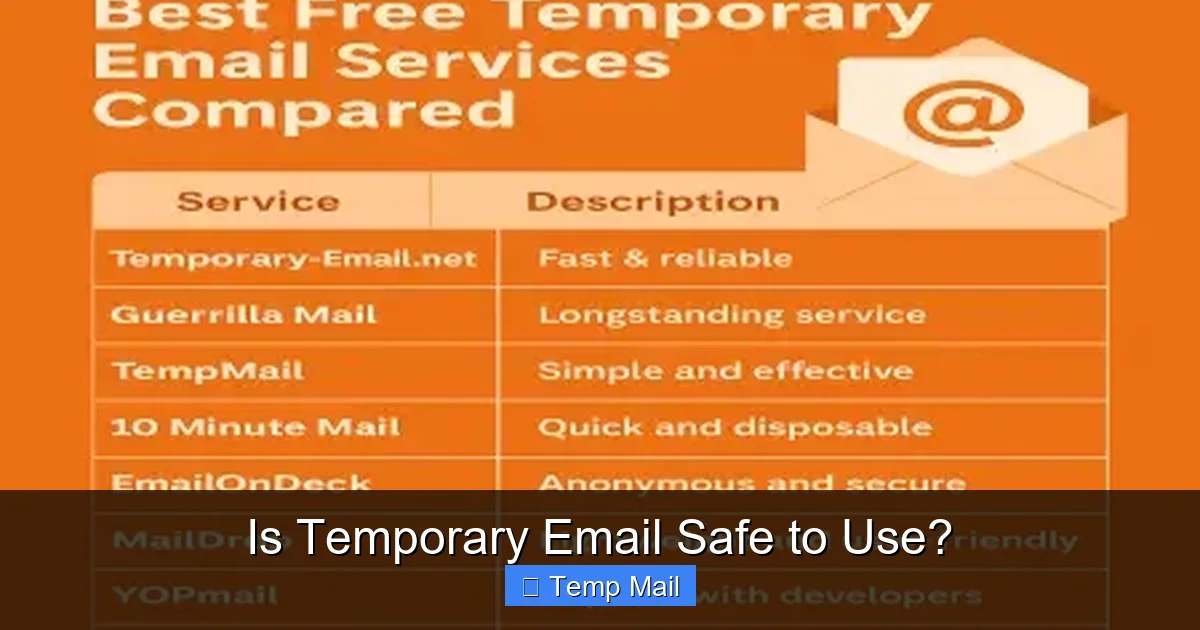
    Not all disposable email providers are created equal. Here’s a practical comparison based on common features and my experience using them for low-risk tasks.

    Service Typical Address Lifespan Key Feature Notable Limitation Best For
    Temp-Mail Until tab is closed (or manually refreshed) Very simple, multiple domain options Inbox can be cleared by anyone else if they guess the address Quick, one-off sign-ups
    10MinuteMail 10 minutes (extendable) Clear countdown timer, very focused Very short window; not for processes that take time Instant verification, no delay expected
    Guerrilla Mail 1 hour (inbox persists) Includes a simple email composer to reply More ads on interface Slightly longer tasks, needing a reply
    Maildrop Inbox persists until cleared No ads, clean interface, supports attachments No “compose” feature, only receiving Receiving files, cleaner UI experience

    Important: This table is for informational comparison. Always verify a service’s current terms before use. The landscape changes frequently.

    Best Practices: How to Use Temporary Email Responsibly

    So, you’ve decided the benefits outweigh the risks for your specific need. How do you use them wisely? Here’s my personal checklist:

    The Golden Rules

    • Never Use for Critical Accounts: Repeat after me: no banking, no main social media, no account recovery. This is the cardinal rule.
    • Assume the Inbox is Public: Never put sensitive information in an email sent to a temporary address. Assume a stranger could read it. No passwords, no ID numbers, no private details.
    • Use a Different Address Each Time: Don’t reuse the same temp address across multiple sites. The whole point is compartmentalization. If one site gets spam or is breached, only that single “identity” is tainted.
    • Copy the Address Immediately: These addresses are random and long. Copy it to your clipboard and paste it into the sign-up form immediately. Don’t try to remember it or type it.
    • Complete the Action Quickly: If you’re signing up for something, do it all in one browser tab. Get the verification email, click the link, and complete the process before you close the temp mail tab. Once the tab is closed, access is often lost.
    • Have a Plan B: If the site you’re signing up for is something you might genuinely want to use long-term (a project management tool, a newsletter you’re interested in), use your primary email. The convenience of a temp mail isn’t worth losing access to a service you care about.
    When to Walk Away

    Sometimes, the need for a temporary email is a signal. If a website only accepts emails from disposable providers, or if it feels overly pushy about getting your email for a simple download, it might be a low-quality or spammy site. It’s okay to abandon the sign-up. Your primary inbox’s peace of mind is more valuable than that free pdf.

    The Verdict: It’s About Smart, Limited Use

    So, is temporary email safe? The honest answer is: it is safe for its intended, narrow purpose, and dangerously unsafe for anything else.

    Think of it like a public library computer. You can use it to quickly look up a phone number or read a news article. It’s perfect for that. You would never use it to log into your online banking or write a confidential email to your lawyer. The environment is inherently public and transient.

    The safety comes from what you use it for, not from the technology itself. Used wisely for creating frictionless, low-stakes digital interactions where you have zero expectation of long-term relationship or privacy, temporary email is a fantastic tool. It’s a shield for your primary identity.

    Used for anything where you need security, account recovery, or privacy of the communication itself, it’s a terrible choice. The risks of a public inbox and lack of control make it fundamentally unsuitable.

    My own rule is simple: if the website or service is asking for my email as a mere formality to get me to the content or download, and I have no intention of engaging with them again, I reach for a temp mail. If I’m creating an account I plan to actually use, I use my real email and rely on good spam filters and unsubscribe buttons. That balance has kept my primary inbox manageable and my accounts secure.

    Ultimately, the power is in your hands. By understanding the mechanics—the public inbox, the limited lifespan, the trust you place in a anonymous service—you can make an informed choice. Temporary email isn’t inherently unsafe; it’s just unsafe for the wrong jobs. Use it as the specialized tool it is, and it will serve you well. Use it as a replacement for your real digital identity, and it will eventually cause problems.

    The next time you see that email field, pause for a second. Ask yourself: “What’s the worst that could happen if this address is public?” If the answer is “nothing I care about,” then go ahead and generate that fluffy_panda address with confidence. If the answer gives you any pause, close the tab and walk away. Your future self will thank you.


    Frequently Asked Questions

    Is using a temporary email safe for my privacy?

    Yes, temporary emails can enhance privacy by preventing spam and data harvesting from your primary inbox. However, they are not completely anonymous, as the service provider may log IP addresses and timestamps. For maximum safety, avoid using them for sensitive accounts or transactions.

    Can a temporary email be traced back to me?

    While the email address itself is ephemeral, your activity can potentially be traced via your IP address by the temporary email provider. Law enforcement may also obtain logs with a legal request. Therefore, they should not be considered a tool for illegal anonymity.

    Is temporary email legal to use?

    Yes, using disposable email services is perfectly legal for purposes like signing up to websites or receiving one-time coupons. It becomes problematic if used to circumvent bans, commit fraud, or engage in illegal activities, which can violate a service’s Terms of Service.

    When should I use a temporary email address?

    They are ideal for situations where you don’t need long-term access or trust, such as downloading a free ebook, accessing a gated article, or registering on a forum with questionable privacy practices. They help keep your main inbox clean from promotional clutter.

    What are the main risks of using temp mail?

    The primary risks are the lack of account recovery—if you lose the inbox page, access is gone forever. Additionally, some services block known temporary email domains, and the provider could potentially intercept unencrypted communications if you use it for sensitive logins.

    Are there secure alternatives to temporary email?

    For better security and persistence, consider using a dedicated secondary email address from a reputable provider like Gmail or ProtonMail. For signing up to less trusted sites, browser extensions that generate unique, forwardable aliases (like SimpleLogin or Firefox Relay) offer a more robust solution.

  • Temp Mail for Quick Website Registrations

    Temp Mail for Quick Website Registrations

    Tired of spam filling your primary inbox after signing up for websites? Temp mail offers a quick, disposable email address specifically for one-time registrations. It acts as a protective shield, keeping your real email private and your main inbox clean from promotional clutter. This simple tool is perfect for accessing gated content, trying new services, or creating test accounts without long-term commitment or risk.

    You’re clicking through the internet, and you stumble upon an incredible article behind a “subscribe to read” wall. Or maybe you want to download a free template, but the site demands your email first. Perhaps you’re just curious about a new forum but have zero interest in becoming a member. The universal gatekeeper? An email address field. For a simple, one-time action, the requirement to hand over your personal, primary email address feels like a major overreach. It opens the floodgates to spam, clutters your carefully organized inbox, and ties your identity to a service you may never use again. This is the exact moment temp mail becomes your best-kept secret weapon. It’s not about being shady; it’s about being smart, efficient, and in control of your digital footprint.

    Temp mail, short for temporary mail, is a service that provides you with a disposable, anonymous email address for a short period. These addresses receive emails just like a regular inbox, but they are designed to be used once and forgotten. The entire philosophy behind it is to decouple your valuable, permanent identity from transient online interactions. In this guide, we’ll dive deep into how temp mail transforms the tedious chore of website registrations into a seamless, one-click experience. We’ll explore its inner workings, walk through practical scenarios, weigh the pros and cons, and establish clear best practices so you can use this tool effectively and responsibly.

    Key Takeaways

    • Instant Privacy Shield: Temp mail provides a throwaway email address that safeguards your primary inbox from spam, marketing emails, and potential data breaches associated with a website.
    • Speed and Convenience: It eliminates the friction of creating and managing a new account for minor tasks, allowing for immediate access to websites, downloads, or forums in seconds.
    • Not for Critical Accounts: Never use a temporary email for important services like banking, primary cloud storage, or social media where account recovery and long-term access are essential.
    • Understanding Limitations: Most temp mail inboxes are public, expire quickly (often 10 minutes to a few hours), and cannot be used for password recovery on the site you’re registering for.
    • Simple Workflow: The process is universally simple: visit a temp mail site, get an auto-generated address, use it to sign up, then close the browser tab. No password, no login, no trace.
    • Ethical and Legal Use: Using temp mail is legal and ethical for privacy protection, but it violates the Terms of Service of many platforms that require verifiable, lasting contact information.

    What Exactly is Temp Mail and How Does it Work?

    At its core, a temp mail service is a simple web application. You don’t need to download software or create an account. You simply visit the provider’s website, and it instantly generates a random email address for you, like [email protected]. That address is now live and can receive emails. A mailbox viewer is typically displayed right on the same page, listing incoming messages in real-time. You copy that temporary address, paste it into the registration form of the website you’re visiting, and submit.

    The Behind-the-Scenes Mechanics

    These services operate on shared, public domains. The domain (the part after the @ symbol) is owned by the temp mail provider. When an email is sent to your temporary address, the provider’s mail server receives it. Since the inbox isn’t password-protected and is tied only to the unique, random local part (the part before the @), anyone with the full address can view the emails by visiting the site and entering that address—or, more commonly, the site automatically loads the mailbox for the address it just generated.

    The emails are stored temporarily, usually for a predefined lifespan. This could be 10 minutes, 1 hour, 1 day, or until you close the browser tab. After that time, the address and all its contents are permanently deleted from the server. There is no persistent storage, no password recovery, and no way to access that specific inbox again once it’s expired or the session is closed. This ephemeral nature is both its greatest strength and its most critical limitation.

    The Registration Headache: Why We All Dread the “Email Required” Field

    To understand the value of temp mail, we must first acknowledge the pervasive problem it solves. The mandatory email field on countless websites is a friction point for several reasons:

    Temp Mail for Quick Website Registrations

    Visual guide about Temp Mail for Quick Website Registrations

    Image source: images-websitehunt.s3.amazonaws.com

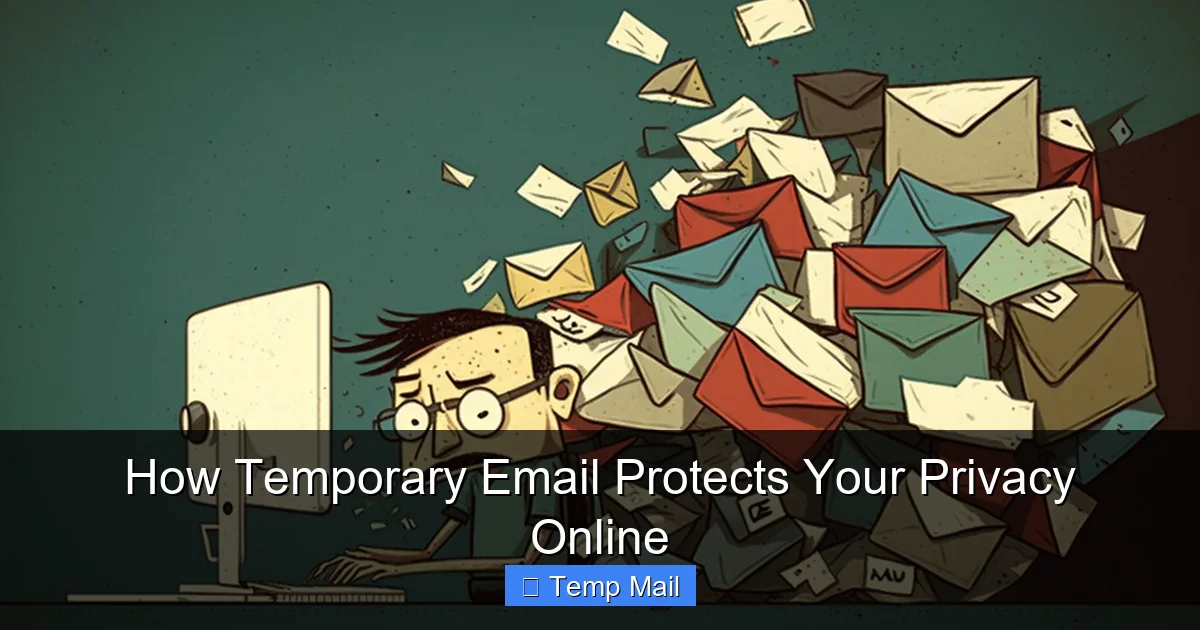
    The Spam Avalanche

    You sign up for a free webinar, promising valuable insights. You provide your real email. Within minutes, you’re added to a daily newsletter. A week later, you’re getting “exclusive offers” from partners you’ve never heard of. Your primary inbox, meant for family, friends, and work, becomes a dumping ground for promotional noise. Unsubscribing is often a cumbersome, multi-step process, and some senders ignore opt-out requests entirely. A single registration can trigger a years-long deluge.
    Data Breach Anxiety

    Every website you register with becomes a potential point of failure in your digital security. Companies large and small suffer data breaches. When they do, user databases—including email addresses, usernames, and sometimes passwords—are exposed on the dark web. Your email address is a golden key for hackers. It can be used in phishing attacks (emails that pretend to be legitimate services to steal your credentials), credential stuffing attacks (using breached passwords on other sites), or simply to build a profile of your online activity for targeted scams. Using a disposable address for low-stakes sites contains this risk.

    The Time Sink of Account Management

    How many legitimate, one-time-use accounts do you have? An account to download a single PDF? An account to comment on one news article? An account to access a free trial you canceled? Each of these requires a unique password (if you’re security-conscious), creates a profile with your name, and needs to be remembered if you ever want to return. This creates “digital clutter.” Temp mail eliminates this cognitive load. There is no account to manage, no password to forget, and no profile to clean up later.

    How Temp Mail Solves These Problems: A Practical Guide

    Now let’s translate theory into action. Using temp mail for registrations is straightforward, but knowing *when* and *how* is key.

    Temp Mail for Quick Website Registrations

    Visual guide about Temp Mail for Quick Website Registrations

    Image source: temp-mail.best

    Step-by-Step: Registering for a Gated Download

    Imagine you find a perfect resume template on a career website, but to download it, you must enter your email. Here’s the temp mail workflow:
    1. Open a new tab and go to a reputable temp mail provider (e.g., Temp-Mail.org, 10MinuteMail.com).
    2. Copy the auto-generated address displayed prominently on the homepage. The inbox for this address is already open in another pane.
    3. Paste that address into the registration form on the career website. Fill any other required fields (often just a name) and submit.
    4. Switch back to your temp mail tab. Within seconds, you should see a new email from the career site with a download link.
    5. Click the link, download your template, and close the tab. The job is done. The temporary email will expire, and the career site has no way to contact you again unless you give them a real address later.

    Pro Tip: Some sites use JavaScript to validate the email format in real-time. If the temp mail domain is on a known “blocked” list, the form might reject it. If this happens, try a different temp mail provider, as they use different domains.

    Step-by-Step: Creating a Forum or Comment Account

    You want to engage in a discussion on a niche forum but don’t want your real email tied to your comments. The process is identical. Use the temp mail address to register. The forum will send a verification link. Open it from your disposable inbox to activate the account. You can now post using a pseudonym, and your real identity is completely separate. If the forum requires a password, use a password manager to generate and store one for this throwaway account, or use a simple, unique password you’ll forget after the conversation ends.

    Bypassing “Read More” Walls and Free Trials

    Many news sites and SaaS platforms use email gates. A temp mail address is perfect for these. For a 7-day free trial of a project management tool, you can sign up, explore the features, and cancel before the trial ends—all without a single email landing in your primary inbox. The tool might send reminder emails, but they vanish into the void of the expired temporary address.

    The Flip Side: Crucial Pros and Cons of Using Temp Mail

    While powerful, temp mail is not a universal solution. Understanding its advantages and, more importantly, its drawbacks is essential for using it correctly.

    Temp Mail for Quick Website Registrations

    Visual guide about Temp Mail for Quick Website Registrations

    Image source: i0.wp.com

    Pros: Freedom and Cleanliness

    • Spam Prevention: Your primary inbox remains pristine. This is the single biggest benefit.
    • Enhanced Privacy: Reduces the data footprint linking your real identity to minor websites.
    • No Long-Term Commitment: Zero obligation. No need to remember login details or worry about deleting the account later.
    • Speed: Registration is reduced to copy-paste. No navigating to your real inbox to find a verification code (though sometimes verification is needed).
    • Testing: Developers and testers use it to create multiple test accounts for apps without managing hundreds of real emails.

    Cons: The Critical Limitations You Must Know

    • No Account Recovery: If you forget a password for a site you registered with a temp mail address, you are permanently locked out. The “forgot password” email goes to an inbox that no longer exists.
    • Ephemeral Nature: The email address is gone. You cannot log back into that same account later. If you need ongoing access to a service, a temp mail is the wrong tool.
    • Public Inboxes: By design, anyone who knows the temporary address can view the emails. Never use it for sensitive information like password resets for *other* accounts, confidential documents, or private communications.
    • Violates Terms of Service: Most reputable websites’ Terms of Service require a valid, reachable, and permanent email address. Using a disposable address is often explicitly forbidden and can lead to account suspension if detected.
    • Not for Trust & Verification: Services that need to verify your identity—like banking, PayPal, government sites, or LinkedIn—will not accept disposable emails and may block the domain entirely.

    Best Practices: Using Temp Mail Responsibly and Effectively

    To be a savvy user, follow these guidelines. Think of temp mail as a tool for specific jobs, not a replacement for your main email.
    The Golden Rule: Know Your “Why”

    Ask yourself: “What is the purpose of this registration, and will I ever need to access this account again?” If the answer is “no” or “maybe, but I can re-register later,” then a temp mail is appropriate. If the answer is “absolutely yes” (e.g., an online banking portal, your main cloud storage, a subscription you pay for), use your real email.
    Strategic Provider Selection

    Not all temp mail services are created equal. Some offer longer inbox lifespans (up to 24 hours), some have more domains (making them less likely to be blocked), and some have cleaner, ad-free interfaces. Have 2-3 trusted providers bookmarked. If one is down or its domain is blocked, switch to another instantly.

    Never Use for High-Stakes Verification

    This cannot be stressed enough. Do not use a temp mail address for:

    • Two-Factor Authentication (2FA) recovery codes.
    • Password reset links for any account you care about.
    • Any service that sends legal documents, contracts, or financial statements.
    • Primary communication channels with businesses or services where you need a paper trail.

    Combine with a Password Manager

    If a site forces you to create a password for an account you’re making with temp mail, use your password manager (like Bitwarden, 1Password, or even your browser’s built-in one) to generate and store a unique, strong password. This way, if you *do* need to log back in within the short lifespan of the temporary inbox, you have the credentials. Once the inbox expires, you can safely delete the entry from your manager.

    Alternatives and the Future of Disposable Communication

    Temp mail is the most direct solution, but it exists within a ecosystem of privacy tools.

    Email Aliasing Services

    Services like SimpleLogin, AnonAddy, or Firefox Relay take a different approach. You create a long-term, central account with them. They then allow you to generate unlimited *unique, forwardable* email aliases (e.g., [email protected]). Emails sent to the alias are forwarded to your real inbox, and you can reply from the alias. You can delete the alias at any time, stopping all forwarding. This is more powerful than temp mail because it allows for ongoing conversation and is tied to your real inbox, but it requires a setup step and sometimes a small fee. It’s the “premium” version of disposable email.

    Built-in Browser Features

    Some browsers, like Firefox with its “Firefox Relay” integration or Safari with “Hide My Email” (part of iCloud+), offer native ways to generate disposable aliases directly within login forms. This is the most seamless experience, as it’s integrated into the browser itself. However, availability depends on your browser and ecosystem.

    The “Just Don’t Sign Up” Philosophy

    The ultimate best practice is to simply decline the registration. Ask: “Do I *really* need this?” If it’s a one-off download, see if there’s an alternative source. If it’s a forum, can I read without commenting? Sometimes, the most powerful privacy tool is the decision to not participate. Use temp mail for the times when the benefit truly outweighs the minor hassle.

    Conclusion: Reclaiming Control in a Registration-Obsessed World

    The internet’s growth has been fueled by data, and email addresses are one of the most fundamental pieces of that data. The “email required” field is a gatekeeper that often demands more trust and commitment than the action warrants. Temp mail democratizes a simple defense: the right to be anonymous for a little while. It’s a tool for the casual browser, the cautious tester, and the privacy-conscious individual who is tired of trading their primary email address for every fleeting digital interaction.

    By understanding its mechanics, respecting its limitations, and applying it strategically, you can navigate the web with far less friction and far greater peace of mind. You can download that template, read that article, and explore that forum without leaving a permanent, spam-attracting trail back to your most valuable communication channel. Use temp mail not as a cloak of invisibility for malicious intent, but as a practical shield for everyday digital hygiene. In a world that asks for your email at every turn, being able to say “here’s a disposable one” is not just convenient—it’s a small but significant act of reclaiming your autonomy.

    Frequently Asked Questions

    Is using temp mail legal and safe?

    Yes, using temp mail is completely legal. It’s safe in the sense that you are not handing over personal information, and the inboxes are isolated. However, “safe” also depends on use: never use it for sensitive communications or account recovery, as the public inbox means anyone with the address can see the emails.

    How long do temp mail addresses last?

    It varies by provider. Common lifespans are 10 minutes, 1 hour, or 1 day. Some allow you to extend the session by clicking a refresh button. Once the time expires or you close the browser tab, the address and all its emails are permanently deleted and cannot be recovered.

    Can websites detect that I’m using a temp mail address?

    Yes, many can. They maintain lists of known disposable email domains (like those from temp mail providers) and will block registration attempts using those domains. This is why it’s helpful to know a few different temp mail services, as they use different domains.

    What happens if I need to reset my password for a site I signed up with using temp mail?

    You will not be able to. The password reset email will be sent to the temporary inbox, which will have expired by the time you need it. This is why the cardinal rule is: never use temp mail for any account where you need lasting access or password recovery.

    Are the emails I receive on a temp mail service private?

    No. By design, temporary inboxes are not private. They are not password-protected. Anyone who knows the specific temporary email address can open the provider’s website, enter that address, and view all received emails. Only use it for non-sensitive, one-time verification emails.

    Should I use temp mail for social media or online shopping accounts?

    Generally, no. For social media, you want to recover your account if locked out, and you may receive important notifications. For online shopping (especially with stores you use repeatedly), you need order confirmations, shipping updates, and receipts. Use your real email for these persistent, transactional relationships.

  • Best Websites to Get a Temporary Email Address

    Best Websites to Get a Temporary Email Address

    Tired of your primary inbox getting flooded with spam? A temporary email address is your first line of defense. These disposable inboxes let you sign up for websites, download files, or verify accounts without exposing your real email. We’ve tested and ranked the top services like Temp-Mail.org, 10MinuteMail, and Guerrilla Mail, highlighting their speed, features, and limitations. Use them for one-time tasks to keep your personal data safe and your main inbox clean.

    You’re clicking through a website, eager to download a free ebook or access a juicy piece of software. The site asks for your email address. You hesitate. That little voice in your head whispers: “Spam. Unsubscribe hell. Your inbox will never be the same.” Sound familiar? We’ve all been there. That moment of friction between wanting a resource and protecting your digital peace is exactly why temporary email address services exist. They are the unsung heroes of the modern web, offering a simple, no-strings-attached way to interact online without sacrificing your primary contact. In this deep dive, we’ll explore the best websites to get a temporary email address, how they work, when to use them (and when not to), and the critical privacy considerations you must know. Let’s reclaim your inbox.

    Key Takeaways

    • Primary Purpose: Temporary email services provide a short-lived inbox to shield your permanent email from spam, data breaches, and unwanted marketing.
    • No Registration Needed: Most top sites generate an address instantly—no sign-up, no password, no personal details required to start receiving mail.
    • Limited Lifespan: Inboxes typically self-destruct after 10 minutes to 24 hours, or after a set number of emails, ensuring temporary use.
    • Use for Verification, Not Communication: Ideal for account activation links, download codes, and forum sign-ups; avoid for important personal or professional correspondence.
    • Security Trade-offs: While they hide your real email, most services do not encrypt content; never use for passwords, financial info, or sensitive data.
    • Choose Reputable Providers: Stick with well-known sites that offer clear privacy policies, manual deletion options, and no hidden data selling.
    • They Complement, Not Replace, Real Email: A temp mail is a tool for specific scenarios; maintain a secure primary email for banking, work, and essential accounts.

    What Exactly is a Temporary Email Service?

    Think of a temporary email address as a public, digital locker for your online interactions. It’s a fully functional email inbox that you can use to receive messages, but it’s designed to be used once and then discarded. Unlike your Gmail, Outlook, or iCloud account, which is tied to your identity and intended for long-term use, a temp mail is anonymous, ephemeral, and requires zero commitment.

    How Do They Work? The Magic Behind the Inbox

    The process is beautifully simple. You visit a temp mail website. Instantly, the site generates a random email address for you—something like [email protected]. That inbox is now live. Any email sent to that address appears on a web page you can view in your browser. There’s no password, no login, no recovery process. You simply refresh the page to check for new mail. Once the timer runs out (often 10-60 minutes) or you close the browser tab, that address and all its contents are permanently deleted from the server. Some services allow you to extend the time manually.

    The Core Benefits: Why You Need This Tool

    • Spam Prevention: This is the big one. If a website sells or leaks your email (which happens constantly), the spam goes to the disposable address, not your main one. You can delete the temp address and the spam vanishes with it.
    • Privacy Protection: You don’t have to provide any personal information to get an address. Your real identity, location, and primary email remain hidden from the site you’re interacting with.
    • Zero Clutter: Your primary inbox stays pristine for emails from family, friends, and important services. No more wading through promotional newsletters from a site you visited once.
    • Bypass Verification Walls: Many sites gate content behind an email sign-up. A temp mail lets you get the verification code or download link instantly without the long-term commitment.
    • Test & Debug: Developers and testers use these to create multiple test accounts quickly without managing dozens of real email accounts.

    The Top 5+ Temporary Email Websites (Tested & Ranked)

    Not all temp mail services are created equal. Some are faster, some offer more features, and some have better privacy practices. After extensive testing for speed, reliability, domain variety, and user experience, here are the best websites to get a temporary email address right now.

    Best Websites to Get a Temporary Email Address

    Visual guide about Best Websites to Get a Temporary Email Address

    Image source: images.surferseo.art

    1. Temp-Mail.org: The All-Round Champion

    Temp-Mail.org is arguably the most popular and reliable service in the space. It’s fast, clean, and feature-packed.

    • Inbox Lifespan: Automatically deletes after 24 hours or when you close the browser, whichever comes first. You can manually refresh the timer.
    • Key Features: Offers multiple domain names (e.g., @temp-mail.org, @tmpmail.org), allows file attachments (up to 25MB), has a browser extension, and provides an API for developers. The interface clearly shows the countdown timer and has a “Copy Address” button.
    • Best For: General-purpose use, downloading files/attachments, and anyone who wants a reliable, no-fuss service.
    • Potential Drawback: The free version shows ads on the page, though they are not overly intrusive.

    2. 10MinuteMail: The Classic Speedster

    As the name suggests, this service gives you a 10-minute window. It’s the original and remains a benchmark for speed.

    • Inbox Lifespan: 10 minutes by default. You can extend it in 10-minute increments with a click if you need more time.
    • Key Features: Incredibly simple, single-purpose interface. Shows a large, easy-to-read countdown. The email address changes with each new session, ensuring maximum anonymity.
    • Best For: Quick, one-off verifications where you know the email will arrive instantly (like a confirmation code). Ideal for when you’re in a rush.
    • Potential Drawback: The short timer means you must act fast. Not suitable for scenarios where the verification email might be delayed.

    3. Guerrilla Mail: The Veteran with Attachments

    Guerrilla Mail has been around for over a decade and is trusted for its robustness and support for attachments.

    • Inbox Lifespan: Inbox persists for 1 hour after the last received email. You can manually “Scramble” the address to get a new one while keeping the inbox.
    • Key Features: Supports attachments, allows you to send emails *from* the temporary address (a rare feature), and offers a password-protected inbox option for a small fee. It also has a “Blog” section with useful tips.
    • Best For: Receiving downloadable files (PDFs, images, ZIPs) and situations where you might need to reply once or twice to a received message.
    • Potential Drawback: The interface can feel cluttered compared to newer, minimalist services.

    4. Tempail: The User-Friendly European Option

    Tempail (from the creators of Temp-Mail) offers a polished, user-friendly experience with a focus on privacy.

    • Inbox Lifespan: 3 days. Yes, you read that right. This is significantly longer than most.
    • Key Features: Clean, modern interface. Allows you to “bookmark” your temporary inbox with a custom name for easier recall. Offers a browser extension and mobile apps. Based in Germany, which has strong privacy laws.
    • Best For: Tasks that might take a day or two, like signing up for a trial service where you need to receive a welcome email later. Great for users who prefer a longer safety net.
    • Potential Drawback: The longer lifespan means the address sits in their system longer, slightly increasing the theoretical window for data exposure (though they claim not to log content).

    5. Maildrop: The Minimalist’s Choice

    Maildrop lives up to its name: it’s a bare-bones, no-frills drop box for email.

    • Inbox Lifespan: Inboxes are deleted after 24 hours of inactivity.
    • Key Features: Extremely clean, ad-light interface. You can create a custom alias (e.g., [email protected]) for easier remembering. No CAPTCHAs on the main page. Simple, fast, effective.
    • Best For: Users who hate clutter and just want a fast, anonymous inbox without extra buttons or features.
    • Potential Drawback: Lacks advanced features like attachment support or browser extensions. Very basic.

    Honorable Mentions & Specialized Tools

    Mohmal: A popular Middle Eastern service with a 1-hour lifespan and multiple domain choices.
    Dispostable: Allows you to choose your own disposable address format (e.g., [email protected]).
    Burner Mail: A browser extension that creates unique, forwardable email addresses for each site you visit. It’s a more sophisticated, semi-permanent solution that still protects your main address.

    Practical Use Cases: When to Reach for a Temp Mail

    Knowing how to use a tool is as important as knowing which tool to use. Here are the most common and smart scenarios for deploying a temporary email address.

    Best Websites to Get a Temporary Email Address

    Visual guide about Best Websites to Get a Temporary Email Address

    Image source: media.nbcdfw.com

    Scenario 1: The “Free Download” Gate

    You find a fantastic template, ebook, or software trial, but the site demands an email to get the download link. Use a temp mail. Enter it, get the link in the disposable inbox, download your file, and walk away. The site has your temp address, which will vanish, and your real inbox is untouched.

    Scenario 2: Creating a One-Time Account

    You need to sign up for a forum, comment on a news article, or access a one-off service just to complete a task. A temp mail is perfect. You verify the account, perform your action, and never log in again. The account becomes inert, and any future password resets or notifications go to the dead inbox.

    Scenario 3: Avoiding Post-Purchase Spam

    You’re buying a one-time item from an unfamiliar online store. They’ll inevitably add you to their marketing list. Use a temp mail for the order confirmation and shipping updates. You’ll need to check it once or twice, but after the package arrives, you can abandon the address, cutting off the spam stream at the source.

    Scenario 4: Software & App Beta Testing

    Developers often need to create multiple test accounts for their apps. Using a temp mail service streamlines this, allowing for rapid account creation without managing a fleet of real email addresses or worrying about cleanup later.

    Scenario 5: Protecting Your Identity on Public Wi-Fi

    When using a café or airport Wi-Fi, your internet traffic is less secure. If you need to register for a public Wi-Fi portal that asks for an email, using a temp mail adds a layer of identity protection. Even if the network operator logs the email, it leads to a dead end.

    The Crucial Security & Privacy Reality Check

    “But is it safe?” This is the most important question. The answer is: it depends on your definition of “safe.”

    Best Websites to Get a Temporary Email Address

    Visual guide about Best Websites to Get a Temporary Email Address

    Image source: assets-global.website-files.com

    Myth Busting: What Temp Mail Does & Doesn’t Protect

    What it DOES protect:
    – Your primary email address from being sold, leaked, or spammed.
    – Your real identity from the website you’re signing up with (they see only the temp address).
    – Your long-term email hygiene and digital footprint.

    What it DOES NOT protect:
    The content of your emails: Most temp mail services do not use end-to-end encryption. The content is stored in plain text on their servers. Assume anyone with server access (the provider, a hacker, a government request) can read it.
    Your IP address from the temp mail provider: When you visit the temp mail site to check your inbox, your IP address is logged by that provider. A reputable service won’t tie it to the inbox content, but it’s a metadata point.
    You from illegal activity: Using a temp mail to fraudulently sign up for services, harass others, or send illegal content does not make you anonymous to law enforcement. Providers may cooperate with legal requests and can often correlate a session’s IP with a temporary address.

    Essential Safety Rules for Using Temporary Email

    • NEVER use a temp mail for: Banking, financial accounts, primary social media, password recovery for important accounts, job applications, or any official government/legal correspondence. These require a verified, permanent, and secure email.
    • DO NOT send sensitive information: Never email your Social Security number, credit card details, confidential documents, or private photos through a disposable inbox.
    • Check the provider’s policy: Before using a service, glance at its privacy policy or FAQ. Do they log IPs? Do they sell data? How long are logs kept? Choose transparency.
    • Use incognito/private browsing mode: This prevents your browser from storing cookies or history from the temp mail site, adding a small layer of separation between your session and your regular browsing.
    • Manually delete when done: If the service has a “Delete” or “Forget” button for your inbox, use it immediately after you’ve received the needed email. Don’t rely solely on the timer.

    Alternatives & When a Temporary Email Isn’t Enough

    A temporary email address is a specific tool for a specific job. Sometimes, you need something slightly different.

    Alias or “Hide My Email” Services

    Apple’s “Hide My Email” (part of iCloud+) and Firefox’s “Relay” service create unique, forwardable email aliases that route to your real inbox. Unlike a temp mail, these are semi-permanent. You can receive and reply to emails, and they can be deleted at any time. They offer better security (often with encryption) and are integrated into your ecosystem. Use these when you want to protect your main email for a service you might use long-term, like an online store or newsletter.

    Dedicated “Burner” Email Accounts

    Create a separate, free email account (e.g., a new Gmail) dedicated to online sign-ups and newsletters. This is more work than a temp mail but offers more control and longevity. You can log in, manage subscriptions, and use it for years. This is the step up from a temp mail when you find yourself using disposable addresses too often for the same types of sites.

    When to Just Use Your Real Email

    If the website is a trusted, major platform (Google, Amazon, your bank, your employer’s HR portal), use your primary email. The risk of spam is low and managed, and you need the account for legitimate, long-term use. The convenience and security of your main, well-secured email outweigh the minor spam risk from reputable companies.

    The temp mail landscape is evolving. As websites become smarter at detecting and blocking disposable email domains, these services must adapt.

    The Cat-and-Mouse Game with Blocklists

    Many websites now maintain blocklists of known temp mail domains. When you try to sign up with @tempmail.org, the site might reject it outright. This drives demand for services like Temp-Mail and Tempail, which constantly rotate and add new domains to stay ahead of these lists. It’s a perpetual arms race between privacy tools and platforms wanting “real” user data.

    Increased Scrutiny and Regulation

    Regulations like GDPR and CCPA give users more control over their data. While temp mail services themselves are legal, their use can be restricted by the websites you visit. Some jurisdictions are also looking more closely at anonymous communication tools, balancing privacy rights with the need to prevent fraud and abuse.

    Integration with Privacy-First Browsers & Extensions

    We’re seeing tighter integration. Browsers like Brave and privacy extensions are starting to build in email alias or temporary address generation directly into the browser, making the process seamless and reducing the need to visit a separate website. This trend will likely continue, making temporary email a standard, built-in privacy feature.

    Conclusion: Your Inbox, Your Rules

    A temporary email address is more than just a spam-fighting hack; it’s a fundamental tool for digital self-defense in an age of relentless data collection. Services like Temp-Mail.org, 10MinuteMail, and Guerrilla Mail provide an invaluable service, giving you the power to engage with the web on your terms. You can explore, download, and verify without leaving a trail of breadcrumbs that leads back to your primary identity.

    Remember the golden rule: use temp mail for low-stakes, one-time interactions. Treat it like a public restroom—use it, accomplish your goal, and leave it behind without a second thought. For everything that matters—your finances, your career, your core social connections—invest in a secure, primary email with strong, unique passwords and two-factor authentication.

    By understanding the capabilities and limits of these services, you can build a smarter, cleaner, and more private digital life. So next time a website asks for your email, pause. Ask yourself: “Is this a relationship worth having?” If the answer is no, you now know exactly where to get a temporary email address to say “no thanks” without actually saying it. Your future inbox will thank you.

    Frequently Asked Questions

    Is using a temporary email legal?

    Yes, using a temporary email service is completely legal in most countries. The services themselves operate within the law. However, using a temp mail for fraudulent activities, hacking, or to circumvent bans is illegal, regardless of the email tool used.

    Are temporary emails truly safe and private?

    They are safe for protecting your primary inbox from spam and hiding your real email from websites. However, they are not private in the same way as encrypted email. Most do not encrypt message content, and the provider can potentially see any emails you receive. Never use them for sensitive data.

    How long does a temporary email last?

    It varies by service. Common lifespans are 10 minutes (10MinuteMail), 1 hour (Guerrilla Mail), 24 hours (Temp-Mail.org, Maildrop), or even 3 days (Tempail). The inbox is deleted after the time expires or after a period of inactivity.

    Can I send emails from a temporary address?

    Most services are receive-only. A few, like Guerrilla Mail, allow you to send emails from the temporary address, but this is a rare feature. Sending capability is usually limited to prevent abuse.

    What is the best temporary email website?

    For overall reliability and features, Temp-Mail.org is widely considered the best. For extreme speed, 10MinuteMail excels. For attachment support, Guerrilla Mail is a top choice. The “best” depends on your specific need for lifespan, features, and simplicity.

    What’s the difference between a temporary email and a disposable email?

    The terms are often used interchangeably. Technically, “disposable email” often implies a very short lifespan (minutes) and is meant for a single use. “Temporary email” can sometimes refer to services with slightly longer lifespans (hours or days) that might allow a couple of uses. In practice, they serve the same core purpose.

  • How to Create a Temp Email Instantly

    How to Create a Temp Email Instantly

    Creating a temporary email is a fast, free way to protect your primary inbox from spam and data breaches. You simply visit a dedicated website, and it generates a random, disposable email address for you in seconds—no registration or personal details required. Use it for one-time sign-ups, downloads, or verifications, then discard it when done. It’s the ultimate tool for online privacy and clutter control.

    Key Takeaways

    • Instant Setup: A temp email is generated the moment you visit a provider’s website—no account creation needed.
    • Complete Anonymity: These services don’t require any personal information, keeping your identity private.
    • Automatic Disposal: Emails and addresses self-destruct after a set time (usually 10 minutes to 24 hours) or after you close the browser tab.
    • Spam Prevention: Use a temp email for untrusted websites to keep promotional and malicious emails out of your permanent inbox.
    • No Long-Term Commitment: Unlike permanent email, there’s no password to remember or inbox to manage long-term.
    • Limited Functionality: Temp emails typically only receive messages; you usually cannot send emails from them.
    • Not for Critical Accounts: Never use for banking, primary social media, or any service where account recovery is essential.

    What Exactly is a Temporary Email?

    Imagine needing to sign up for a website to download a free ebook, but you’re certain that action will subscribe you to a dozen marketing newsletters. Your primary email inbox is already a chaotic hub of work messages, personal bills, and family updates. You don’t want that chaos multiplied. This is where the magic of a temporary email, often called a disposable or throwaway email, comes into play.

    A temporary email is a service that provides you with a random, functional email address for a very short period. Think of it as a digital burner phone. You use it for a single, specific, low-stakes purpose and then forget about it. The address and any messages it receives vanish into thin air, often within minutes or a few hours. It’s a tool designed explicitly for moments when you need to provide an email address but have zero trust or long-term interest in the relationship with that website or service.

    How It Differs From Your Regular Email

    Your Gmail, Outlook, or Yahoo account is a permanent digital identity. It’s tied to your name, used for password recoveries, and is a central hub for your online life. A temp email is its complete opposite. It’s anonymous, transient, and has no links to your real identity. There’s no inbox to log into with a password; you simply visit the temp mail provider’s website, and your inbox for that random address is right there in your browser. Once you close the tab, that session is typically gone forever.

    How Do Temporary Email Services Work? The Simple Magic

    The underlying technology is surprisingly straightforward, which is why these services are so fast and lightweight. When you navigate to a site like Temp-Mail.org or 10MinuteMail.com, the server instantly does two things: it generates a completely random email address (e.g., [email protected]) and it creates a corresponding, hidden mailbox on its backend.

    How to Create a Temp Email Instantly

    Visual guide about How to Create a Temp Email Instantly

    Image source: blog.aspose.com

    That randomly generated address is now active and able to receive emails. Any message sent to it by an external server is captured by the temp mail provider’s system and displayed in the web-based inbox they show you on their site. There’s no complex routing to a personal mailbox. It’s a direct, temporary pipe. The provider sets a timer on that mailbox. When the time expires—be it 10 minutes, 1 hour, or 24 hours—the server automatically purges the address and all its contents from existence. Some services also delete the address as soon as you close your browser window, adding an extra layer of ephemeral security.

    The Role of Domains

    These services own or lease large blocks of domain names specifically for this purpose (e.g., @tempmail.com, @guerrillamail.com). They can generate millions of unique addresses across these domains because they control the entire mail server setup for those domains. It’s a system built for mass, anonymous, and short-term use.

    Step-by-Step: How to Create a Temp Email Instantly (Under 30 Seconds)

    The beauty of this process is its sheer simplicity. There is no “account creation” in the traditional sense. Here is the universal, three-step process that works on any reputable temp mail site.

    How to Create a Temp Email Instantly

    Visual guide about How to Create a Temp Email Instantly

    Image source: slash1.startupheroes.io

    Step 1: Choose and Visit a Provider

    Open your web browser. In the search bar, type “temporary email” or “disposable email.” You’ll see a list of popular services. For this guide, we’ll use Temp-Mail.org as a classic example. Click on its link to go to the website.

    Step 2: Your Address is Already Waiting

    Seriously, that’s it. The moment the page loads, look at the top of the screen. You will see a long, random email address already displayed, often with a handy “Copy” button next to it. The inbox view below it is already active and waiting for mail. You did not have to sign up, choose a username, or verify anything. The address is yours to use immediately.

    Step 3: Use and Discard

    Highlight the address, copy it, and paste it into the website or service that is asking for your email. Proceed with whatever you needed to do (download the file, verify the account, etc.). Keep the temp mail site open in a tab. When the verification email arrives, it will pop right into the inbox on that page. Open it, click the link, get your download—whatever the goal was.

    Once you’re done, simply close the browser tab. For many services, that’s the end of the line. The address is now invalid. For others with a time-based system, you can wait for the countdown timer (often visible on the site) to hit zero. Either way, no action is required on your part to “delete” it. It’s designed to clean up after itself automatically.

    Pro Tips for the Instant Creation Process

    • Use an Incognito/Private Window: This prevents the site from placing tracking cookies on your browser and ensures a truly fresh session every time.
    • Bookmark the Site, Not the Address: If you think you might need another temp email later, bookmark the provider’s homepage (e.g., temp-mail.org). Never bookmark the specific random address, as it will be useless later.
    • Check the Timer: Always glance at the countdown timer on the site. If you need more time for a delayed email, you might need to refresh the page to get a new address with a fresh timer (some sites offer a “Change” button).

    Top 5 Practical Use Cases for a Disposable Email

    Knowing *how* to create one is only half the battle. Knowing *when* to use it is what makes it a genuinely powerful tool for digital hygiene. Here are the most common and effective scenarios.

    How to Create a Temp Email Instantly

    Visual guide about How to Create a Temp Email Instantly

    Image source: d33wubrfki0l68.cloudfront.net

    1. Signing Up for “Gated” Content or Trials

    This is the #1 use case. A blog offers a fantastic PDF checklist, a software company offers a 14-day trial of their premium tool, or a newsletter promises exclusive insights. To get it, you must surrender your email. Using your primary address guarantees future promotional spam. A temp email lets you get the immediate resource (the PDF, the trial activation) and then vanish. The promotional emails from that company will bounce off the dead address, leaving your real inbox untouched.

    2. Downloading from “Sketchy” or High-Volume File Portals

    Sites that host free software, game mods, or video tutorials often bombard you with pop-up ads and aggressive email capture walls before the download button even appears. Using a temp email here is a defensive move. You get the file you want without subscribing to a torrent of marketing emails from a source you don’t trust.

    3. Creating Test Accounts for Apps and Services

    Are you a developer testing a user flow? A curious user wanting to explore an app’s features without commitment? A temp email is perfect for creating a throwaway account to test registration, notification systems, or basic functionality. It keeps your real identity separate from your testing activities.

    4. Protecting Your Identity on Forums and Comment Sections

    Many online forums, especially those discussing sensitive topics (tech support for malware, financial advice, health issues), require an email for account activation. Using your personal email links that anonymous forum persona directly to you. A temp email breaks that link, allowing for more genuine anonymous participation without fear of future data aggregation or doxxing.

    5. Bypassing Regional Blocks or Basic Access Walls

    Some websites restrict content to certain countries or require a simple email “wall” to view an article. A temp email from a service with multiple domain options can sometimes help you get past these basic barriers to access information, though this should be done ethically and in line with the site’s terms of service.

    The Crucial Balance: Advantages and Significant Drawbacks

    Temp emails are a powerful tool, but they are not a universal replacement for a permanent email address. Understanding their strengths and, more importantly, their weaknesses is critical for using them safely and effectively.

    • Unmatched Privacy: Zero personal data is collected. No name, no phone number, no recovery questions.
    • Zero Spam in Your Primary Inbox: This is the primary benefit. All the clutter is funneled into a disposable container that self-destructs.
    • Speed and Simplicity: The instant creation process is frictionless. It takes less time than logging into your own email.
    • No Long-Term Management: There is no inbox zero to strive for. No folders to organize. It just disappears.
    • Free to Use: The vast majority are supported by ads on their site, so the service is free for the user.

    Critical Drawbacks and Risks You Must Know

    • No Sending Capability: You almost always cannot *send* emails from a temp address. It’s receive-only. This is a deal-breaker for any service where you need to communicate.
    • No Account Recovery: If you use a temp email to sign up for an important service and later forget your password, you are permanently locked out. There is no “forgot password” email that will reach you.
    • Unreliable Delivery: Some sophisticated websites or services (like major social media platforms, banks, or government sites) actively block known disposable email domains. Your sign-up attempt will be rejected outright.
    • Short Lifespan: The core feature is also a flaw. If a crucial verification email is delayed by a minute and your 10-minute timer expires, the email is lost forever, and you may not be able to complete the sign-up.
    • Security Perception: Using a temp email can sometimes be flagged by fraud detection systems as suspicious behavior, potentially leading to additional verification steps or even account suspension on more sensitive platforms.
    • Lack of Encryption: While the connection to the temp mail site may be HTTPS, the service itself is not built for confidentiality. Anyone with access to your device while the tab is open could see your temporary inbox. It is not for private communications.

    Staying Safe: Security Best Practices for Temp Mail Users

    Using a temp email is safe by design for its intended purpose—receiving a single verification link. However, you must practice good digital hygiene to avoid pitfalls.

    Never Use for Anything Valuable

    This is the golden rule. Do not use a temporary email for: online banking, stock trading, primary social media accounts (Facebook, Instagram, Twitter), your main cloud storage (Google Drive, iCloud), or any service where you store sensitive personal data or financial information. The risk of losing access is too great.

    Treat the Session Like a Public Computer

    Once you close the tab, assume the address and its contents are gone. Do not rely on it for any follow-up communication. If a service expects you to reply to an email, they will likely reject a reply from a disposable address anyway.

    Clear Your Browser Data After Use

    For maximum privacy, especially on a shared computer, clear your browser’s cookies and cache after your temp mail session. This removes any potential session data that could, in theory, be used to resurrect the inbox link (though most services invalidate it upon tab closure anyway).

    Use a Reputable Provider

    Stick with well-known, widely used temp mail services. These are more likely to have stable uptime and clear privacy policies. Avoid obscure sites that might be malicious themselves, potentially logging your IP address or injecting malware. A quick search for “best disposable email” will show you the consistently recommended ones.

    Understand What “Anonymous” Means

    While the service doesn’t ask for your info, your internet service provider (ISP) and the temp mail provider itself can see your IP address when you visit their site. The provider *could* log it, though reputable ones claim not to. For truly high-stakes anonymity, a temp email alone is insufficient; you would need a VPN and Tor browser. For avoiding spam, it’s perfectly adequate.

    Alternatives and When to Use a Permanent Email Instead

    The temp email is a specialized tool. Sometimes, a different tool is better suited for the job.

    Alternatives to Consider

    • Alias/Plus Addressing: Gmail and Outlook (and some others) allow you to add a “+” and a tag to your main email (e.g., you+news@ gmail.com). Mail still goes to your main inbox, but you can filter it easily and later block that specific alias. This is more organized than a temp email but still ties back to your primary account.
    • Dedicated “Spam” Email Account: Create a second permanent email address (e.g., on ProtonMail for privacy) that you use only for newsletters and sign-ups. This is more work than a temp email but offers the reliability of a permanent address for password recoveries on less critical sites.
    • Email Masking Services: Services like SimpleLogin or AnonAddy (often paid) create unique, forwardable email aliases that can be disabled with one click. They are more robust than temp mail but require a sign-up and often a subscription fee.

    When You Must Use a Real, Permanent Email

    Reach for your primary email address without hesitation for: financial services (banking, PayPal, Venmo), any account related to your physical identity (government IDs, healthcare portals), primary communication platforms (your main email for work, family, friends), and any service where you foresee needing long-term access and account recovery. The convenience of a temp email is not worth the catastrophic risk of being locked out of these essential services.

    Conclusion: Your New Digital Decluttering Weapon

    Learning how to create a temp email instantly isn’t about being sneaky or dishonest; it’s about being a smart, intentional digital citizen. It’s about drawing a clear line between your essential online identity and the countless minor interactions that pollute it. By adopting the habit of using a disposable address for any non-critical sign-up, you perform a daily act of inbox hygiene. You reclaim your attention from spam, reduce your exposure to data breaches (since the breached temp email is useless after 10 minutes), and simplify your digital life. The process is so fast and effortless that it becomes second nature. The next time a website demands your email for a PDF guide or a trial run, pause. Don’t hand over your primary address. Instead, open a new tab, visit a temp mail provider, copy the random address that’s already there, and proceed with confidence. You’ve just protected your real inbox from another day of digital clutter. That’s the power of instant, anonymous, temporary email.

    Frequently Asked Questions

    Is using a temporary email legal?

    Yes, using a disposable email service is completely legal. These are legitimate businesses providing a communication tool. However, using one to commit fraud, evade bans, or engage in illegal activities is, of course, illegal. The tool itself is neutral.

    How long does a temporary email last?

    It varies by provider, but most temporary emails last between 10 minutes and 24 hours. The countdown timer is always displayed on the service’s website. Some addresses expire as soon as you close the browser tab. Always check the specific timer for the service you are using.

    Can I send emails from a temporary address?

    Almost never. Temporary email services are designed for receiving only. Their primary function is to get you a verification link or a download file. You cannot use them to send messages, which is another reason they are not suitable for any meaningful communication or account creation for major platforms.

    Will a temporary email stop all spam?

    It will stop spam *to that specific disposable address*. However, if you use your primary email elsewhere, spam will still go there. The tactic is to use a new temp email for every new untrusted site, ensuring that any spam generated from that site is isolated to an address that will soon vanish.

    Are temporary emails safe from hackers?

    They are safe for their intended, limited purpose. The major risk is not the service being “hacked,” but rather that the inbox is accessible to anyone who has the URL to the specific inbox page while it’s active. Never use them for sensitive data, and always close the tab when finished. For high security, a permanent, encrypted email service is better.

    What happens if I need to recover an account I signed up with a temp email?

    You will be permanently unable to recover it. Since you cannot access the disposable inbox after it expires, any “forgot password” or account verification emails will be lost. This is why the cardinal rule is: never use a temporary email for any account you might need to log into again.

  • Temp Mail Vs Disposable Email: What’s the Difference?

    Temp Mail Vs Disposable Email: What’s the Difference?

    Temp mail and disposable email are often used interchangeably, but they have distinct technical and functional differences. Temp mail typically refers to automatically generated, ultra-short-lived inboxes without user control, while disposable email often implies a user-created, slightly longer-lasting address with more features. Both serve the core purpose of protecting your primary email from spam and data harvesting, but choosing the right tool depends on your specific need for anonymity, duration, and functionality.

    Key Takeaways

    • Understanding Temp Mail vs Disposable Email: What’s the Difference?: Provides essential knowledge

    Temp Mail Vs Disposable Email: What’s the Difference?

    You’re about to sign up for a new online forum, download a free e-book, or access a gated article. The website asks for your email address. Your stomach tightens. You know that handing out your primary email is like giving out your home address—it invites spam, clutters your inbox, and risks your data in the next inevitable breach. So, you turn to a temporary solution. But as you search, you encounter two terms: “temp mail” and “disposable email.” Are they the same thing? If not, which one should you use?

    The short answer is: they are cousins, not twins. While the terms are often used interchangeably in casual conversation, and many services blur the lines, there are meaningful differences in their operation, user control, and ideal applications. Understanding these nuances helps you pick the right tool for the job, balancing convenience, privacy, and a touch of digital hygiene. Let’s unravel the mystery, layer by layer.

    A Tale of Two Inboxes: Setting the Stage

    Imagine you need a spare key. You could have a locksmith cut a brand new, random key that works for exactly one hour and then melts (that’s temp mail). Or, you could go to a hardware store, pick a blank key, and have it cut to a specific shape you choose, which will work for a few days before you deliberately discard it (that’s disposable email). Both get you through the door without using your main key, but the process, control, and duration differ.

    This analogy gets to the heart of the distinction. The divergence lies in user agency, predictability of the address, and service philosophy. One is designed for utter, anonymous transience. The other is designed for short-term, managed utility. Over the next few sections, we’ll define each, compare their mechanics, explore their best and worst use cases, and finally, give you a clear decision framework.

    Defining the Contenders: What Is Each Service?

    Before we compare, we must define. Let’s establish clear working definitions for “temp mail” and “disposable email” as they are commonly understood in the tech and privacy community.

    Temp Mail Vs Disposable Email: What’s the Difference?

    Visual guide about Temp Mail Vs Disposable Email: What’s the Difference?

    Image source: temp-mail.eu.com

    Temp Mail: The Ephemeral Phantom

    Temp mail, short for temporary mail, is the most transient form of a throwaway inbox. Its defining characteristics are:

    • Automatic Generation: You visit a website like Temp-Mail.org or 10MinuteMail.com. Instantly, a random email address (e.g., [email protected]) and an inbox are created for you. You have zero input in the username or domain.
    • Ultra-Short Lifespan: The address is designed to die quickly. Classic “10-minute mail” services give you 10 minutes. Others might extend to 30, 60, or 120 minutes. The countdown timer is prominently displayed.
    • Receive-Only Simplicity: The interface is stark. You see the inbox, you refresh to check for mail. There is rarely a compose function, no folders, no settings. It’s a digital mailbox, not a communication hub.
    • Session-Based: The address is tied to your browser session and IP. If you close the tab or your session expires, that address is often gone forever, and a new random one is generated if you return.

    The philosophy behind pure temp mail is maximum anonymity and minimum friction. It’s for when you need an email right now for a single verification and will never need to see the confirmation code again once you’ve typed it in. The randomness ensures no link can ever be made back to you or your habits.

    Disposable Email: The Managed Short-Term Solution

    Disposable email, sometimes called “throwaway email” or “fake email,” is a broader category that encompasses more user-friendly, feature-rich services. Think of services like Guerrilla Mail, Mailinator (public inboxes), or even the “plus addressing” feature of Gmail (which is a form of self-managed disposable email). Its hallmarks are:

    • User Choice: You often get to choose your inbox name. You might type in [email protected]. This makes the address memorable and relevant to your task.
    • Longer, Manageable Lifespan: Lifespans range from 1 hour to several days (e.g., 24 hours, 1 week). Many services allow you to extend the lifespan by clicking a button. The address persists until you manually delete it or the timer runs out.
    • Enhanced Features: Beyond receiving, you can often:
      • Compose and reply to emails (within the disposable system).
      • Create multiple disposable addresses from a single dashboard.
      • Use a custom domain (paid tiers).
      • Access basic filtering or forwarding.
    • Account-Like Experience: You might have a password-protected session, allowing you to close the browser and return later to the same inbox from a different device (within the lifespan).

    The philosophy here is managed utility. It’s for tasks that might span a few days—like signing up for a free trial, joining a community for a short project, or downloading multiple resources from a single site—where you want a consistent address you can recall and potentially interact with briefly.

    How They Work: A Technical & User Experience Glance

    The differences in definition lead to different user experiences and underlying technical approaches.

    Temp Mail Vs Disposable Email: What’s the Difference?

    Visual guide about Temp Mail Vs Disposable Email: What’s the Difference?

    Image source: atempmail.com

    The “Fire-and-Forget” Mechanism of Temp Mail

    When you hit a temp mail site, the server does the following in milliseconds:

    1. Generates a Random Alias: It creates a unique string of characters for the local part (before the @) and pairs it with its domain.
    2. Provisions an Inbox: It creates a database entry linking that alias to a temporary mailbox file.
    3. Starts a Countdown: A timer is initiated based on the service’s policy (e.g., 10 minutes).
    4. Displays Credentials: It shows you the full email address and the inbox interface. The address is not “registered” to you in any persistent way; it’s just allocated to your current session.

    When an email arrives, it’s stored in that temporary mailbox. You can read it. Once the timer hits zero, the server’s automated purge process permanently deletes that database entry and mailbox file. The address is then recycled and will eventually be reassigned to a completely different user. There is no recovery.

    The “Managed Account” Approach of Disposable Email

    Disposable services operate with a bit more structure:

    1. Address Reservation: When you choose an address (e.g., [email protected]), the system checks its availability and reserves it, often associated with a session ID or a temporary account token.
    2. Persistent Storage (Temporary): The mailbox exists on the server for a defined period (e.g., 24 hours from creation or last activity). During this time, it accumulates emails.
    3. User Controls: You typically have controls: “Extend for 1 hour,” “Delete this address,” “Reply to sender.” Some services let you create a list of addresses under one umbrella.
    4. Manual or Timed Deletion: The address is deleted either when you manually click “delete” or when the system’s TTL (Time To Live) expires. After deletion, the address may be retired for a cooldown period or made available again.

    This model allows for a slightly more predictable workflow. You can give an address to a service, close your browser, and return the next day (within the lifespan) to retrieve a password reset email.

    Head-to-Head: Comparing Features and Use Cases

    Now, let’s pit them against each other in key categories to see where each excels.

    Temp Mail Vs Disposable Email: What’s the Difference?

    Visual guide about Temp Mail Vs Disposable Email: What’s the Difference?

    Image source: store-images.s-microsoft.com

    Privacy & Anonymity: Which Hides You Better?

    This is the million-dollar question. Both aim to protect your primary identity, but they do it differently.

    • Temp Mail’s Edge: Because the address is completely random and ultra-short-lived, it leaves almost no pattern. There’s no association between you and the address beyond the immediate session. Even if someone saw the address you used, by the time they could act, it’s likely gone. It’s the digital equivalent of a whisper in a crowded room.
    • Disposable Email’s Trade-off: The address you choose might be memorable to you, but it’s also a pattern. If you use [email protected] for several related sign-ups, those services could potentially correlate those sign-ups to a single user (you) if they share data. However, it still shields your real, permanent email address and name.

    Verdict: For pure, untraceable anonymity in a single interaction, temp mail has a slight theoretical edge. For most practical privacy needs against commercial spam and data brokers, both are highly effective at masking your primary identity.

    Ease of Use & Accessibility

    • Temp Mail: The ultimate in ease. No sign-up, no login, no thinking. Click a button, copy the address, paste it, and forget it. The barrier to entry is zero.
    • Disposable Email: Slightly more steps. You may need to think of an address name, maybe solve a CAPTCHA, and sometimes remember a session token. Returning to your inbox later might require keeping a tab open or saving the unique URL. It’s still very easy, but not as instant as temp mail.

    Reliability & Email Delivery

    This is a critical, often overlooked factor. Not all email systems treat these domains equally.

    • Temp Mail Domains: Many are on public, well-known blocklists. Some websites (especially financial institutions, social media platforms, or government services) have aggressive filters that will outright reject emails from known temp mail domains. Your verification email might simply never arrive.
    • Disposable Email Domains: This varies wildly. Some disposable services use domains that are also widely blocked. Others, particularly those that offer more “premium” features, maintain domains that are less commonly blacklisted because they are used for legitimate short-term business communication. Services like SimpleLogin or AnonAddy (which are more alias-forwarding services) often have excellent deliverability because they act as a proxy.

    Pro Tip: If you’re trying to sign up for something important and the email doesn’t come, try a different disposable service domain. Sometimes, just switching from @tempmail.com to @guerrillamail.com works.

    Best Use Cases: When to Use Which

    Here’s where practical advice crystallizes.

    Ideal Scenarios for Temp Mail:

    • One-time content access: Download a single PDF, read one gated article.
    • Instant forum/comment sign-up: You want to post a comment on a news site that requires an account you’ll never use again.
    • Testing a website’s email flow: As a developer or QA tester, you need to see what kind of email a site sends without using a real address.
    • When you have zero time: You’re on a public computer or in a hurry and need an email in 5 seconds.

    Ideal Scenarios for Disposable Email:

    • Short-term projects (1-7 days): You’re researching a topic intensely for a week and will sign up for multiple related newsletters or resource hubs.
    • Free trials: You need an email to start a 7-day trial of a SaaS tool. You might receive onboarding emails and a final receipt, and you want a consistent address for that entire trial period.
    • One-off professional communication: You need to email a vendor or contact for a quote on a specific project but don’t want to use your main business email. A disposable address with a reply function is perfect.
    • When you need to receive an attachment: Most temp mail services block attachments for security. Many disposable services allow small file attachments.

    Security Considerations: A Critical Warning

    Here is the most important section. Neither temp mail nor disposable email is secure for sensitive information.

    • No Encryption Guarantee: These services are not designed with end-to-end encryption like ProtonMail or Tutanota. Emails are stored in plaintext on their servers. The provider (and any hacker who breaches their systems) can read everything.
    • No True Privacy: While they hide your address from the recipient, the provider itself knows the IP address from which the inbox was accessed (unless you use a VPN/Tor) and has full access to all email content.
    • Never Use For: Password resets for important accounts (if you lose access to the temp inbox, you’re locked out), banking, medical, official government correspondence, or any communication containing personal identifiable information (PII), credit card numbers, or confidential documents.

    Rule of Thumb: Treat every email sent to or from a temporary address as if it were posted on a public bulletin board. Its sole purpose is to facilitate a single, low-stakes transaction and then vanish.

    Making the Choice: A Simple Decision Flowchart

    Still unsure? Walk through these questions next time you hesitate at the email field.

    Question 1: How long do I need this address?

    • Less than 2 hours, and I won’t need to reply?Temp Mail.
    • A few hours to several days, and I might need to check back or reply?Disposable Email.

    Question 2: Do I need to send emails from this address?

    • No, I just need to receive a verification code or link.Temp Mail.
    • Yes, I need to contact someone or reply to an automated message.Disposable Email (or a dedicated alias service).

    Question 3: Is this for something critical or sensitive?

    • Yes (banking, health, main account recovery).STOP. Do not use either. Use your primary, secure email.
    • No (free resource, forum, non-essential trial). → Proceed with the appropriate temporary service.

    Question 4: Has the website blocked known temp/disposable domains?

    • If the email field rejects your temp address: Switch to a different disposable service. Some maintain better deliverability. As a last resort, consider using an email alias from a privacy-focused service like SimpleLogin or AnonAddy, which forwards to your main inbox but can be disabled at any time (this is a more advanced, but superior, method).

    The Evolving Landscape and Future-Proofing

    The world of temporary email is not static. As websites get smarter at blocking these services to combat spam and fraud, the services adapt.

    • Domain Churn: Temp mail services constantly rotate and add new domains to stay ahead of blacklists. The domain you used last month might be blocked today.
    • Rise of Alias Forwarding: The most powerful modern solution is the email alias. Services like SimpleLogin, AnonAddy, and Firefox Relay create unique, forwardable email addresses (e.g., [email protected]) that all route to your real Gmail. You can disable any alias with one click. This offers the control of disposable email with the reliability and feature-set of your primary inbox. It’s becoming the gold standard for privacy-conscious users.
    • Browser Extensions: Some disposable email providers offer browser extensions that auto-fill these addresses, making the process even smoother.

    While pure temp mail and disposable email will likely always exist for the simplest use cases, the trend is towards more integrated, manageable, and deliverable alias-based solutions.

    Conclusion: Clearing the Digital Fog

    So, temp mail versus disposable email. The difference, in essence, is this: temp mail is a anonymous, random, and fleeting ghost, while disposable email is a short-term, user-managed tool.

    For the vast majority of everyday situations where you just need to bypass an email gate without inviting a lifetime of newsletters, either will work. The choice often comes down to immediacy versus a slightly longer, more controlled tenure. If you need an email this second for a one-click verification, grab a temp mail address. If you’re embarking on a three-day research sprint and might need to receive a couple of follow-up emails, create a disposable address you can remember.

    But always, always remember the cardinal rule: these are tools for convenience and spam avoidance, not for security or privacy-sensitive tasks. They are the digital equivalent of using a public restroom—functional, temporary, and not a place to conduct your most important business. By understanding their distinct natures, you can wield them effectively, keeping your primary digital identity cleaner and your main inbox blissfully quiet. Now, go forth and sign up without fear, armed with the right knowledge for the right job.

    Frequently Asked Questions

    Is temp mail safe to use?

    Temp mail is safe from a malware perspective for basic receiving, but it is not private or secure. The provider can see all email content. Never use it for sensitive accounts or information.

    Can disposable email be traced back to me?

    While your primary email is hidden, the disposable service provider knows your IP address and the full content of emails. Law enforcement with a warrant could potentially obtain logs from the provider. For commercial tracking, your real identity is protected from the recipient.

    Which is better for signing up for free trials?

    Disposable email is generally better. You’ll likely need to receive onboarding emails, receipts, and possibly a cancellation reminder over the course of the trial (e.g., 7-30 days). A temp mail address will expire long before then.

    Will my temp mail address work for Gmail or Facebook sign-up?

    Almost certainly not. Major platforms like Google and Meta actively block known temporary and disposable email domains at the sign-up stage to prevent spam and abuse. You’ll likely get an error message.

    What happens to emails after a temp mail address expires?

    They are permanently deleted from the service’s servers. The email address is then recycled and will eventually be assigned to a different user. There is no way to recover those emails.

    Should I use a temp mail service on a public computer?

    Yes, this is one of the few good use cases. Since the address is session-based and expires quickly, you don’t risk leaving a persistent account logged in. Just ensure you close the browser tab completely after use.

  • Why You Should Use a Temporary Email Address

    Why You Should Use a Temporary Email Address

    A temporary email address is your first line of defense against digital clutter and privacy invasion. It shields your primary inbox from spam, safeguards your personal information during sign-ups, and requires zero long-term commitment. Use it for one-time downloads, forum access, or testing services to maintain online anonymity and keep your main email pristine.

    Key Takeaways

    • Privacy Shield: A temp mail keeps your real identity and primary email hidden from websites, marketers, and data harvesters.
    • Spam Annihilator: It completely eliminates spam and promotional emails from cluttering your permanent inbox.
    • No Strings Attached: These addresses expire automatically, requiring no manual deletion or account management.
    • Security Booster: Reduces risk by limiting exposure of your primary email in data breaches or phishing attempts.
    • Testing & Access Tool: Perfect for gating content, testing apps, or accessing sites that demand an email you don’t trust.
    • Cost-Effective: Most temp mail services are free, offering a simple solution without subscription fees.
    • Simplicity: Generate a working email in seconds without registration, passwords, or personal details.

    What Exactly Is a Temporary Email Address?

    Imagine needing to give a phone number to a store clerk for a receipt, but you hand over a burner phone that rings only once. A temporary email address, often called disposable or throwaway email, functions exactly like that burner phone for your digital life. It’s a fully functional, randomly generated email inbox that exists for a short, predetermined period—usually 10 minutes to a few hours—before self-destructing. You don’t create an account, set a password, or provide any personal information to obtain it. You simply visit a temp mail website, an address is assigned to you, and you can immediately start receiving emails in a web-based inbox. Once the timer hits zero, the address and all its contents vanish into the digital ether.

    This concept isn’t about hiding illicit activity; it’s a pragmatic tool for modern internet hygiene. The average person has dozens, if not hundreds, of online accounts. Many of these require an email address for what feels like minimal gain—a PDF guide, a forum comment, a trial software download. Each sign-up is a tiny contract where you hand over a piece of your digital identity in exchange for something of questionable value. A temporary email neatly breaks that contract, allowing you to access the resource while keeping your primary, personal email address out of the hands of yet another company’s marketing database.

    The Core Mechanics: How Do They Work?

    Behind the simple interface is a straightforward technical process. Services like Temp-Mail, 10MinuteMail, or Guerrilla Mail operate large pools of domain names and mail servers. When you visit their site, their system randomly picks an available address from their pool (e.g., [email protected]) and creates a unique, isolated inbox linked to it. Any email sent to that specific address is routed to that specific inbox. You read it directly on their website. There is no forwarding to your real email, no POP/IMAP setup, and no storage beyond the service’s short lifespan. Once the time expires, the server purges the address and its inbox, making it available for the next user.

    The Overwhelming Case for Privacy Protection

    Your email address is more than a communication tool; it’s a master key to your online identity. It’s often the primary username for social media, banking, shopping, and work accounts. It’s used to track your behavior across websites via login pixels and cookies. It’s the hook for password reset links, which, if intercepted, can compromise multiple accounts. Data brokers and advertisers buy and sell email lists, building intricate profiles of your interests, location, and lifestyle. Using your primary email everywhere is like using your Social Security Number as a library card—it’s an unnecessary and risky level of exposure.

    Why You Should Use a Temporary Email Address

    Visual guide about Why You Should Use a Temporary Email Address

    Image source: tempmailmaster.io

    Minimizing Your Digital Footprint

    Every website that has your email contributes to your permanent digital footprint. Even if you unsubscribe later, the initial record of your association with that site often remains in their archives. A temporary email ensures that a specific website or service has no lasting link to your true identity. For example, if you’re researching a sensitive health condition online and a forum requires an email to post, using a temp mail means that forum has no way to connect your research activity to your real name or main email. This compartmentalization is a powerful privacy strategy.

    Bypassing Data Harvesting and Profiling

    Many “free” online services are funded by advertising and data collection. Your email is the linchpin of that ecosystem. By providing a disposable address to a site offering a “free” e-book or whitepaper, you receive the content without feeding your email into their lead generation machine. The company gets a valid (but temporary) email to satisfy their form, and you get the file. They cannot add this temp address to their weekly newsletter because it will bounce in a week. You win, and their data set doesn’t grow with your real information.

    Declaring War on Spam and Unwanted Email

    Spam is the most visible, annoying consequence of email over-sharing. It’s not just Nigerian prince scams anymore. It’s relentless promotional blasts from companies you forgot you signed up to, “exclusive offers” from partners you never authorized, and newsletters that bury the unsubscribe link. Once your primary email is on a list, it can be sold, leaked, or scraped, leading to years of clutter. A temporary email acts as a spam sponge. It absorbs all the promotional and unsolicited emails destined for a disposable address. When the address expires, so does all the spam it collected. Your primary inbox remains a sanctuary for emails from family, friends, and essential services.

    Why You Should Use a Temporary Email Address

    Visual guide about Why You Should Use a Temporary Email Address

    Image source: i.ytimg.com

    The “Free Trial” Trap

    Consider the common scenario: you want to try a SaaS tool for a week. The sign-up page demands an email. You use your primary Gmail. The trial ends, you decide not to pay, and you click “Cancel.” Months later, you still get “We miss you!” emails, “Last chance!” discounts, and notifications about new features. The company has no incentive to truly delete your contact from their marketing automation system. Had you used a temporary email that expired after 48 hours, those follow-up emails would have bounced silently. The company’s system would have marked it as invalid and eventually suppressed it, saving you the annoyance.

    Gated Content Without the Guilt

    Blogs and media sites often gate valuable content—research reports, template libraries, video courses—behind an email sign-up form. You might genuinely want the content but have no desire to join their mailing list. Using a temporary email allows you to be honest with the site (you are providing a working email) while protecting yourself from the inevitable influx of marketing emails. It’s a ethical way to access information without committing to a long-term relationship you don’t want.

    Simplifying Online Sign-Ups and Reducing Commitment Anxiety

    There’s a psychological barrier to signing up for new services. We hesitate because we know it means managing another password, dealing with potential notifications, and adding to our digital clutter. The requirement to provide an email can stop us from exploring a useful tool or participating in a community. A temporary email removes that friction. It lowers the stakes of the sign-up to zero. You can create an account on a new project management app to test its interface, join a Discord server for a one-time event, or register on a classifieds site to make a single purchase—all without the dread of “now I have to remember to unsubscribe later.”

    Why You Should Use a Temporary Email Address

    Visual guide about Why You Should Use a Temporary Email Address

    Image source: pakgreeneagles.com

    Testing and Development Made Easy

    For developers, QA testers, or even tech-savvy users, temp mail is invaluable. Need to test an app’s email verification flow? Use a temp address. Want to see how a website handles a new user sign-up without using your real data? Temp mail. It allows for clean, repeatable testing without contaminating personal inboxes or needing to create and manage multiple real email accounts. You can run through the onboarding process, verify the email is received, and then discard the address. It’s a sandbox for email-dependent features.

    Accessing Restricted or International Services

    Some websites or forums are region-locked or require an email from a specific country to register. While a VPN handles the IP address, the email requirement can be a hurdle. Temporary email services often have domains from various countries, providing a workaround to access region-specific communities or services that are otherwise closed off, all without needing to set up a legitimate international email account.

    Enhancing Security and Mitigating Risk

    Security professionals often talk about “attack surface”—the sum of all points where an unauthorized user can try to enter a system. Your primary email address is a massive part of your personal attack surface. If it appears in a data breach (and it likely already has), hackers can use it to try to reset passwords on other sites, launch phishing campaigns that seem more legitimate, or sell it on the dark web. By using a unique, temporary email for low-stakes websites, you ensure that a breach at that specific site does not expose your primary email. This practice, known as using “email aliases” or “plus addressing” (with Gmail’s [email protected]), is a form of compartmentalization. Temp mail takes this to the extreme by creating completely separate, short-lived identities.

    Phishing and Scam Defense

    If you use a temp mail for a sketchy-looking site, and that site later emails you a phishing link (“Your account is compromised! Click here!”), that email goes to an address that no longer exists. You never see it. The scam attempt fails because there’s no active mailbox to target. This creates a natural filter. Only communications from services where you used your *real* email will reach your primary inbox, making it easier to spot fraudulent emails that appear there.

    Protecting Against Credential Stuffing

    Credential stuffing is when hackers take usernames and passwords from one breached site and try them on hundreds of others. If your email is leaked from a low-security forum, hackers now have a key piece of the puzzle: your email. They can then try that email/password combination on your bank, social media, or email provider. By never giving your primary email to low-trust sites, you break this chain. Even if a site you used a temp mail for is breached, the leaked database contains only disposable addresses that are useless for attacking your other accounts.

    Practical Use Cases: When and How to Use Temp Mail

    Knowing the theory is one thing; applying it is another. Here are concrete, everyday scenarios where a temporary email address is not just helpful, but the smart choice.

    Downloading Gated Resources

    You see a blog post promising “10 Free Excel Templates.” To get the download link, you must enter your email. You suspect this is just a tactic to build an email list. Use a temporary email. Enter it, get the link in the temp inbox, download the templates, and walk away. No subscription, no follow-up spam.

    Signing Up for One-Time Events or Webinars

    A webinar on a topic you’re interested in requires registration with an email. You plan to attend once and have no interest in the organizer’s ongoing newsletter. A temp mail gets you the registration link and the join details without future marketing emails.

    Creating Accounts on “Questionable” Sites

    You need to use a niche forum, a file-sharing site with intrusive ads, or a service with a poor privacy policy. You need an account to participate, but you don’t trust the site with your real email. A temporary email is perfect here. It fulfills the technical requirement while insulating your identity.

    Testing Online Services and Trials

    Want to test a premium feature of a tool without the sales team calling you? Use a temp mail for the trial sign-up. You can explore the software without your contact info entering their CRM pipeline. Similarly, for app developers testing user flows, it’s a clean tool.

    Accessing Public Wi-Fi or Shared Computers

    If you’re on a library computer or airport Wi-Fi and need to quickly sign up for something, never use your primary email. A temp mail ensures no credentials or access links are left behind on a public machine.

    Protecting Your Email from Data Breaches

    Be proactive. For any new, non-essential service, make a mental rule: “If it’s not my bank, primary cloud storage, or core communication tool, use a temp mail.” This habit dramatically reduces the number of companies that have your primary email, minimizing your risk profile.

    Choosing and Using Temporary Email Services Wisely

    Not all temp mail services are created equal, and using them effectively requires a bit of know-how. While the core function is simple, some nuances matter.

    Key Features to Look For

    Seek services that offer a clear, visible countdown timer so you know exactly when your inbox will expire. A longer duration (60+ minutes) is useful for multi-step processes. Look for a simple, ad-light interface; some free services bombard you with aggressive ads that can be misleading. Ensure the inbox refreshes automatically or has a clear “Check Mail” button. Some advanced services offer browser extensions or mobile apps for easier access. Popular, reputable options include Temp-Mail, 10MinuteMail, and Guerrilla Mail, each with slightly different domain options and time limits.

    Important Limitations and Caveats

    Temporary email is a tool for low-stakes, non-critical interactions. You should never use it for: password recovery on important accounts (you’ll be locked out), official government or financial services, primary email for a business, or any account where long-term access and legal record are required. The address is ephemeral. If you need to reset a password a week later, the email will be gone. Also, some sophisticated websites actively block known temp mail domains to prevent abuse. If you encounter this, it’s a sign the site takes security seriously, and you should reconsider whether you want to proceed at all.

    Best Practices for Optimal Use

    • Copy the address immediately: Don’t rely on remembering it. Copy it to your clipboard or a secure note before leaving the service page.
    • Keep the tab open: If you’re expecting a verification email, keep the temp mail service tab open and refreshing. Don’t navigate away until you’ve received the needed email.
    • Use a dedicated browser window: For complex tasks, open a private or incognito window just for the temp mail session to avoid confusion with your real accounts.
    • Don’t use for personal communication: These are one-way receiving addresses. You typically cannot send emails from them. They are for receiving verification links and downloads, not for replying to friends.
    • Assume it’s public: The inbox is accessible to anyone who knows the address URL. Do not use it for anything remotely sensitive. The service provider can potentially read the emails, though reputable ones claim not to log content.

    The Future of Digital Identity and The Role of Disposable Communication

    As data privacy regulations like GDPR and CCPA evolve, the principle of data minimization—collecting only what is strictly necessary—is gaining legal traction. Using a temporary email aligns perfectly with this philosophy. It’s a user-controlled method of data minimization. You provide only the minimal data (a random string of characters) required to access a service, and that data self-destructs. This trend will likely continue, with more users and perhaps even browser-integrated tools (like Apple’s “Hide My Email” feature) making disposable addresses a standard part of the online toolkit.

    The rise of privacy-focused ecosystems signals a shift. Users are becoming aware that their email is a valuable asset that they have been giving away for free for decades. Temporary email services empower users to reclaim control. They represent a simple, effective act of digital self-defense. In an internet where every click is tracked and every form is a data-harvesting opportunity, the disposable inbox is a quiet rebellion—a way to say, “I will participate on my terms, and I will not leave a permanent trail for this minor interaction.”

    Conclusion: Embracing the Disposable Mindset

    Adopting the use of a temporary email address is not about paranoia; it’s about pragmatism and proactive hygiene. It’s the digital equivalent of using a coaster for your drink, a paper towel for a quick spill, or a locker for your gym bag. You don’t use these permanent items for temporary, messy, or low-value tasks. Similarly, your primary, permanent email address should be reserved for your core digital life: communication with loved ones, critical account access, and essential services.

    Start small. Next time you see an email gate for a free template or a webinar, open a new tab, generate a temp mail, and use it. Experience the satisfaction of closing that tab and knowing your primary inbox is untouched. That small act is a step toward a cleaner, safer, and more private digital existence. In the constant battle against spam, data harvesting, and digital clutter, the temporary email address is a surprisingly powerful, elegantly simple weapon. Arm yourself with it.

    Frequently Asked Questions

    Is using a temporary email address legal?

    Yes, using a temporary email address is completely legal. These services are legitimate tools for privacy protection. The legality only becomes an issue if the disposable address is used for fraudulent activity, harassment, or to circumvent a service’s terms of use in a malicious way. For normal activities like downloading resources or signing up for trials, it is perfectly lawful.

    Are temporary email services safe to use?

    Reputable temporary email services are generally safe for their intended purpose: receiving non-sensitive verification emails. However, you should never use them for password recovery on important accounts, banking, or transmitting confidential information. The inbox is not encrypted in the same way as a secure email service, and the provider can potentially see any emails you receive. Always assume anything sent to a temp mail could be viewed by the service provider.

    How long does a temporary email address typically last?

    The lifespan varies by provider but is usually between 10 minutes and 1 hour. Some services offer extended periods, up to 24 hours or even several days, often in exchange for viewing an ad or upgrading to a “pro” version. The countdown timer is always displayed, so you know exactly when your address and inbox will be permanently deleted.

    Can I send emails from a temporary address?

    Almost universally, no. Temporary email addresses are designed solely for receiving emails. They do not have an SMTP server configured for outgoing mail. Their sole function is to give you a destination to receive a single verification link or download file. If you need to send emails, you must use your permanent email service.

    What happens if I need to recover an account I signed up with a temp email?

    This is the primary risk and reason not to use temp mail for important accounts. If you forget your password for a service where you used a disposable email, you will be unable to receive the password reset link. The address will have expired, and the email will bounce. You will likely be permanently locked out of that account. This is why temp mail is only for low-value, non-critical sign-ups.

    What are the main downsides of using temporary email?

    The downsides are primarily related to their temporary nature: no sending capability, no long-term storage, and the inability to recover accounts. Some websites actively block domains from popular temp mail providers, which can prevent you from signing up. There is also a small risk that the service itself could be untrustworthy and log or misuse the emails you receive, though this is less common with well-known providers. They are a tool for specific jobs, not a replacement for your primary email.

  • Top Free Temp Mail Generators in 2026

    Top Free Temp Mail Generators in 2026

    In 2026, your email inbox is a battleground. Spam, data breaches, and relentless marketing are constant threats. Free temp mail generators are your first line of defense, offering disposable addresses to shield your primary identity. This guide cuts through the noise to review the top services, highlighting which truly prioritize privacy and which are scams in disguise. Learn to choose the right tool for sign-ups, downloads, and any scenario where you’d rather not use your real email.

    Key Takeaways

    • Temp mail is essential privacy hygiene: Using a disposable email for non-critical sign-ups prevents your primary address from being sold, scraped, or hacked.
    • Not all generators are created equal: The best services in 2026 offer no-registration use, strong encryption, and reasonable inbox retention times (10-60 minutes).
    • Avoid services with hidden agendas: Steer clear of generators that show intrusive ads, require captchas constantly, or have vague privacy policies—they often log your data.
    • It’s for one-time use, not critical accounts: Never use a temp mail for banking, primary social media, or any account you must recover long-term.
    • Advanced features matter: Look for API access, custom domain options, and browser extensions for power users and developers in 2026.
    • Legal and ethical use is key: Temp mail is a legitimate tool for privacy but violates Terms of Service on many platforms; use it responsibly for testing and gated content.

    The Unseen War on Your Inbox: Why 2026 Demands a New Strategy

    Remember the early 2000s? Your email was a relatively peaceful place. Maybe a newsletter or two. Fast forward to 2026, and your primary email address is a target. It’s the key to your digital identity, and every new website, app, or webinar you sign up for is a potential breach point. Data leaks are not “if” but “when.” Once your email is out there, it’s sold on dark web marketplaces, bombarded with phishing attempts, and forever linked to your real name. The inbox you once used for family photos is now a spam-filled liability.

    This is where free temp mail generators become non-negotiable. They act as a digital shield, a disposable buffer between your true identity and the chaotic, often predatory, corners of the internet. Think of it as using a burner phone for a Craigslist deal, but for your email. In this guide, we’re not just listing names; we’re conducting a forensic analysis of the top free temp mail generators in 2026. We’ll separate the privacy guardians from the data-hungry impostors, giving you the knowledge to navigate the web without sacrificing your security.

    What Exactly is a Temp Mail Generator? (And How It Works)

    The Disposable Email Principle

    A temporary email generator creates a random, unique email address on a dedicated domain (like @tempmail.demo or @10minutemail.net). This address exists for a short, predefined period—usually 10 minutes to 1 hour—or until you manually delete it. Any emails sent to that address are stored on the service’s server and displayed in a web-based inbox you can access without a password. Once the time expires or you close the inbox, the address and all its emails are permanently purged from the system.

    Top Free Temp Mail Generators in 2026

    Visual guide about Top Free Temp Mail Generators in 2026

    Image source: toolpix.pythonanywhere.com

    No Password, No Problem

    The genius of a true temp mail service is the complete lack of registration. You visit the site, an address is generated, you copy it, and you use it. There’s no “create account” button, no password to forget, and no personal data tied to that inbox. The entire process is designed for anonymity and ephemerality. In 2026, the best generators have refined this to a science, offering instant inbox loading and minimal, non-intrusive interfaces.

    Our Selection Criteria for 2026’s Best: What Actually Matters

    Not all that glitters is gold. A quick Google search yields hundreds of “free temp mail” sites, many of which are ad farms or data collection fronts. To curate this list for 2026, we evaluated each service against a strict, privacy-first rubric:

    Top Free Temp Mail Generators in 2026

    Visual guide about Top Free Temp Mail Generators in 2026

    Image source: grovers.io

    • Zero Registration & No Logs: The service must not require sign-up and must have a clear, public policy stating they do not log IP addresses, email content, or access times.
    • Inbox Lifetime & Customization: How long does the inbox last? Is it a fixed 10 minutes, or can you extend it? Can you choose your own inbox name?
    • Ad Intrusiveness: Free services need ads to survive, but there’s a line. We penalized sites with pop-ups, auto-playing video ads, or misleading “Download Now” buttons that lead to malware.
    • Email Delivery Reliability: Does it actually receive emails from major providers (Gmail, Outlook, corporate domains)? A temp mail that fails to get your verification code is useless.
    • Security & Encryption: Does the site use HTTPS? Is the inbox itself accessible only via a unique, random URL that changes per session?
    • User Experience (UX): Clean design, fast load times, one-click copy, and clear refresh/delete buttons are signs of a service built for users, not just ad revenue.

    Top 6 Free Temp Mail Generators of 2026: Detailed Reviews

    1. TempMail.org: The Gold Standard for Simplicity

    TempMail.org has consistently refined its offering and remains the industry benchmark in 2026. It exemplifies the “do one thing perfectly” philosophy. Upon landing, you’re presented with a random address and a 60-minute countdown timer. The inbox auto-refreshes every 10 seconds.

    Top Free Temp Mail Generators in 2026

    Visual guide about Top Free Temp Mail Generators in 2026

    Image source: mailslurp.com

    Why it’s top-tier: Its privacy policy is starkly clear: “We do not store, log, or process any emails after they are deleted from the server.” The ad load is minimal, consisting of static banners at the bottom. The domain pool is vast, reducing the chance of your temp address being blocked by a website. A standout feature is the “One-Click Extend” button that adds 30 minutes to your timer without changing your address—crucial for longer verification processes.

    Best for: Everyday users, students, and professionals needing a quick, reliable buffer for forum sign-ups, ebook downloads, or app testing. It’s the “set it and forget it” champion.

    Watch-out: The 60-minute limit is firm. If you need an address for a 24-hour job application portal, you’ll need to manually copy the address and revisit the site before time runs out to see new emails.

    2. 10MinuteMail.com: The Original Speedster

    A veteran that perfected the ultra-short-term niche. As the name implies, your inbox lives for exactly 10 minutes from generation. The interface is brutally simple: a giant countdown clock, your email, and a list of received messages. No distractions.

    Why it’s top-tier: Its focus on extreme temporality is its strength. For a quick password reset on a site you’ll never use again, 10 minutes is plenty. It has a near-perfect record for receiving emails from major providers. The service operates on a strict no-logs policy and the domain (@10minutemail.com) is widely recognized and rarely blocked.

    Best for: Instant, one-off tasks. Testing if a website sends a confirmation email. Accessing a single article behind a paywall. It’s the digital equivalent of a paper shredder for your email address.

    Watch-out: The 10-minute clock is unforgiving. Have your next tab ready. You cannot extend the time, and the address is gone forever after the timer hits zero.

    3. Guerrilla Mail: The Feature-Powered Power User Tool

    Guerrilla Mail (guerrillamail.com) is the Swiss Army knife of temp mail. It combines a disposable inbox with a surprisingly robust set of features that cater to developers and privacy enthusiasts.

    Why it’s top-tier: Beyond the standard 60-minute inbox, you can choose your own inbox name from a list of available aliases (e.g., [email protected]). This is huge if you need to remember or share the address easily. It also offers a password-protected inbox option (you set a simple PIN) if you need to step away but want to keep the same address active. For developers, it provides a public API for programmatic email reception—a rare and valuable feature in 2026 for automated testing.

    Best for: Developers testing email workflows, users who need a semi-persistent alias for a multi-day project, and anyone who hates random strings of characters.

    Watch-out: The ad load is higher than TempMail.org, with more animated banners. The “choose your name” feature can sometimes lead to addresses that look less random and might be blocked by stricter websites.

    4. Mailinator (Free Tier): The Public Inbox Pioneer (With Caveats)

    Mailinator is a legacy name in the temp mail space. Its free tier (mailinator.com) is a public inbox service. Any address you think of (like [email protected]) is instantly available to anyone, as all inboxes are public by default.

    Why it’s notable: Its reliability is unparalleled. Major companies have used Mailinator’s public inboxes for years for QA testing. The domain is almost never blocked. It’s incredibly fast and simple.

    Critical 2026 Warning: The free, public model is a massive privacy risk. Anyone can view the inbox for any public address. You should never use it for anything containing personal data, password resets, or private links. Its value in 2026 is almost exclusively for developers testing if an *email was sent*, not for receiving anything sensitive. Use it like a public bulletin board, not a mailbox.

    Best for: Anonymous, non-sensitive testing where you just need to confirm an email triggered. A developer checking a “welcome email” template.

    Watch-out: Absolute zero privacy. Do not use for personal sign-ups.

    5. Temp-Mail.io: The Modern, Mobile-First Contender

    Temp-Mail.io represents the new wave of temp mail services built for a mobile-first world. Its interface is sleek, responsive, and feels like a native app. It offers a 60-minute default inbox with a one-click extend feature.

    Why it’s top-tier: It excels in user experience. The “Copy Address” and “Open Inbox” buttons are large and tactile. It provides a dedicated browser extension for Chrome and Firefox that generates a temp address with one click from any webpage—a game-changer for on-the-go sign-ups. The ad experience is managed by a reputable network, resulting in fewer malicious-looking “download” traps.

    Best for: Mobile users, social media managers signing up for multiple tools, and anyone who values a polished, app-like experience over raw functionality.

    Watch-out: The domain pool is smaller than TempMail.org’s, so some websites (especially gaming or social platforms) might flag its domains more frequently.

    6. DropEmail.net: The “Set & Forget” Longevity Specialist

    Most temp mail services cap at 60 minutes. DropEmail.net breaks the mold by offering a default 24-hour inbox retention. You generate an address, and it stays active for a full day unless you delete it.

    Why it’s top-tier: This solves the “I need this address for a job application that’s open for 12 hours” problem. It’s perfect for multi-stage processes where you might receive emails at different times throughout a day. The interface is clean, and it includes a useful “Mark as Read/Unread” feature. It also allows you to reply to received emails (from the temp address), a feature almost unique in the free tier, useful for simple two-step verifications.

    Best for: Longer-duration tasks like freelance platform sign-ups, scholarship applications, or accessing a course that sends materials over several hours.

    Watch-out: The 24-hour window is its main differentiator, but it means the address exists longer, increasing (slightly) the theoretical attack surface. Its ad load is moderate.

    Beyond the Basics: Advanced Features to Look For in 2026

    The landscape is evolving. The best free temp mail generators in 2026 aren’t just about a random address; they’re about integrated workflows. Here’s what the power users are seeking:

    API Access for Automation

    For developers and QA testers, an API is the holy grail. Services like Guerrilla Mail offer this, allowing you to programmatically generate an address, poll for emails, and fetch content. This automates testing cycles for sign-up flows, password resets, and notification systems without ever touching a real inbox.

    Browser Extensions & Mobile Apps

    The friction of copying an address, opening a new tab, and pasting is a barrier. The 2026 leaders provide browser extensions (like Temp-Mail.io) that inject a generator button next to every email field on the web. Some are even experimenting with lightweight mobile apps for on-the-go generation.

    Custom Domain Support

    While most use shared domains (like @tmpmail.org), some premium-oriented free tiers allow you to use a custom domain you own. This is for businesses or advanced users who want branded, disposable addresses (e.g., [email protected]) that still route to a secure, temporary inbox.

    The Dark Side: Red Flags and Temp Mail Scams to Avoid

    The temp mail space is rife with bad actors. A “free generator” can be a front for malware distribution or data harvesting. Here are your survival rules for 2026:

    Aggressive, Deceptive Advertising

    If the site has giant green “DOWNLOAD” buttons that are actually ads, pop-ups that block the inbox, or ads that look like system warnings (“Virus Detected!”), leave immediately. These are often adware networks that profit from accidental clicks and may lead to phishing sites.

    No Clear Privacy Policy or “We May Log” Disclaimers

    A legitimate privacy-focused service will proudly state “No logs” or “Emails deleted after X time.” If the policy is buried, written in legalese, or explicitly says they collect “usage data,” assume your activity is being tracked and sold.

    Requiring “Verification” via SMS or Another Email

    This is a major red flag. A true temp mail generator does not need to verify you. If a site asks you to enter a code sent to a *different* email or your phone to “unlock” the inbox, it’s trying to link your real identity to the session and harvest your phone number.

    No HTTPS or Padlock Icon

    Never use a temp mail site without “https://” and a valid padlock in the browser bar. Your communication with the inbox could be intercepted by your ISP or on public Wi-Fi.

    Practical Applications: Where to Use (and NOT Use) Temp Mail

    Perfect Use Cases

    • Gated Content & Lead Magnets: Downloading an ebook, whitepaper, or template that requires an email. Use temp mail, get the file, and never hear from them again.
    • One-Time Forum or Commenting: Signing up on a niche forum to ask a single question or comment on a news article.
    • App & Software Trials: Registering for a 14-day SaaS trial you want to test without future sales emails.
    • Online Gaming or Betting Sites: These are notorious for spam and data sharing. Use a disposable address.
    • Testing Email Delivery: For developers, as mentioned, using APIs or the manual interface to test if your own website’s emails are being sent and formatted correctly.

    Absolutely NOT Use Cases

    • Banking, Financial Services, or Crypto Exchanges: These require secure, recoverable communication. Losing access to the temp inbox means losing access to your funds.
    • Primary Social Media Accounts (Facebook, Instagram, Twitter/X):strong> Recovery is impossible. If your account is hacked, you cannot reset the password.
    • Any Account with Long-Term Value: Cloud storage (Google Drive, iCloud), primary email accounts, professional networking (LinkedIn).
    • Government or Official Services: Tax agencies, university portals, official DMV/transport sites. These often have legal requirements for valid contact information.

    Conclusion: Your Digital Hygiene Depends on It

    The free temp mail generators of 2026 are more than just a convenience; they are a critical tool for maintaining digital hygiene and personal privacy. The services we highlighted—TempMail.org, 10MinuteMail, Guerrilla Mail, Temp-Mail.io, and DropEmail.net—represent the pinnacle of what’s possible when a service is built with user anonymity as the core principle. They are the breath of fresh air in a cluttered, predatory online ecosystem.

    Your strategy should be simple: for any interaction that is transactional, temporary, or low-stakes, reach for a temp mail. Reserve your primary, personal email address for your family, close friends, and essential, trusted services. By making this distinction, you take back control. You stop the data brokers at the gate. You declutter your mind and your inbox. In the ongoing battle for your digital identity, a reliable temp mail generator isn’t just a helpful tool—it’s your first and most essential line of defense. Choose wisely from the vetted list above, and sign up with confidence, not compromise.

    Frequently Asked Questions

    Is using a temp mail generator legal?

    Yes, using a disposable email service is perfectly legal in most countries. It’s a tool for privacy protection. However, using it to fraudulently sign up for services, evade bans, or send illegal content is illegal. Always comply with a website’s Terms of Service.

    Can a temp mail address be traced back to me?

    With a reputable, no-log service like those listed, the service provider itself does not link the temp address to your IP or personal data. However, if you use the temp address to perform an action that requires identity (like purchasing something), your activity on that *target website* could be linked to the payment method or behavior, not the email itself.

    What’s the difference between a temp mail and a VPN?

    They protect different things. A VPN encrypts your internet traffic and masks your IP address, hiding your location and network activity from your ISP and websites. A temp mail masks your *identity* by providing a disposable contact point. They are complementary tools for layered privacy.

    What is the best temp mail generator for beginners?

    For absolute beginners, TempMail.org is the best. Its interface is the simplest: you land, you have an address, you have an inbox. There are no confusing options, no need to choose a username. It’s the most intuitive and foolproof option for one-off use.

    How long should I keep a temp email address active?

    Only as long as the task requires. For a quick verification code, 10-30 minutes is fine. For a multi-day process like a job application, use a service like DropEmail.net that offers 24-hour retention. Never rely on a temp address for anything requiring long-term recovery.

    What should I do if a website blocks a temp mail domain?

    This happens occasionally with stricter platforms (some social media, banking trials). Simply generate a new address from a different temp mail service. The top generators use large pools of domains, so switching from TempMail.org to 10MinuteMail.com will often yield an address on a different, unblocked domain.

  • How Temporary Email Protects Your Privacy Online

    How Temporary Email Protects Your Privacy Online

    Your primary email address is a digital fingerprint, constantly tracked and sold. Temporary email services provide disposable, anonymous inboxes that act as a protective shield. By using a throwaway address for online sign-ups, you prevent spam, minimize data exposure in breaches, and reclaim control over your personal information. It’s a simple, powerful tool for anyone wanting to browse and register online without sacrificing privacy.

    Think about your primary email address. It’s likely the key to your social media, your online bank, your shopping accounts, and maybe even your work communications. It’s a master key to your digital life. Now, think about the last time you wanted to download a free PDF, access a forum, or get a discount code from a website you didn’t fully trust. What did you do? You probably typed in that same, precious, permanent email address. Every time you do that, you hand over a piece of your digital identity. That address is tracked, sold to data brokers, and becomes a target for spam and potential data breaches. But what if you had a way to say “no” to that exchange? What if you could get the resource you need without giving away your real contact information? Enter the world of temporary email—a simple, powerful tool designed specifically to protect your privacy online.

    This isn’t about hiding something; it’s about being smart. Your email address is one of the most valuable pieces of personal data online. It’s used to identify you across platforms, target you with ads, and, unfortunately, becoming a liability when companies you’ve shared it with suffer a security breach. Temporary email services offer a practical solution: a disposable, anonymous inbox that exists for a short time, serves its single purpose, and then vanishes. In this guide, we’ll dive deep into exactly how this technology works, the tangible privacy benefits it provides, and how you can seamlessly integrate it into your daily digital routine to build a stronger, more private online presence.

    Key Takeaways

    • Spam & Marketing Prevention: A temporary email intercepts promotional emails and newsletters, keeping your primary inbox clean and clutter-free.
    • Data Breach Mitigation: If a website using your temp mail is hacked, your real identity and permanent contacts remain safe and uncompromised.
    • Enhanced Anonymity: These services require no personal details, creating a barrier between your online activities and your true identity.
    • Reduces Digital Footprint: Using temp mail for low-stakes accounts limits the number of services that directly link to your main email address.
    • Guards Against Tracking: It prevents companies from easily building a comprehensive profile based on your primary email address across multiple sites.
    • Simple & Instant: No registration is needed; a new, private inbox is generated in seconds for immediate use.
    • Not for Critical Accounts: Temp mail is ideal for one-time sign-ups but should never be used for banking, primary social media, or essential services.

    The Problem: Your Permanent Email is a Privacy Liability

    Before we explore the solution, we must fully understand the scale of the problem. Your primary email address is far more than a communication tool; it’s a unique identifier that ties your entire digital self together. Let’s break down why handing it out casually is a risk.

    It’s a Beacon for Spam and Targeted Ads

    When you sign up for a free webinar or a store’s newsletter using your main email, you’re often added to their marketing list. But that’s rarely the end of it. Many companies sell or share their email lists with “partner” networks. Your single sign-up can trigger a cascade of promotional emails from dozens of unrelated companies you’ve never heard of. Your inbox, meant for important personal and professional messages, becomes a dumping ground for advertisements. This is not just annoying; it’s a constant distraction and a subtle form of data exploitation where your attention is the product being sold.

    The Data Brokerage Ecosystem

    Data brokers are companies that collect personal information—including your email address, name, location, and browsing habits—and compile it into detailed profiles. These profiles are then sold to advertisers, insurers, employers, and others. Your email address is often the anchor point that links all this disparate data together. The more services you use with your primary email, the richer and more accurate your profile becomes. This happens often without your explicit, informed consent. By limiting the number of services that have your real email, you directly starve data brokers of a key linking identifier, making your digital profile less valuable and less complete.

    The Domino Effect of Data Breaches

    This is the most serious threat. Major data breaches are weekly news. When a company you have an account with gets hacked, the stolen data almost always includes user email addresses. Hackers then use these vast databases for phishing attacks (sending fake emails that look legitimate to trick you into giving passwords or credit card info), credential stuffing (trying common passwords on other sites), or simply selling the list on the dark web. If you used your primary email for a low-security forum that got breached, that email address is now in the hands of malicious actors, making your more important accounts (like your email or bank) bigger targets. A temporary email creates a buffer zone; if the forum is breached, the attacker only gets a disposable address that leads nowhere.

    How Temporary Email Works: The Mechanics of Disposable Inboxes

    Understanding the simplicity of temporary email services helps demystify why they are so effective. There’s no complex setup or hidden catch. It’s a straightforward process designed for instant, anonymous access.

    How Temporary Email Protects Your Privacy Online

    Visual guide about How Temporary Email Protects Your Privacy Online

    Image source: anonymmail.net

    Generation and Assignment

    You visit a temporary email provider’s website (like Temp-Mail, 10MinuteMail, or similar services). The moment the page loads, the system automatically generates a unique, random email address for you. This address is tied to a temporary inbox stored on the provider’s server. You don’t create an account; you don’t set a password. The address and its associated inbox are created simultaneously and are ready to use immediately.

    The Lifespan and Auto-Deletion

    These inboxes are designed to be ephemeral. The lifespan varies by service—some last 10 minutes, others 1 hour, and some up to 24 hours or until you close the browser tab. A countdown timer is usually displayed prominently. During this period, any emails sent to your temporary address are captured by the service’s server and displayed in a simple web-based inbox interface. Once the timer expires, the inbox and all its contents are permanently and automatically deleted from the server. There is no recovery. This forced expiration is a core privacy feature, ensuring no lingering data.

    Receiving and Accessing Emails

    You use the generated temporary address to sign up for a website or service. When that site sends a verification email or a download link, it is routed to the temporary email provider’s server. You simply refresh the temporary inbox page on your browser to see the new email arrive. You can then click links, copy codes, or view content directly from that web interface. There is no need to forward emails to your main account (which would defeat the purpose), though some advanced services offer that as an optional, secure feature for a limited time.

    Core Privacy Benefits: Your Invisible Shield

    Now let’s connect the mechanics to the tangible privacy advantages. Using a temporary email isn’t just about avoiding clutter; it’s an active privacy-preserving strategy.

    How Temporary Email Protects Your Privacy Online

    Visual guide about How Temporary Email Protects Your Privacy Online

    Image source: gadgetsin.com

    1. Complete Spam Interception

    The most immediate and noticeable benefit. Any marketing emails, newsletters, or promotional blasts are sent to the temporary address, which expires and takes all that junk with it. Your primary inbox remains a sanctuary for emails from friends, family, and critical services. This drastically reduces the “noise” and the psychological burden of managing a flooded inbox.

    2. Breach Containment and Identity Protection

    Imagine you use a temp mail to sign up for a niche gaming forum. Six months later, that forum suffers a massive breach. The hackers get a database full of usernames and… a bunch of defunct temporary email addresses. They have nothing to link back to your real identity. Your primary email, your name, your other accounts—all remain insulated. You’ve effectively contained the breach to a disposable, meaningless identifier. This is arguably the most powerful security benefit of using temp mail for non-essential accounts.

    3. True Anonymity for Low-Stakes Actions

    Many online activities don’t require you to identify yourself. Reading a public blog that asks for an email to comment, downloading a public whitepaper, accessing a free trial of a SaaS tool you’re just testing. A temporary email allows you to participate in these activities without handing over a piece of your permanent identity. It lets you explore the web, test services, and consume content anonymously, which is a fundamental privacy right.

    4. Thwarting Cross-Site Tracking and Profiling

    Ad networks and analytics companies use email addresses as a stable “key” to track your behavior across different websites. If you use the same email on Site A, Site B, and Site C, they can build a super-profile of your interests and habits. By using a different temporary email for each new site or service, you break this linkage. Each site sees a completely different “person,” making it impossible for them to merge your activity into a single profile. You become a collection of anonymous, unconnected users.

    5. Minimizing Your Digital Footprint

    Every account you create is a data point that exists in cyberspace. Reducing the number of accounts tied to your primary email is like reducing your digital shadow. It means fewer companies have a direct line to your main communication channel and fewer passwords (even if you use a password manager) that are ultimately linked to your core identity. A minimalist digital footprint is a more secure and private one.

    Practical Use Cases: When to Reach for a Temporary Email

    Knowing the theory is one thing; knowing when to apply it is another. Here are concrete, everyday scenarios where a temporary email is the smart, private choice.

    How Temporary Email Protects Your Privacy Online

    Visual guide about How Temporary Email Protects Your Privacy Online

    Image source: gadgetsin.com

    Downloading Gated Content

    This is the #1 use case. An ebook, a research report, a template, or a software trial that requires an email address to download. You want the content, but you don’t want to be added to a marketing list for the next five years. Use a temporary email, get the download link, and walk away. The company gets a “lead,” and you get your content with zero long-term commitment or spam risk.

    Signing Up for One-Time Access or Trials

    Need to create an account on a forum just to read one thread? Want to test a new app for 10 minutes? These are perfect for temp mail. The service gets a user count, and you get access without creating a permanent record. Just remember to note down any important login details if the service requires them beyond the initial session, though this is rare for temp-mail-friendly sites.

    Accessing Public Wi-Fi or Services

    Some public Wi-Fi networks (in cafes, airports, hotels) require you to “register” with an email address to get the password. Using your primary email here exposes it to the network provider’s data practices and potential spam. A temporary email is the ideal, no-strings-attached solution for this common situation.

    Bypassing Regional Restrictions or Surveys

    Some websites block content based on geography and ask for an email to “unlock” it. Others use lengthy surveys as a gatekeeper. A temp mail allows you to circumvent these barriers quickly and privately when the content is worth it, but the barrier is not.

    Testing Website or App Registrations

    If you’re a developer or a QA tester, you need to test user registration flows. Using a suite of temporary emails allows you to automate or manually test sign-up, verification, and welcome email processes without polluting your real inbox or creating dozens of permanent test accounts.

    Protecting Your Identity on Marketplaces

    Selling something on a peer-to-peer marketplace like Craigslist or Facebook Marketplace? Often, initial buyer or seller inquiries come through an anonymized email relay. If you need to provide a direct email for a serious inquiry, using a temporary one for the first few exchanges protects your main address until you’re sure the other party is legitimate.

    Important Limitations and Cautions: What Temporary Email Is NOT For

    While powerful, temporary email is not a universal solution. Understanding its limitations is crucial for using it safely and effectively.

    It’s Not for Important, Long-Term Accounts

    Never, ever use a temporary email for your primary email account password recovery, your bank, your main social media profiles (Facebook, Twitter/X, Instagram), your cloud storage (Google Drive, iCloud), or your work/school accounts. If the inbox expires, you will be permanently locked out of these essential services, often with no way to recover them. These accounts require a stable, permanent, and secure email address you control indefinitely.

    No Sending Capability (Usually)

    Most free temporary email services are receive-only. You can get emails sent *to* the address, but you cannot *send* emails *from* it. This is by design to prevent abuse for spam. If you need to send an email anonymously, you would need a different, more specialized secure email service, not a standard temp mail provider.

    Potential Blocking by Some Services

    Many reputable websites and platforms are wise to the use of disposable email domains. They actively maintain and block lists of known temporary email providers to prevent fraud, spam, and abuse. If you try to sign up with a temp mail on a site like Netflix, PayPal, or most major social networks, the registration will be rejected outright. This is a good thing—it tells you that for that service, a real, committed identity is required.

    Security and Provider Trust

    You are trusting the temporary email provider not to log your IP address or the content of received emails. While reputable providers delete data quickly, a malicious provider could theoretically log everything. For highly sensitive activities (like whistleblowing), a more robust, encrypted anonymous email service like ProtonMail (which offers a permanent, encrypted address) is a better choice. Use temp mail for routine privacy, not for high-stakes anonymity.

    Two-Factor Authentication (2FA) Woes

    If a service sends 2FA codes (like for login verification) to your email, and that email is a temporary one that expires before you need it, you will be locked out. Always use your primary, secure email for any account that offers or requires 2FA.

    Choosing a Temporary Email Service: What to Look For

    Not all temporary email services are created equal. While the core function is similar, some features and practices distinguish a good, reliable service from a potentially problematic one.

    Automatic Deletion and Clear Lifespan

    The service must explicitly state the inbox lifetime (e.g., 10 minutes, 1 hour, 24 hours) and, most importantly, must automatically and permanently delete all emails and the address after that time. Avoid services that claim to be “temporary” but keep data for days or require manual deletion.

    No Registration or Personal Data Required

    The entire point is anonymity. A service that asks for a CAPTCHA is fine (to prevent bots), but one that asks for your own email, phone number, or forces account creation defeats the purpose. The ideal service: visit site > get address > use it > forget it.

    HTTPS Encryption

    Ensure the website uses HTTPS (look for the padlock icon in your browser). This encrypts the connection between your browser and the service’s server, preventing eavesdroppers on your local network (like in a cafe) from seeing the emails you are viewing.

    Domain Variety and Auto-Refresh

    Some services offer multiple domain options (e.g., @tempmail.com, @10minutemail.com). This is useful if one domain gets blocked by a particular website. An auto-refresh feature for the inbox is also convenient, so you don’t have to manually reload to see new emails arrive.

    Reputation and Transparency

    Do a quick search for reviews or forum discussions about the service. A provider that has been around for a while and is recommended in privacy-focused communities (like Reddit’s r/privacy) is generally a safer bet than an obscure, newly launched site. Look for a clear privacy policy that states they do not share or sell your data.

    Optional Secure Features

    Some premium or advanced temp mail services offer features like password-protected inboxes (if you need to access it from a different device), the ability to extend the inbox lifespan, or secure forwarding to your main email for a limited time. These can be useful for more complex scenarios but aren’t necessary for basic, single-use needs.

    Empowering Your Digital Life, One Disposable Address at a Time

    Protecting your online privacy can feel like an overwhelming, technical battle against massive data-hungry corporations. But often, the most effective strategies are brilliantly simple. Temporary email is precisely that: a brilliantly simple tool that puts power back in your hands. It’s the digital equivalent of using a throwaway glove to handle something dirty—you complete the task, you get what you need, and then you discard the glove without contaminating your own hands.

    By consciously choosing to use a temporary email for the vast majority of online sign-ups that don’t merit your primary identity, you perform a powerful act of data hygiene. You stop the relentless accumulation of your email address across thousands of databases. You insulate your critical accounts from the ripple effects of inevitable data breaches. You reclaim your inbox as a space for genuine communication, not a billboard for targeted advertising. Most importantly, you shift from being a passive subject of data collection to an active manager of your digital footprint.

    Start today. Bookmark one or two reputable temporary email providers. The next time a website asks for your email to access a free guide or a trial, pause. Ask yourself: “Is this worth linking to my permanent identity?” If the answer is no, generate a disposable address. It takes five seconds. That small habit, multiplied over hundreds of sign-ups over the years, will have a profound impact on your privacy, security, and peace of mind. Your primary email address is a key to your life. Guard it fiercely. Use the disposable one for everything else.

    Frequently Asked Questions

    Is using a temporary email legal?

    Yes, using temporary email services is completely legal. They are legitimate tools provided by companies for privacy and convenience. The legality only becomes an issue if the service is used for fraudulent activities, sending spam, or other illegal purposes, which violates the provider’s terms of service and the law.

    Can temporary emails be traced back to me?

    Generally, no. Reputable temporary email services do not require any personal information and do not keep logs linking the temporary address to your IP address after the inbox expires. However, your IP address is visible to the service during your session. For highly sensitive anonymity, combining a temp email with a VPN would add an extra layer of protection by masking your IP from the temp mail provider itself.

    What happens if I need to reset a password for an account I signed up with a temporary email?

    You will not be able to. This is the critical limitation. Any account that requires password recovery, important notifications, or two-factor authentication via email must be registered with a permanent, accessible email address that you control long-term. Always use your primary email for any account you need to keep and access reliably in the future.

    Are temporary email services secure?

    Security varies. Most focus on privacy through disposability rather than high-grade encryption for the inbox content. Look for services that use HTTPS to protect the connection. For maximum security of the email content itself, a service like ProtonMail (which offers encrypted, permanent accounts) is a better choice for sensitive communications. Temp mail is secure against long-term data harvesting and breach linkage but may not be secure against a malicious provider intercepting content in real-time.

    Why do some websites block temporary email addresses?

    Websites block disposable email domains to combat fraud, spam, and abuse. These platforms want genuine users who are committed to the service (like social networks, banks, or subscription services). Blocking temp mail helps them reduce fake account creation, limit spam registrations, and ensure users can be contacted reliably. If a site blocks your temp mail, it’s a sign that service likely requires a real, long-term identity.

    Can I extend the life of a temporary email inbox?

    Some services offer a “keep alive” or “extend” button that adds more time (e.g., another 10 minutes) to the inbox timer. This is useful if you’re waiting for a delayed verification email. However, this is not universal, and the total lifespan is always finite. Do not rely on being able to extend it indefinitely; treat every temporary inbox as having a short, fixed expiration.