Blog

  • Temp Email for Secure Website Registrations

    Temp Email for Secure Website Registrations

    Using a temporary email address for website registrations is a simple yet powerful way to safeguard your personal inbox from spam, phishing attempts, and data breaches. These disposable addresses act as a protective shield, allowing you to access gated content, trial offers, and forums without sacrificing your primary email’s security. By understanding how to leverage these services correctly, you can significantly reduce your digital footprint and maintain greater control over your online privacy.

    Key Takeaways

    • Temp emails are single-use, disposable inboxes designed for short-term interactions. They automatically delete after a set period or once you close the browser, leaving no lasting trace.
    • Their primary function is privacy protection. They prevent websites from collecting and selling your primary email address, stopping spam before it starts.
    • They mitigate security risks from data breaches. If a site you registered with using a temp email is hacked, your real identity and permanent inbox remain unaffected.
    • Not all sites allow them, and they are unsuitable for critical accounts. Avoid using them for banking, primary social media, or any service requiring long-term account recovery.
    • Choosing a reputable provider is crucial. Look for services that don’t require registration, offer decent inbox time (15+ minutes), and have a clear privacy policy.
    • The process is straightforward: get a temp address, use it to sign up, receive the verification email in the temp inbox, and complete the process. No complex setup is needed.
    • They are legal and ethical tools for privacy, not just for “shady” activities. Their use is a legitimate practice for managing unsolicited digital communications in the modern internet.

    The Inbox Invasion: Why Your Primary Email Is a Target

    Think about the last time you signed up for a new online service. Maybe it was a streaming platform trial, a discount newsletter, or a forum to ask a single question. What did you have to provide? For 99% of websites, the gateway is your email address. That simple string of characters is your digital key. But every time you hand it over, you’re creating a permanent data point. That key can be sold, leaked, or phished. Your primary inbox—the one linked to your bank, your family, your work—becomes a battleground for spam, promotional nightmares, and sophisticated phishing attacks. The promise of a useful website or a freebie often comes with a hidden cost: a cluttered, insecure, and tracked digital identity. This is the modern web’s core paradox: to participate, you must expose your most valuable communication channel.

    What if you had a spare key? A disposable, temporary key that you could use for these one-off interactions, and then simply throw away? That’s the concept behind temporary email services, often called “temp mail” or “disposable email.” They provide a ready-made, anonymous inbox that exists for minutes or hours, solely to receive that one verification email or download link. Once its job is done, it self-destructs. This isn’t about hiding malicious intent; it’s about intelligent boundary-setting. It’s the digital equivalent of giving a restaurant a fake phone number so they can’t call you back with endless promotions. For the average user, a temp email is the first and most effective line of defense in a proactive privacy strategy.

    Demystifying the Disposable: What Exactly Is a Temp Email Service?

    Not Your Average Webmail

    A temporary email service is a web-based platform that generates a random, unique email address on demand. Unlike Gmail, Outlook, or Yahoo, you don’t create an account, set a password, or log in. You simply visit the website, and it presents you with an inbox address like [email protected]. That inbox is immediately active and ready to receive emails. The interface is usually a simple list of incoming messages. You click on one to read it, and that’s it. There are no folders, no labels, no long-term storage. The entire service is designed for ephemerality.
    Temp Email for Secure Website Registrations

    Visual guide about Temp Email for Secure Website Registrations

    Image source: domainsrush.com

    The Technology in a Nutshell

    Behind the scenes, these services run on catch-all mail servers. When they generate [email protected], their mail server is configured to accept *any* email sent to any address at @service.com. This means they don’t need to pre-create millions of individual mailboxes. The moment an email arrives for your specific random address, the server dynamically creates a visible inbox for it on the website. The lifespan is managed by automated scripts: after 10 minutes, 1 hour, or 24 hours (depending on the provider), the address and all its emails are purged from the system. Some services allow you to manually refresh the address to get more time. The simplicity is its strength—no persistent user data, no complex account recovery.

    How Temp Emails Fortify Your Online Security and Privacy

    Shielding Your Primary Inbox from the Spam Tsunami

    The most immediate and tangible benefit is spam annihilation. When you use a temp email for a website sign-up, that website’s marketing emails, partner newsletters, and data-sharing partners have nowhere to go but the disposable address. Your primary inbox remains pristine. Consider this: you sign up for a “free e-book” on a marketing site using a temp email. That site’s default terms often allow them to add you to 10 other promotional lists. With a temp address, that spam cascade hits a dead-end inbox that vanishes in an hour. You’ve just prevented a week’s worth of unwanted clutter. This is proactive inbox hygiene.

    Mitigating the Fallout from Data Breaches

    Data breaches are not a matter of *if*, but *when*. Major companies from LinkedIn to Have I Been Pwned have suffered massive leaks of user email addresses. When you use your primary email everywhere, a single breach exposes that address to hackers, spammers, and credential stuffers. They now have a verified, high-value target associated with your identity. With a temp email, the breached database contains a dead-end address. The hacker gains nothing of value about *you*. Your real email, and the countless other accounts linked to it, remain insulated. You’ve created a “firewall” at the very point of data entry.

    Preventing Identity Theft and Phishing Trails

    Phishing emails are more convincing when they address you by name and appear to come from a service you use. If your primary email is compromised in a breach, attackers can craft highly targeted “spear-phishing” emails using that context. A temp email severs this link. There is no personal history, no name, no connection to your financial or social identity to exploit. It’s a blank slate. Furthermore, if a malicious site itself is a phishing operation designed to harvest emails, you’ve successfully given them a worthless asset. You’ve turned their trap into a null result.

    Choosing Your Weapon: Selecting the Right Temp Email Service

    Critical Features to Evaluate

    Not all temp mail services are created equal. Your choice impacts usability and security. First, inbox lifespan. Some only give you 10 minutes, which is insufficient for slow-loading sites or delayed emails. Aim for services offering at least 30-60 minutes, with options to extend. Second, no-registration policy. The best services require no sign-up, no CAPTCHA, and no personal details to start. If a service asks for your email to “receive a temp email,” run. Third, domain variety. Some sites block known disposable email domains. Using a service with multiple, less-common domains increases your chance of success. Fourth, privacy policy. Read it. Do they log IP addresses? Do they claim ownership of the emails? A reputable provider states they do not access or store your emails beyond the auto-deletion.

    Comparing Common Providers: A Neutral Overview

    Several established services dominate the landscape. Temp-Mail is one of the most popular, offering a random address, multiple domain options, and a 60-minute default lifespan with refresh capability. Its interface is clean and ad-supported. Guerrilla Mail provides a slightly longer default (60+ minutes) and allows you to choose your own random address prefix. It also has a “scramble” feature to change your address mid-session. 10MinuteMail lives up to its name with a strict 10-minute timer, useful for ultra-fast sign-ups but risky for slower processes. Maildrop focuses on simplicity and privacy, with a 24-hour retention policy for addresses that are actively used. When comparing, test a few. Visit each site, generate an address, and see if the domain is commonly blocked by sites you frequent.

    Free vs. Paid: Is There a Premium Advantage?

    The vast majority of temp email services are completely free, supported by unobtrusive advertising on their web interface. For the average user, a free service is perfectly adequate. Paid “premium” temp mail services exist, typically offering dedicated domains (less likely to be blocked), longer expiration times (days instead of hours), and ad-free interfaces. For a business conducting market research or a developer needing reliable test emails, a paid plan might make sense. For individual use—signing up for a news site or downloading a PDF—a reputable free service is more than sufficient. The key is the service’s reliability and domain reputation, not its price tag.

    The Practical Playbook: Using a Temp Email for Registration, Step-by-Step

    Before You Click: The Preparation Phase

    Don’t wait until you’re on the sign-up form. Open a new browser tab and navigate to your chosen temp email provider (e.g., temp-mail.org). The moment the page loads, you should see your new, randomly generated email address prominently displayed. Copy it to your clipboard. Open a second tab and go to the website you want to register for. This two-tab approach keeps your temporary inbox visible and accessible while you fill out the form. Have a password manager ready, as you’ll still need to create a secure password for the new site—your temp email does not manage passwords for other sites.

    The Registration Process Walkthrough

    On the target website, find the sign-up or “create account” page. Enter the temp email address you copied. Create a strong, unique password (use your password manager). Fill any other required fields (username, etc.). When you hit “Submit” or “Sign Up,” the site will typically send a verification email. Immediately switch to your temp mail tab. You should see a new message appear within seconds, often titled “Verify your email address” or “Confirm your subscription.” Click on it to open the email. Inside, there will be a verification link or a code. Click the link (it will open in a new tab) or copy the code back into the website’s verification box. Your account is now active, and your primary email is safely unlinked.

    After Verification: Managing the Aftermath

    Once you’ve verified the account, your immediate need for the temp email is over. You can now close the temp mail tab. The inbox and its contents will expire automatically. Here’s a crucial tip: if the website is valuable and you might need password resets *later*, you have a problem. The temp email is gone. Therefore, the golden rule is: only use a temp email for services where you don’t need long-term, reliable account access. Use it for one-time downloads, forum comments, or trial accounts you’ll cancel. For any service you intend to use for months or years—even a social media account you use casually—use your permanent email. Also, if the site sends a “welcome” email with useful login details after verification, read it immediately and save any necessary information (like a temporary password) before the temp inbox expires.

    Beyond the Sign-Up: Smart & Strategic Uses for Disposable Email

    Downloading Gated Content Without the Guilt

    How many times have you wanted a whitepaper, a research report, or a template, only to be stopped by a form demanding your email? Companies use this “content gate” to build email lists. Using a temp email here is the perfect ethical workaround. You get the resource you wanted instantly, and the company gets a valid (but disposable) email to satisfy their form. It’s a win-win that respects your desire for information without consenting to long-term marketing. This applies to blog posts requiring email, webinar registrations for recordings you may not attend, and software demo downloads.

    Anonymous Forum Participation and Commenting

    Many online forums, especially niche technical or hobbyist boards, require email verification to prevent bot spam. If you want to contribute to a discussion on a single topic without creating a permanent identity tied to your main email, a temp email is ideal. It allows you to participate authentically while keeping your online personas separate. This is also useful for commenting on news articles or blogs that require login via email, enabling you to voice an opinion without linking it to your primary digital footprint.

    Testing Services and Claiming Promotional Offers

    Want to try a SaaS tool’s 30-day trial without worrying about automated renewal emails cluttering your inbox? Use a temp email. Need to claim a one-time discount code from a partner website? A temp email keeps that promotional stream contained. This is particularly useful for “freemium” services that aggressively upsell via email. You get the trial benefits, and after the trial period, you can simply let the temp address expire. The service will email the dead address, and you walk away cleanly. Just remember to note the password you used for that trial account somewhere safe if you plan to use it during the trial period!

    Separating Fact from Fiction: Debunking Common Temp Email Myths

    “It’s Only for Illegitimate or Shady Activities”

    This is the most pervasive and unfair myth. While it’s true that malicious actors might use disposable emails for illicit sign-ups, the vast majority of users employ them for the exact opposite reason: to *avoid* spam and *enhance* security. Using a temp email is a privacy-conscious choice, akin to using a VPN or an ad blocker. It’s a tool for digital self-defense. Major privacy advocates and tech journalists routinely recommend their use for non-essential sign-ups. The ethics lie in the user’s intent, not the tool itself. Just as a knife can be used to cook dinner or commit a crime, a temp email is neutral; it’s how you use it that matters.

    “It’s Not Secure and They Sell Your Data”

    This concern is valid and requires due diligence. A shady temp mail provider could indeed log IP addresses, read emails, or sell metadata. This is why choosing a reputable provider is non-negotiable. Established services like those mentioned earlier have built trust by maintaining clear no-logging policies and by virtue of their business model (ad revenue from their site interface, not from selling user data). Their reputation is their asset. Always check the privacy policy. Look for statements like “emails are deleted automatically,” “we do not monitor or store content,” and “no personal data is required.” If a policy is vague or absent, avoid that service. The security of the *connection* to the temp mail site is also important—ensure it uses HTTPS.

    “It’s Too Complicated for the Average Person”

    In reality, the process is simpler than managing a password for yet another website. There’s no account creation, no password to remember, no recovery process. You go to a website, copy an address, paste it, and check a web page for a email. It takes 30 seconds. The perceived complexity often comes from fear of “doing it wrong.” The only real rule is: don’t use it for anything important. Once that mental model is clear, the action is effortless. Many users find it *simpler* than creating yet another login with a unique password they’ll forget.

    Conclusion: Embracing Proactive Privacy in a Data-Hungry World

    The internet’s foundational bargain has always been trade data for access. For too long, we’ve given away our primary email—a cornerstone of our digital identity—too freely, for too little return. Temporary email services flip this script. They give us the power to say “no” to permanent data collection for trivial interactions. They transform our inbox from a passive archive into an active firewall. Integrating a temp email into your digital routine isn’t about paranoia; it’s about practicality and stewardship of your personal information.

    Start small. Next time you see a “Get our free checklist!” pop-up, open a temp mail tab first. Experience the clean simplicity of an inbox that doesn’t absorb the spam. As you get comfortable, you’ll naturally extend its use to forum sign-ups and trial accounts. Remember the cardinal rule: your permanent email is for your permanent relationships—your bank, your core social networks, your essential subscriptions. Everything else is fair game for the disposable. In an era of relentless data harvesting, a temp email is a small act of rebellion. It’s a tool that says your attention and your inbox are valuable, and you decide who gets access. Use it wisely, and reclaim control over your digital doorstep.

    Frequently Asked Questions

    Is using a temporary email address legal?

    Yes, using a temporary email service is completely legal in virtually all jurisdictions. It is a legitimate software tool. However, you must still abide by the Terms of Service of each website you visit. Some sites explicitly prohibit the use of disposable emails in their terms, and they may block known temp mail domains or cancel your account if detected.

    Are temporary emails truly safe and private?

    They can be, but safety depends heavily on the provider’s reputation. Reputable services do not require personal information, use HTTPS, and automatically delete emails after a short time, ensuring no long-term data storage. However, you should never send sensitive information like passwords, financial data, or private documents through a temp email, as the provider (or a potential attacker) could potentially intercept it. Their primary safety benefit is protecting your *permanent* identity from the receiving website.

    How long does a temporary email inbox last?

    The lifespan varies by provider, typically ranging from 10 minutes to 24 hours or more. Some services offer a default of 60 minutes and allow you to manually “refresh” or extend the time while you are actively using the inbox. Always check the specific service’s timer to ensure you have enough time to receive and click a verification link before the address expires.

    Can I use a temp email for all website registrations?

    No. You should never use a temporary email for any service where you need long-term, reliable account access. This includes banking, primary email accounts, major social media profiles, cloud storage, subscription services with billing, and any account where password recovery is critical. If the site emails a password reset link and your temp inbox is gone, you will be locked out permanently. Use temp emails only for one-time access, trials, and content downloads.

    Is a temp email more secure than a regular email for sign-ups?

    In one critical way, yes: it provides superior *privacy* by isolating your primary identity from the website. However, it does not inherently provide better *encryption* or *security* for the email content itself. The security of the email in transit depends on the website you’re signing up for (whether they use HTTPS) and the temp mail provider’s connection (use HTTPS). Its main security advantage is breach containment—if the website is hacked, your real email is not in the stolen database.

    What happens if I need to recover an account I signed up with a temp email?

    You will not be able to. Recovery emails are sent to the address on file. Since a temporary email address and its inbox are permanently deleted after expiration, you will never receive that recovery link. This is why the cardinal rule exists: only use a temp email for accounts where you do not need to maintain access or recover the account in the future. For any account of value, use your permanent, accessible email address.

  • Best Temp Mail for Spam Protection

    Best Temp Mail for Spam Protection

    Tired of your main email inbox being flooded with spam, scams, and promotional junk? Using a temporary email service is your first and most effective line of defense. These disposable inboxes let you sign up for websites, download files, or access content without ever revealing your real email address, keeping your primary account completely private and spam-free. This guide breaks down exactly how temp mail works for spam protection and reviews the top services to use in 2024.

    Let’s be honest: your email inbox is a battleground. Between relentless marketing newsletters, “you’ve won a prize!” scams, phishing lures disguised as bank alerts, and the constant drip of data breach notifications, it feels like your primary email address is public enemy number one for spammers worldwide. Every time you type it into a website for a free ebook, a discount code, or just to read an article, you’re potentially handing over a key to your digital peace. But what if you could simply… not give it out? What if you had a secret, throwaway email address you could use for all those fleeting online interactions, leaving your real inbox pristine and quiet? That’s not a fantasy; it’s the powerful, simple reality of using a temporary email service for spam protection.

    This isn’t about hiding from the internet. It’s about taking control. Think of your personal email as your home address. You wouldn’t give that out to every random store clerk or street surveyor, right? You’d use a P.O. box or a trusted friend’s address for the unimportant stuff. A temp mail service is your digital P.O. box. In this comprehensive guide, we’re diving deep into the world of disposable email. We’ll explain exactly how these services form an impenetrable barrier against spam, highlight the critical features that separate the best from the rest, and provide detailed reviews of the top temporary email providers in 2024 that prioritize your privacy and inbox sanity. By the end, you’ll know exactly which service to use and how to use it, transforming your email experience from a chore into a calm, organized space.

    Key Takeaways

    • Temp mail is a shield for your primary email: It creates a disposable, anonymous inbox that you use for one-time sign-ups, preventing websites from adding you to their marketing lists or selling your data.
    • It stops spam at the source: By never giving out your real email, you eliminate the root cause of unsolicited emails, phishing attempts, and data breach notifications.
    • Look for key features: The best services offer no registration, multiple domain options, a decent inbox lifespan (10 mins to 1 day), and a simple, ad-light interface.
    • Not all temp mail is created equal: Some have hidden fees, aggressive ads, or short lifespans. We identify the most reliable and user-friendly options.
    • It’s for sign-ups, not critical accounts: Use temp mail for forums, free trials, or content downloads. Never use it for banking, primary social media, or account recovery.
    • Privacy and legality: Temp mail is a legitimate privacy tool. Its misuse for fraud or illegal activity is prohibited by reputable services’ terms of service.

    What is Temporary Email & How Does It Block Spam?

    At its core, a temporary email (or disposable email) service provides you with a random, fully functional email address that exists for a short, predetermined period—usually anywhere from 10 minutes to 24 hours. You don’t need to register an account, provide a phone number, or link it to any of your existing identities. You simply visit the website, an inbox is generated for you (like [email protected]), and you can start receiving emails immediately.

    The spam-blocking magic happens through a simple but brilliant principle of isolation. Here’s the step-by-step process:

    • 1. The Sign-Up: You want to download a whitepaper from a website. Instead of entering your real [email protected], you generate a temp address like [email protected] and use that.
    • 2. The Isolation: The website sends the download link to that temp address. You check the temporary inbox, get the link, and download the file. The website now has [email protected] in its system, not your real email.
    • 3. The Vanishing Act: After you’ve retrieved what you needed, or after the service’s timer expires (say, 1 hour), that entire inbox—and the associated address—is permanently deleted from the service’s servers. It never existed. There is no record.
    • 4. The Spam Prevention: That website, or any data broker it sells your (temp) email to, now has a dead end. They can send all the spam they want to [email protected], but it goes into the void. Your primary inbox remains completely untouched.

    This breaks the spam cycle at its most common entry point: the initial data harvest. Most spam doesn’t come from random guessing; it comes from databases of emails collected through website sign-ups, contests, and free offers. By using a temp mail, you ensure your real address never enters those databases in the first place.

    The Difference Between Temp Mail and Email Aliasing

    It’s important to distinguish temporary email from email aliasing. Services like SimpleLogin or AnonAddy create forwarding aliases. You create an alias like [email protected] that forwards to your real Gmail. You can disable the alias later, stopping future emails. This is great for ongoing subscriptions you might want to manage. Temp mail is different: it’s a standalone, non-forwarding inbox that is deleted entirely. It’s for one-off, “burn after reading” scenarios where you have zero intention of maintaining a relationship with the sender. For pure, maximum-strength spam prevention on one-time interactions, temp mail is the more absolute tool.

    Why Your Primary Email is a Spam Magnet (And How to Fix It)

    Understanding why your main email gets so filthy helps you appreciate the temp mail solution. Your primary address is a valuable asset to marketers and criminals alike. Here’s how it gets compromised:

    Best Temp Mail for Spam Protection

    Visual guide about Best Temp Mail for Spam Protection

    Image source: temp-mail.io

    The Data Broker Ecosystem

    When you sign up for a free service, a social media platform, or even a loyalty card, you’re often agreeing (in lengthy terms you didn’t read) to allow that company to share your data, including your email, with “partner” companies. These partners are often data brokers who compile massive profiles. Your single email address can end up in dozens of databases within weeks, each one a potential source of future spam.

    Data Breaches: The Inevitable Leak

    No company is immune to data breaches. When a service you used (with your real email) gets hacked, your email address is exposed in a breach database. Spammers and phishing actors buy these databases by the millions. They now know you’re a real person who uses the internet, and they target you with “credential stuffing” attacks (using passwords from other breaches) or highly personalized phishing scams. A temp mail used for that one sign-up means that breached database contains a useless, expired address, not yours.

    The “Unsubscribe” Trap

    Clicking “unsubscribe” in a spam email can sometimes backfire. It confirms to the spammer that your email address is active and monitored, potentially leading to *more* spam from different sources. Using a temp mail means you never get these emails in the first place, so there’s nothing to unsubscribe from. You simply delete the temporary inbox.

    The Solution: Compartmentalization

    The fix is to compartmentalize your digital life. Your primary email is for your family, close friends, critical accounts (banking, primary cloud storage), and nothing else. For everything else—online shopping accounts you’ll use once, forum registrations, free tool trials, content downloads—you use a disposable address. This creates a firewall. If a temp mail address starts getting spam during its short life (which can happen if the service itself is poor), it expires and dies, taking the spam with it. Your primary inbox stays a sanctuary.

    Critical Features to Look for in the Best Temp Mail Services

    Not all temporary email services are built for effective, user-friendly spam protection. Some are ad-infested nightmares or have crippling limitations. Here are the non-negotiable features that define the best services:

    Best Temp Mail for Spam Protection

    Visual guide about Best Temp Mail for Spam Protection

    Image source: temp-mail.io

    1. No Registration Required (The Golden Rule)

    The entire point is anonymity and speed. The moment a service asks you to create an account, verify a phone number, or solve a CAPTCHA to get an inbox, it defeats the purpose. You should be able to visit the site and have an inbox ready in under 5 seconds. This also means no login credentials to forget or secure.

    2. Multiple Domain Options

    Sophisticated websites sometimes block known temp mail domains (like @tempmail.com) from sign-up forms. The best services offer multiple, rotating domains (e.g., @dropmail.me, @tmpmail.org, @guerrillamail.info). If one domain is blocked, you can often generate a new address from a different domain on the same site, bypassing the block.

    3. Reasonable Inbox Lifespan

    Lifespans vary from 10 minutes to 24 hours. For most spam-protection use cases (downloading a file, getting a one-time password), 60 minutes is the sweet spot. It gives you enough time to retrieve what you need without the inbox lingering indefinitely. Services that only offer 10 minutes can be stressful if you’re multitasking. Those offering 24 hours are great for slightly longer engagements but risk the address being used in more data breaches.

    4. Clean, Intuitive Interface with Minimal Ads

    Many free temp mail services are supported by aggressive advertising. While some ads are expected, avoid sites with pop-ups, misleading download buttons, or auto-playing video ads that make checking your inbox a hazardous experience. The interface should be clean: a clear list of received emails and a simple way to view their content. The focus should be on utility, not ad revenue.

    5. Reply Functionality (A Rare Bonus)

    Most temp mail is receive-only. However, a few top-tier services allow you to reply to emails from within the temporary inbox. This is useful if you need to confirm a sign-up via a reply or engage in a very brief, one-off conversation. It’s not essential for pure spam protection but is a mark of a more robust service.

    6. Browser Extensions & Mobile Apps

    For power users, browser extensions (like for Chrome or Firefox) that auto-fill temp mail addresses into web forms are a huge convenience. Similarly, a dedicated mobile app makes managing temporary inboxes on the go seamless. This isn’t a core requirement but is a significant quality-of-life feature for regular users.

    Top 5 Best Temp Mail Services for Spam Protection in 2024

    Based on the criteria above—reliability, privacy, usability, and anti-spam efficacy—here are our top recommendations. We’ve tested dozens of services for inbox stability, domain variety, and ad annoyance.

    Best Temp Mail for Spam Protection

    Visual guide about Best Temp Mail for Spam Protection

    Image source: temp-mail.club

    1. Temp-Mail.org: The All-Round Champion

    Temp-Mail.org consistently ranks at the top for its perfect balance of features, reliability, and a clean user experience.

    • Why it’s great for spam protection: It generates a random address instantly upon visiting. It offers a wide array of domains (e.g., @temp-mail.org, @tempmail.com, @tmpmail.net), making it hard for websites to block. The inbox lasts for a generous 24 hours by default, which you can extend manually. Its interface is remarkably clean, with only subtle, non-intrusive ads at the bottom.
    • Key Features: No registration. Multiple domains. 24-hour default lifespan (extendable). Browser extension available. Ability to manually choose your email address from a list of available ones.
    • The Verdict: It’s the most dependable, no-fuss option for 95% of users. Its longevity and domain variety make it exceptionally effective at bypassing site blocks while providing ample time to retrieve verification emails.

    2. Guerrilla Mail: The Veteran Privacy Defender

    Guerrilla Mail has been a staple in the disposable email space for over a decade. It’s known for its strong privacy stance and robust feature set.

    • Why it’s great for spam protection: It goes beyond just receiving mail. You can send emails from your temporary address (a rare feature), which is useful if you need to reply to a confirmation. It also allows you to create a “pobox”—a more persistent address that lasts longer (up to 10 days) if you need it for a slightly longer project, but you can destroy it instantly.
    • Key Features: Send and receive. Create a pobox (10-day max). No registration. Password-protect your inbox for a session. Strong emphasis on not logging IP addresses.
    • The Verdict: Choose Guerrilla Mail if you need the ability to reply or want a slightly more persistent (but still disposable) address for multi-day tasks. Its reputation for privacy is excellent.

    3. DropMail: The Minimalist Powerhouse

    As the name suggests, DropMail excels at the core function: dropping you into an inbox with zero friction.

    • Why it’s great for spam protection: Its interface is arguably the cleanest and fastest. You visit dropmail.me, and an address is ready. It uses a dynamic system where your inbox is tied to a unique URL. If you close the browser, you can return to that same inbox later via that URL (until it expires, usually 1 hour). This is great if you get an email on your phone but want to open the link on your computer.
    • Key Features: Extremely lightweight, ad-light interface. Inbox recovery via unique URL. Multiple domain options. Very fast load times.
    • The Verdict: Perfect for users who prioritize speed, simplicity, and a near-ad-free experience. The URL-based recovery is a clever touch for cross-device use.

    4. 10MinuteMail: The Classic, Focused Tool

    The original and still a great option for the most straightforward use case. It does one thing and does it very well.

    • Why it’s great for spam protection: It’s the definition of “set it and forget it.” You get an address, a 10-minute countdown timer (extendable to 100 minutes), and a barebones inbox. There’s almost nothing to click on or get distracted by. Because it’s so minimal, it’s highly resistant to being blocked by basic form filters.
    • Key Features: Extremely simple. Countdown timer visible. Extend time button. Pure receive-only. No frills, no fuss.
    • The Verdict: Ideal for the most paranoid user or for situations where you know you’ll only need the inbox for a few minutes (like confirming a forum account). Its simplicity is its superpower against spam.

    5. Maildrop.cc: The Customizable Option

    Maildrop.cc offers a bit more control over your temporary address while maintaining the core disposable ethos.

    • Why it’s great for spam protection: You can choose your own mailbox name (e.g., [email protected]) as long as it’s not taken. This makes it easier to remember or associate with a specific site. It also has a solid reputation for reliability and a clean interface with manageable ads.
    • Key Features: Choose your own mailbox name. No registration. Inboxes last for 24 hours but are automatically deleted after 24 hours of inactivity. Can forward emails to a real address (but this reduces spam protection).
    • Strong Caution: The forward-to-real-address feature is a major privacy trade-off. For maximum spam protection, do NOT use the forwarding feature. Use it purely as a standalone disposable inbox.
    • The Verdict: A good choice if you want a memorable, custom disposable address for a specific project, as long as you disable forwarding.

    How to Use Temp Mail Effectively: A Practical Guide

    Knowing which service to use is only half the battle. Using it correctly is crucial for optimal spam protection and convenience.

    The “When to Use It” Checklist

    Get in the habit of asking yourself this question before entering any email: “Is this a critical, long-term account I need to recover?” If the answer is no, use temp mail. Here are perfect scenarios:

    • Downloading gated content: Ebooks, whitepapers, templates, or software where you just need a download link.
    • Free trials & software sign-ups: “Get 30 days free!” offers. Use the temp mail for the trial, then forget it. No risk of being billed if you forget to cancel, as you won’t get renewal reminders.
    • Forum or community registration: Especially for niche forums you might visit once. This keeps your real email out of any potential forum data breach.
    • Online contests and giveaways: These are notorious for adding you to dozens of marketing lists. Enter with a temp address.
    • Accessing public Wi-Fi portals: Some captive portals require an email. Use a temp one.
    • Testing website functionality: If you’re a developer or just curious, use temp mail to test email flows without polluting your real inbox.

    The “When NOT to Use It” Absolute Rules

    Using a temp mail for the wrong thing can lock you out of important accounts forever. Never use it for:

    • Financial services: Banking, PayPal, Venmo, stock trading apps.
    • Primary social media accounts: Facebook, Twitter, Instagram, LinkedIn. Account recovery is tied to your email.
    • Any account that is your main identity online: Your primary Google/Microsoft/Apple ID, your main cloud storage.
    • Government or official services: Tax services, official document portals.
    • Subscription services you intend to keep long-term: Netflix, Spotify, your favorite SaaS tool. You’ll want renewal receipts and security alerts.

    Pro Tip: Use a dedicated “secondary” real email address (e.g., a separate Gmail account) for semi-important, recurring services like online shopping newsletters or store loyalty programs. This creates a middle tier between your primary inbox and the complete void of temp mail.

    Step-by-Step: Using Temp Mail for a One-Time Download

    1. Identify the Need: You want a PDF from “marketingguru.com/ebook”.
    2. Open Your Chosen Service: Navigate to, for example, temp-mail.org.
    3. Copy the Address: The generated address is automatically selected. Click copy.
    4. Paste & Submit: Paste it into the ebook sign-up form on “marketingguru.com” and submit.
    5. Switch Tabs & Refresh: Go back to your temp mail tab. Hit refresh. The email from “marketingguru.com” should appear within seconds.
    6. Open & Download: Click the email, find the download link, and click it. The PDF downloads.
    7. Done: Close the tab. You can forget about the address. It will auto-delete. Marketing Guru now has a dead email address.

    Debunking Myths & Addressing Concerns About Temp Mail

    There are common misconceptions that prevent people from leveraging this powerful tool. Let’s set the record straight.

    Myth 1: “It’s Illegal or Unethical”

    This is false. Using a disposable email address is a perfectly legal exercise of your right to privacy. It is no different from using a pseudonym or a P.O. box. The unethical (and illegal) part is using it to commit fraud, send threats, or bypass bans maliciously. Reputable temp mail services have terms of service prohibiting illegal use. For the average user protecting their inbox, it is 100% legitimate and ethical.

    Myth 2: “It’s Not Secure; They Log My IP”

    This varies by service. This is why choosing a reputable provider from our list is critical. Services like Guerrilla Mail and Temp-Mail.org have clear privacy policies stating they do not log IP addresses or correlate sessions with users. Since no account is created, there’s no user data to log. However, a shady, ad-heavy temp mail site might log data to sell. Always use services with transparent, minimal-data policies. Your activity within the temp inbox is not secure (the provider could technically read it), but you should never be sending sensitive information through a temp mail anyway.

    Myth 3: “Websites Will Block Me If I Use It”

    Many websites do block known disposable email domains. This is why the multiple domain feature is so important. Services like Temp-Mail.org constantly rotate and add new domains. If @tempmail.com is blocked, you might generate an address from @tmpmail.net that works. It’s a cat-and-mouse game, but the best services stay ahead. If a site is extremely strict (e.g., some banking or high-security platforms), they may block all disposable domains. In that case, you must use a real, dedicated email address—which is appropriate for that service anyway.

    Myth 4: “It’s Just for Spammers”

    While spammers certainly use these tools, they are vastly outnumbered by ordinary, privacy-conscious users. Temp mail is a tool, like a knife. It can be used to cook dinner or commit a crime. The vast majority use it for the former: protecting their identity from data-hungry marketers and reducing digital clutter. Journalists, activists, and security professionals routinely use disposable emails for source protection and secure sign-ups.

    Conclusion: Reclaim Your Inbox Today

    The relentless tide of spam isn’t just annoying; it’s a drain on your time, a vector for fraud, and a symptom of a digital ecosystem that treats your personal information as a commodity. You don’t have to accept this as the cost of being online. Armed with a simple, free tool—a reputable temporary email service—you can build a formidable wall between your essential digital identity and the data-hungry corners of the web.

    The strategy is straightforward: compartmentalize rigorously. Reserve your primary email address for your real-life human connections and critical, irreplaceable accounts. For every other digital interaction, reach for a disposable address from a trusted provider like Temp-Mail.org or Guerrilla Mail. The few seconds it takes to generate and copy that address pay massive dividends in the form of a clean, safe, and manageable primary inbox. You’ll stop getting those “Your account at [RandomSite] has been compromised” phishing emails because your real email was never at RandomSite. You’ll unsubscribe from nothing, because the spam never got a foot in the door.

    Start today. Bookmark one of the recommended services. Make it a habit. The next time you see a field asking for your email to access a free resource, pause, open a new tab, generate a temp address, and use that instead. Experience the quiet satisfaction of an inbox that only contains what you explicitly signed up for. That’s not just spam protection; that’s digital self-respect. Take control, one disposable address at a time.

    Frequently Asked Questions

    Is using temporary email legal?

    Yes, using a disposable email address is completely legal for privacy protection. It becomes illegal only if used to commit fraud, send threats, or maliciously bypass systems. For protecting your primary inbox from spam, it is a legitimate and ethical practice.

    Are temporary email services safe and private?

    Safety and privacy depend on the provider. Reputable services like those listed do not require registration, do not log IP addresses, and delete inboxes permanently. However, you should never send sensitive data (passwords, financial info) through any temp mail, as the provider could technically read it. For its intended use—receiving verification links—it is safe.

    How long do temporary emails last?

    Lifespans vary by service. Most offer between 10 minutes and 24 hours. The standard and most useful duration is 60 minutes to 24 hours, giving you enough time to receive and act on a verification email without the address lingering indefinitely.

    Can I send emails from a temporary address?

    Most temp mail services are receive-only. However, some, like Guerrilla Mail, offer the ability to send replies from your disposable address. This is useful for confirming sign-ups but is not a common feature. Do not rely on it for ongoing communication.

    What happens if a website I need to use blocks temp mail domains?

    Many websites do block common disposable domains. Use a service that offers multiple, rotating domains (like Temp-Mail.org). If one domain is blocked, you can often generate a new address from a different domain on the same site. If all are blocked, the site is likely very security-focused, and you should use a dedicated, real email address for it—which is appropriate for such a service.

    What is the best temp mail service for spam protection?

    For most users, Temp-Mail.org is the best overall choice due to its instant setup, multiple domain options, clean interface, and 24-hour default inbox lifespan. Guerrilla Mail is the top pick if you need the ability to send replies or want a slightly more persistent (10-day max) disposable option.

  • Temporary Email Services Without Registration

    Temporary Email Services Without Registration

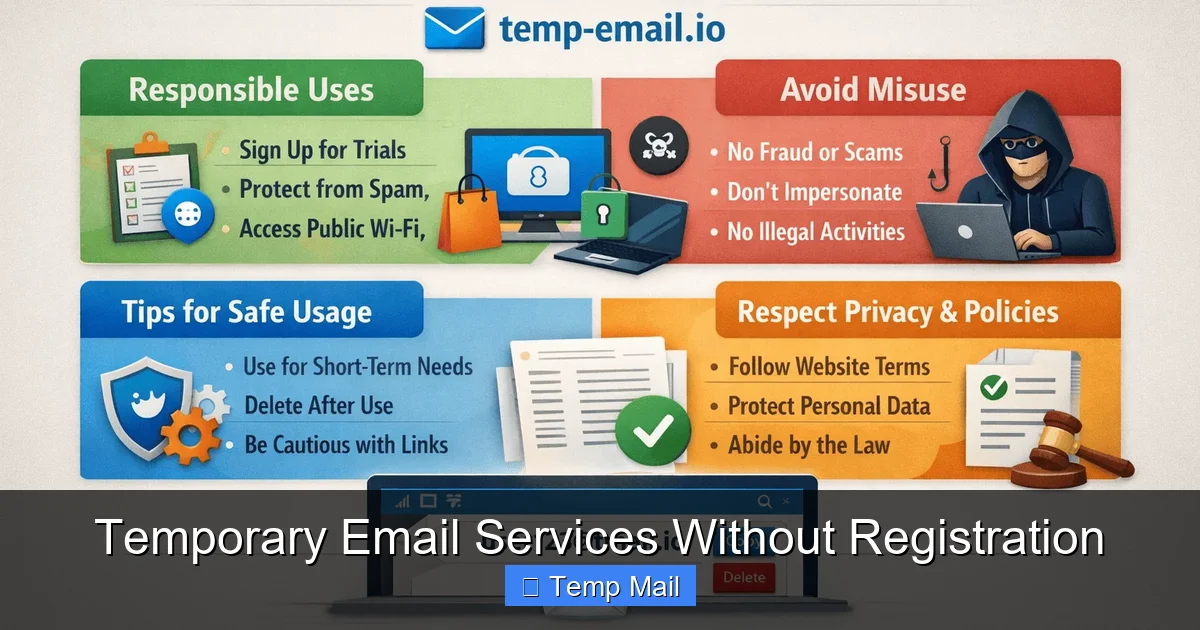
    Temporary email services without registration provide instant, disposable inboxes that require zero personal details or account creation. They are perfect for protecting your primary email from spam, verifying one-time accounts, and testing online forms—all with complete anonymity and immediate access. These tools offer a simple, zero-commitment way to manage digital interactions where you don’t need long-term communication.

    Have you ever hesitated to sign up for a free ebook, a discount code, or a new app because it meant handing over your primary email address? You know the drill: you hand it over, and suddenly your inbox is flooded with newsletters, promotional offers, and, worst of all, potential phishing attempts. This is where the beautiful, no-fuss concept of temporary email services without registration comes in. It’s a tool that feels almost too simple to be true: you click a link, get a random email address, and can start receiving emails in a browser-based inbox seconds later. No name, no password, no two-factor authentication, no recovery questions. Just pure, unadulterated digital anonymity for a brief moment in time.

    This isn’t about being secretive; it’s about being smart and in control of your digital footprint. In a world where data is currency and every online interaction can lead to a lifetime of targeted advertising or data breaches, these services act as a digital condom—a protective barrier for your most personal contact point. They embrace the philosophy of “minimum viable data”: you provide nothing, so there’s nothing to leak, sell, or misuse. Let’s dive deep into how these services work, why they’re essential in your online toolkit, the best options available, and the critical rules for using them safely and effectively.

    Key Takeaways

    • True Anonymity: These services generate random email addresses without linking them to your identity, ensuring no personal data is ever stored or required.
    • Zero Registration Friction: Access an inbox instantly by visiting a website—no forms, passwords, phone numbers, or recovery emails needed.
    • Inherently Disposable: Addresses and their contents are automatically deleted after a short period (usually 10 minutes to 24 hours), leaving no digital footprint.
    • Primary Defense Against Spam: Use them for any website or service you don’t fully trust to keep promotional and phishing emails away from your permanent inbox.
    • Ideal for Testing & Verification: Perfect for developers testing email workflows, or users verifying accounts on platforms where using a real email feels excessive or risky.
    • Not for Sensitive or Long-Term Use: Never use these for banking, official contracts, or any account where recovery or legal proof of ownership is necessary.
    • Security & Privacy Trade-offs: While they hide your identity, the email content is often unencrypted and accessible by the service provider during its short lifespan.

    How Do “No-Registration” Temporary Emails Actually Work?

    The magic of these services lies in their deliberate simplicity and their architectural detachment from user identity. Unlike traditional email providers like Gmail or Outlook, which are built around persistent user accounts, temporary email services are designed for ephemerality. Here’s a breakdown of the seamless, behind-the-scenes process.

    The Instant Inbox Generation

    When you visit a site like Temp-Mail.org or 10MinuteMail.com, the server immediately generates a completely random email address. This address is typically a jumble of letters and numbers (e.g., [email protected]) paired with the service’s domain. This address is then mapped to a unique, temporary inbox session on their backend, often identified by a long, random session ID stored in your browser’s cookies or local storage. There is no “you” in this equation—only a random string of characters pointing to an inbox.

    Receiving and Viewing Emails

    Any email sent to that random address is routed to the service’s mail servers, recognized as belonging to that specific session, and displayed in the web interface you have open. The interface is usually a simple, clean list of received messages. You can click on one to view its full content, including any HTML formatting, links, and attachments (though attachment support varies). The entire system is stateless from a user identity perspective; the service doesn’t know or care who you are, only that this browser session is watching this specific inbox.

    The Inevitable Cleanup

    The defining feature is the automatic deletion timer. From the moment the inbox is created, a countdown begins—often 10 minutes, 1 hour, or 24 hours. Once that timer expires, the server permanently wipes the inbox and the email address from its active pool. In many cases, the address may be recycled and given to a new user. This ensures that any data stored within the service is transient and cannot be accessed later, even by the service provider after deletion (though their logs may retain metadata briefly, depending on their privacy policy).

    Top Contenders: Best Temporary Email Services Without Registration

    Not all temporary email services are created equal. While the core function is similar, user experience, domain variety, inbox lifetime, and ad-load differ significantly. Here are some of the most reliable and user-friendly options that truly require zero sign-up.

    Temporary Email Services Without Registration

    Visual guide about Temporary Email Services Without Registration

    Image source: techdaring.com

    1. Temp-Mail.org

    Often considered the gold standard, Temp-Mail.org offers a clean, ad-light interface. It provides multiple domain options (like @temp-mail.org, @tmpmail.org, @tmpmail.net), which is useful if a site blocks a known temp mail domain. The default inbox lifetime is a generous 24 hours, extendable with a click. It also has a browser extension for quick access. The lack of aggressive pop-ups and its straightforward design make it a top choice for both beginners and power users.

    2. 10MinuteMail.com

    The original pioneer in this space. As the name suggests, its default timer is 10 minutes, which is perfect for quick, one-time verifications. The interface is stark and functional, focusing purely on the task. It’s incredibly fast and reliable. If you need an email for a process you’ll complete in under ten minutes (like a simple forum registration), this is the no-nonsense tool for the job. The address can be extended in 10-minute increments if needed.

    3. Guerrilla Mail

    This service adds a layer of useful functionality. Alongside its disposable email, it offers a basic “send email” feature (allowing you to reply or send from the temp address while it’s active), a password manager for the session, and the ability to choose from several domain names. Its inbox stays alive as long as you keep the browser tab open, giving you manual control. It’s a bit more feature-rich but comes with more prominent ads.

    4. Maildrop.cc

    Maildrop prides itself on simplicity and privacy. It has a very clean design, no password requirement, and a 24-hour inbox lifespan. A key feature is its spam filter, which automatically moves suspected bulk or promotional emails to a “Spam” folder within the temp inbox. It also allows you to create a custom alias (e.g., [email protected]) for the duration of the session, which can be easier to remember than a random string.

    5. Dispostable.com

    Dispostable works slightly differently: you *choose* your own disposable address from a list of available ones on their domain (e.g., [email protected]). You don’t even need to visit the site first; you can give out the address and then check it on their site later. The inbox is cleared after 60 days of inactivity, which is much longer than most, but it still fits the “no registration” model as you never create an account.

    Practical Use Cases: When and Why to Use a Temp Mail

    Knowing *how* to use these tools is one thing; knowing *when* to use them is what makes them powerful. Here are the most common and smart scenarios for deploying a temporary email.

    Temporary Email Services Without Registration

    Visual guide about Temporary Email Services Without Registration

    Image source: webtechsolution.org

    Protecting Your Primary Inbox from Spam

    This is the numero uno use case. You’re about to download a free template, sign up for a webinar, or get a discount from a retailer you’re not sure you’ll shop with again. Using your real email guarantees a newsletter subscription you’ll forget to cancel. Using a temp mail gets you the download link or coupon code instantly, and the inbox vanishes before the first promotional email can even arrive. It’s a preemptive strike against digital clutter.

    Bypassing “Email-Required” Access on Websites

    Many blogs and news sites gate their content behind an email sign-up (“Subscribe to our newsletter to read this article”). Instead of compromising your real address, use a temp mail. You’ll get the one-time access link, read the article, and the temp inbox will die before the next “weekly digest” email is sent. You get the content you want without the long-term commitment.

    Testing Sign-Up and Email Flows (For Developers & Marketers)

    If you’re building a website or app, you need to test what happens when a user signs up, requests a password reset, or receives a notification email. Creating dozens of real Gmail accounts is a hassle. Temp mail services let you generate a new, clean inbox for each test case with a single click, allowing you to verify email content, formatting, and delivery speed effortlessly and anonymously.

    Creating Anonymous or Burner Accounts

    For forums, comment sections, or platforms where you want to participate without tying the activity to your main identity, a temp email is perfect. You create an account, participate as needed, and when you’re done, the account becomes essentially unrecoverable because the email address no longer exists. This is useful for whistleblowing, sensitive discussions, or just maintaining a clear separation between your personal and hobbyist online lives.

    Avoiding Data Harvesting and Profiling

    Every time you enter your email on a website, you’re feeding the data harvesting machine. Companies build sophisticated profiles based on the sites you visit and the emails you use. By consistently using a different, disposable address for each new service, you fragment your digital profile, making it far less valuable and harder to track your cross-platform behavior. It’s a small act of data sovereignty.

    Critical Security and Privacy Considerations

    While incredibly useful, temporary email services without registration are not a panacea. Understanding their limitations is crucial for using them safely and avoiding pitfalls.

    Temporary Email Services Without Registration

    Visual guide about Temporary Email Services Without Registration

    Image source: atempmail.com

    The Illusion of Security: It’s Not Encrypted

    Most of these free services do not use end-to-end encryption. The emails exist in plain text on their servers during their short lifespan. While the chance of someone targeting your specific random inbox is low, it’s not zero. The service provider themselves could, in theory, read the content. Therefore, never use a temporary email for transmitting sensitive personal information: passwords, credit card numbers, Social Security numbers, or confidential documents. Treat it like a public postcard, not a sealed letter.

    No Account Recovery, No Sender Verification

    If you need to reset a password for an account you signed up with a temp email, you are permanently locked out. The service cannot “retrieve” your old inbox or forward emails after deletion. Similarly, you cannot prove to a third party that you “own” that email address at a later date. This makes temp mail unsuitable for any account where future access is important, such as banking, primary cloud storage, or main social media profiles.

    Domain Blocking and Reliability

    Many websites and platforms actively maintain blocklists of known temporary email domains. If you try to sign up with @temp-mail.org, the site may reject it outright. This is why services that offer multiple domain options (like Temp-Mail.org) have an advantage. Always check if the email is accepted during the sign-up process. If it’s blocked, you may need to try a different service’s domain or, ultimately, use a real email.

    Potential for Abuse and Blacklisting

    Because they are anonymous and disposable, these services are frequently used for spam, fraud, and creating malicious accounts. As a result, the domains themselves can get blacklisted by major email providers like Gmail or Outlook. If you use a temp mail to sign up for a legitimate service, that service’s welcome email might get rejected or sent to spam by the recipient’s server because the sending domain (the temp mail service) has a poor reputation. This is a key reason why some sites block them entirely.

    Best Practices and Ethical Guidelines

    To get the most out of these tools while staying safe and ethical, follow these simple but vital rules.

    The Golden Rule: One Service, One Purpose

    Don’t reuse the same temporary email address across multiple unrelated sites. The whole point is compartmentalization. If you use [email protected] for both a sketchy software download site and your LinkedIn profile (which you shouldn’t), you’ve just linked those two activities together. Generate a fresh, random address for each new website or service you encounter.

    Check the Inbox Lifespan

    Before you start a process that might take time (like waiting for a confirmation email that could arrive in 15 minutes), make sure the inbox’s timer is long enough. If you’re on a 10-minute service and the email is delayed, you’ll lose it. Opt for a 1-hour or 24-hour service for anything that isn’t instant. Most services allow you to extend the timer manually—use that feature if you’re still waiting.

    Never Use for Critical Accounts

    Repeat after me: no banking, no primary email recovery, no government services, no main cloud storage, no job applications. The risk of permanent lockout is too high. For anything where losing access would cause significant financial loss, legal trouble, or data loss, use a permanent, secure email address you control.

    While rare, some temporary services support attachments. Be extremely cautious with downloaded files from an anonymous source. They could contain malware. Similarly, links within the temp email should be treated with the same suspicion as any link in a spam email. Hover over them to check the actual URL before clicking. The anonymity of the sender means you have zero trust baseline.

    Respect Website Terms of Service

    Using a temp mail to circumvent a website’s requirement for a “real” email is often against their Terms of Service. While you likely won’t get sued for downloading a free ebook this way, it could result in your account being banned if detected. Use your judgment. For low-stakes content access, it’s fine. For paid services or platforms you want to engage with long-term, be honest and use a real email.

    The Future of Ephemeral Communication and Your Digital Hygiene

    Temporary email without registration is more than a convenience; it’s a fundamental tool for modern digital hygiene. As data privacy concerns grow and regulations like GDPR and CCPA give users more rights, the concept of minimal data disclosure becomes a powerful act of resistance. These services embody the “right to be forgotten” in a proactive way—you forget before you even begin.

    Looking ahead, we may see these services integrate more deeply with privacy-focused browsers and VPNs, or even become a standard option within password managers. The demand is clear: users want to interact online without leaving a permanent trail. While they won’t replace your primary email for daily communication, they are the perfect Swiss Army knife for the hundreds of minor, one-off interactions that populate our digital lives. By adopting the habit of asking “Do I need to give my real email for this?” and then using a disposable alternative when the answer is “no,” you take a significant, practical step toward controlling your online identity and protecting your main inbox from the relentless tide of digital noise.

    Frequently Asked Questions

    Are temporary email services without registration safe to use?

    They are safe for their intended purpose—receiving non-sensitive verification emails—but are not secure for private communication. The content is not encrypted on the server, and the inbox is publicly accessible to anyone with the URL during its lifetime. Never use them for passwords, financial info, or private messages.

    How long does a temporary email inbox last?

    It varies by service. Common lifetimes are 10 minutes (10MinuteMail), 1 hour, or 24 hours (Temp-Mail.org, Maildrop.cc). Some services keep the inbox alive as long as you keep the browser tab open. Always check the specific timer for the service you are using.

    Can I send emails from a temporary address?

    Some services like Guerrilla Mail offer a limited “send” function, but it’s not a standard feature. Most are receive-only. Even when sending is possible, the sender’s identity is still anonymous, and the “from” address is the temporary one, which many receiving servers may flag as spam.

    Is it legal to use a disposable email address?

    Yes, it is completely legal to use a temporary email address. However, using it to commit fraud, harassment, or to violate a website’s Terms of Service is illegal. The tool itself is neutral; its legality depends on how you use it.

    What’s the difference between this and a regular anonymous email service?

    The key difference is the complete lack of registration. Regular anonymous email services (like ProtonMail) still require you to create an account with a username and password, even if they don’t ask for personal details. Temporary email services require zero credentials—you get an inbox just by visiting a webpage.

    What happens if I need to recover an account linked to a temporary email?

    You cannot. Once the temporary inbox is deleted, the email address is gone forever. Any account created with that address will be permanently inaccessible because you cannot receive password reset links. This is why you must only use temp mails for accounts you don’t care about losing.

  • Top Temp Email Providers for Developers

    Top Temp Email Providers for Developers

    Temp email providers are essential tools for developers, offering disposable inboxes to avoid spam, test email flows, and automate sign-ups without compromising personal or work addresses. This guide reviews the top services based on API reliability, privacy standards, and developer-friendly features. Choosing the right provider depends on your specific use case, from quick one-off tests to large-scale QA automation.

    As a developer, you’ve likely been there: you need to test an email-sending feature, sign up for a third-party API that requires email verification, or create dozens of test accounts for QA. Using your real email address is a one-way ticket to a lifetime of spam and a cluttered inbox. This is where temporary, disposable email services become not just useful, but absolutely essential tools in your development toolkit.

    But not all temp email providers are built with developers in mind. Some are designed for casual users wanting a one-time inbox, lacking APIs, automation features, or reliable uptime. Others may have poor privacy practices or use domains that are instantly blacklisted by major services. Your choice can mean the difference between a smooth, automated testing pipeline and a frustrating, manual chore.

    This comprehensive guide cuts through the noise. We’ll explore why developers specifically need these services, the critical features to evaluate, and dive deep into the top providers that offer robust APIs, developer-friendly documentation, and the reliability required for professional workflows. Whether you’re building a startup MVP or maintaining a large-scale enterprise system, understanding this landscape is crucial.

    Key Takeaways

    • Temp emails solve real problems: They protect your primary inbox from spam during development, testing, and automated account creation.
    • API access is critical: For automation and testing, prioritize providers with robust, well-documented REST APIs.
    • Privacy laws matter: Choose services compliant with GDPR and similar regulations, especially for handling user data in tests.
    • Not all providers are equal: Free tiers often have limits on messages, domains, or API calls; evaluate based on your project’s scale.
    • Use cases vary widely: From a single GitHub sign-up to load testing email systems, match the provider’s strengths to your task.
    • Beware of blacklisting: Some disposable domains are blocked by major platforms (e.g., Google, Facebook); verify compatibility first.
    • Integration is key: The best providers offer SDKs for popular languages (Python, JavaScript, etc.) and seamless CI/CD pipeline integration.

    Why Developers Need Dedicated Temporary Email Solutions

    The need for temporary email in development isn’t about hiding activities; it’s about efficiency, security, and cleanliness. Let’s break down the core scenarios where these tools are indispensable.

    1. Testing Email-Dependent Features

    Your application sends transactional emails—password resets, welcome messages, notifications. How do you test these flows without spamming real users or polluting your dev environment? A disposable inbox provides a clean slate. You can trigger an email, check its content and formatting in the temp inbox, and discard the address afterward. This is fundamental for unit and integration testing.

    2. Automating Account Creation and Sign-Ups

    Many SaaS platforms, social logins, and third-party tools require email verification. When writing scripts to onboard test users, you need a way to generate unique, verifiable email addresses programmatically and access the confirmation links. Manual copy-pasting from a web interface doesn’t scale. An API-driven temp email service automates this entire process.

    3. Avoiding Spam and Protecting Privacy

    Using a personal or company email for sign-ups on unfamiliar platforms is risky. It exposes you to data breaches and guarantees promotional spam. A disposable address acts as a firewall. If the service is shady or sells data, you simply delete the address. For developers working with client data or under compliance regimes like GDPR, this segregation is a best practice.

    4. QA and User Acceptance Testing (UAT)

    QA teams need to simulate multiple user journeys, often requiring separate accounts. Creating these with a central team email is messy and insecure. Providing testers with a pool of disposable addresses allows for isolated, realistic testing scenarios without administrative overhead.

    Essential Criteria for Evaluating Developer-Focused Temp Mail Services

    Before we list providers, you must know what to look for. A service that’s great for a one-time coupon code might fail miserably in a CI/CD pipeline. Here are the non-negotiable features for professional use.

    Top Temp Email Providers for Developers

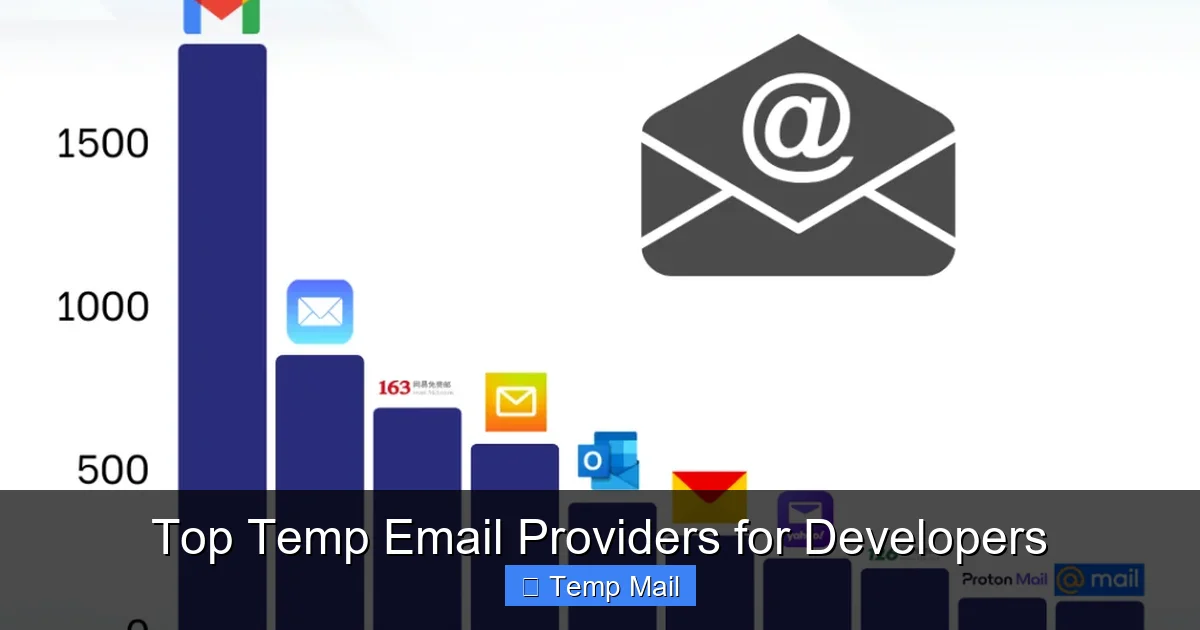
    Visual guide about Top Temp Email Providers for Developers

    Image source: anonymmail.net

    API Reliability and Documentation

    This is the top priority. The API should be stable, fast, and well-documented. Look for:

    • RESTful endpoints for creating inboxes, fetching messages, and deleting addresses.
    • Webhook support to push new message notifications to your server, eliminating constant polling.
    • SDKs and code examples in your stack (Node.js, Python, Go, Java, etc.).
    • Rate limits that match your needs—some free tiers are too restrictive for automated testing.

    A poorly documented or flaky API will cost you more time in debugging than it saves.

    Domain Reputation and Blacklist Avoidance

    This is a silent killer. If the provider’s domains (e.g., @mailinator.com, @temp-mail.org) are on the blocklists of services like Google, Microsoft, or Facebook, your verification emails will never arrive. Always test with your target platforms first. Some providers offer custom domain features or a wider range of less-known domains to mitigate this risk.

    Inbox Control and Message Handling

    How do you interact with received messages?

    • Can you retrieve the full HTML and plain-text body?
    • Are attachments supported?
    • Is there a way to wait for a specific message (e.g., a verification email) with a timeout?
    • Can you extract links or specific tokens from the email content via the API?

    Granular control is necessary for automating actions like clicking verification links within your test scripts.

    Privacy, Data Retention, and Compliance

    Even though the emails are temporary, the service provider handles data. Review their privacy policy.

    • Data Retention: How long are emails stored? 10 minutes? 1 hour? 1 day? For testing, short retention is fine, but ensure it’s long enough for your workflow.
    • Compliance: Are they GDPR compliant? Do they process data in jurisdictions that affect your project? This matters less for anonymous test data but is critical if you’re simulating real user PII.
    • Encryption: Is data in transit (HTTPS) and at rest encrypted?

    Scalability and Pricing Model

    Free tiers are great for starting, but assess the upgrade path.

    • What are the limits on inbox creation per day/hour?
    • Are there costs per API call, per inbox, or per message retrieved?
    • Does pricing scale linearly, or are there enterprise plans with dedicated support and higher throughput?

    For a small project, a free tier might suffice. For a platform with automated regression tests running nightly, you’ll need a paid plan with high limits.

    Top Temp Email Providers for Developers: A Detailed Review

    Based on the criteria above, here are the leading providers that consistently serve the developer community well. Each has a unique strength.

    Top Temp Email Providers for Developers

    Visual guide about Top Temp Email Providers for Developers

    Image source: tenmostsecure.com

    1. Temp-Mail (temp-mail.org)

    Temp-Mail is often the first name that comes to mind for developers due to its straightforward API and reliable free tier. It’s a solid all-rounder.

    Key Features:

    • API: Offers a clear, free API with endpoints to generate addresses, list messages, and fetch content. No authentication required for the free tier, which is rare and convenient.
    • Domains: Uses a large set of domains (e.g., @temp-mail.org, @tempmail.com), reducing the chance of a single domain blacklist affecting all tests.
    • Inbox Lifetime: Messages are stored for up to 48 hours, which is generous for testing.
    • Webhooks: Supports webhooks on paid plans for real-time notifications.

    Developer Experience: The API documentation is simple. A typical workflow: call `/api/email/new` to get an address, use it in your test, then poll `/api/email/{address}/messages` or use a webhook. The lack of required API keys on the free tier lowers the barrier to entry but means you’re subject to stricter rate limits.

    Best For: Quick prototyping, small-scale automated tests, and developers who need a no-strings-attached free API. Not ideal for high-volume, mission-critical automation due to rate limits and lack of guaranteed SLA on the free tier.

    Pricing: Free tier with limits. Paid plans start at ~$5/month for higher rate limits, more domains, and webhook access.

    2. Mailinator (mailinator.com)

    Mailinator is the giant in the space, known for its public inboxes (any address @mailinator.com is publicly viewable). This is a double-edged sword for developers.

    Key Features:

    • Public Inboxes: Any address created is publicly accessible to anyone who guesses it. This means you cannot use it for any private data, but it’s perfect for testing public verification flows.
    • API: Has a robust, paid API (Mailinator Pro) with private inboxes, message retrieval, and webhooks. The public inbox API is limited.
    • Custom Domains: Available on enterprise plans, allowing you to use your own domain (e.g., [email protected]) which drastically improves deliverability and avoids common blacklists.
    • Inbox Lifetime: Messages persist for a few hours on free public tiers; private inboxes on paid plans offer longer retention.

    Developer Experience: For the free public service, you can’t programmatically create a *private* inbox. You’re stuck with the public pool. For serious development, the Pro API is excellent but comes at a cost. The custom domain feature is a major advantage for teams wanting a branded, reliable solution.

    Best For: Testing public-facing sign-up/verification flows where email confidentiality isn’t an issue. Also excellent for teams with budgets who need custom domains and private, API-accessible inboxes.

    Pricing: Free (public only). Pro plans start at ~$39/month for private inboxes and API access. Enterprise for custom domains.

    3. Guerrilla Mail (guerrillamail.com)

    Guerrilla Mail offers a balance of simplicity and some developer-friendly features, with a focus on user privacy.

    Key Features:

    • API: Provides a basic, free API for generating addresses and reading messages. It’s functional but less polished than Temp-Mail’s.
    • Disposable Addresses: You can set the inbox to automatically delete after a certain time or upon closing the browser.
    • No Registration: Entirely anonymous; no account needed.
    • Domain Variety: Uses several domains, helping with blacklist avoidance.

    Developer Experience: The API is usable but the documentation is sparse. It’s a good fallback option. The web interface is also clean if you need occasional manual checks. Reliability is generally good, but it doesn’t have the same ecosystem of SDKs as larger players.

    Best For: Developers who need a simple, anonymous API for low-to-medium volume tests and are willing to handle slightly less polished documentation. Good secondary provider.

    Pricing: Free with rate limits. No clear paid tier for enhanced API; the service is primarily ad-supported.

    4. DropMail (dropmail.me)

    DropMail differentiates itself with a strong focus on real-time, browser-based inboxes and a clean developer API.

    Key Features:

    • API: A well-structured API that allows address generation and message fetching. Supports both polling and webhooks on paid plans.
    • Real-Time Updates: Uses server-sent events (SSE) for instant inbox updates in the browser, which is great for manual debugging.
    • Custom Domains: Available on paid plans, similar to Mailinator.
    • Open Source: Parts of their infrastructure are open source, which can be a trust signal for privacy-conscious devs.

    Developer Experience: The API is modern and intuitive. They provide good examples. The free tier is generous for testing. The open-source aspect means the community can audit their practices, which is rare in this space.

    Best For: Developers who value transparency (open source) and need a reliable API with webhook support. A strong contender for medium-scale automation.

    Pricing: Free tier available. Paid plans start at ~$9/month for higher limits, webhooks, and custom domains.

    5. 10 Minute Mail (10minutemail.com)

    As the name suggests, this service is ultra-short-lived. It’s less about API automation and more about a quick, manual inbox.

    Key Features:

    • Extremely Short Lifespan: Inboxes expire after 10 minutes (extendable). This forces a use-it-and-lose-it mentality.
    • API: Very limited. Primarily a web-based tool. Not suitable for automated testing.
    • Simplicity: Incredibly simple interface. You get an address, use it, and it dies.

    Developer Experience: Minimal. You wouldn’t use this for automated scripts. However, it’s perfect for a developer who just needs to quickly sign up for a documentation site or a tool to download a whitepaper without thinking. It’s a manual tool, not an automation platform.

    Best For: One-off, manual sign-ups where you need an email for 5 minutes and then want it gone forever. Not for testing email flows or automation.

    Pricing: Free, ad-supported.

    Practical Implementation: How to Integrate a Temp Email API into Your Workflow

    Knowing the providers is one thing; using them effectively is another. Here’s how to build a robust, reusable component for your tests.

    Top Temp Email Providers for Developers

    Visual guide about Top Temp Email Providers for Developers

    Image source: htmlemail.io

    Basic Pattern: Create, Use, Clean Up

    The fundamental flow is:

    1. Generate: Call the provider’s API to create a new disposable email address.
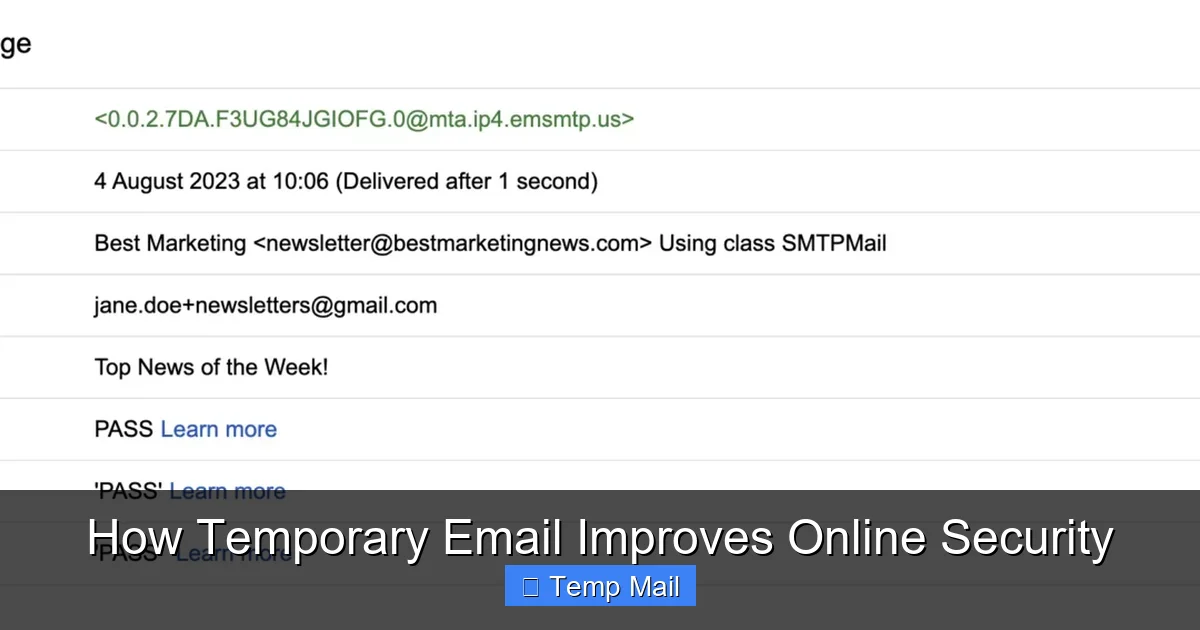
    2. Inject: Use this address in your automated test (e.g., fill a sign-up form via Selenium, Playwright, or an API client).
    3. Wait & Fetch: Poll the API for incoming messages or wait for a webhook. Filter for the expected sender/subject (e.g., “Confirm your email”).
    4. Extract & Act: Parse the email body to find the verification link or code. Use a regex or HTML parser. Trigger the action in your test.
    5. Clean Up: Optionally, delete the address via API if supported, or just let it expire.

    Example: Python Snippet for Temp-Mail

    Here’s a conceptual example using the free Temp-Mail API (no key needed) with Python’s requests library:

    import requests
    import time
    import re
    
    BASE_URL = "https://api.temp-mail.org"
    
    def create_inbox():
        response = requests.get(f"{BASE_URL}/request/email/new")
        response.raise_for_status()
        return response.json()["email"]
    
    def wait_for_email(email, timeout=120, poll_interval=5):
        """Poll for the first email matching a sender pattern."""
        deadline = time.time() + timeout
        while time.time() < deadline:
            response = requests.get(f"{BASE_URL}/request/email/{email}/messages")
            response.raise_for_status()
            messages = response.json()
            for msg in messages:
                # Check sender, subject, etc.
                if "[email protected]" in msg.get("from", ""):
                    return msg
            time.sleep(poll_interval)
        raise TimeoutError("Verification email not received within timeout")
    
    def extract_verification_link(email_body):
        # Simple regex to find http/https links
        match = re.search(r'https?://[^\s]+', email_body)
        return match.group(0) if match else None
    
    # --- Test Workflow ---
    test_email = create_inbox()
    print(f"Using temp email: {test_email}")
    
    # ... your test code that triggers the email to be sent ...
    
    verification_msg = wait_for_email(test_email)
    link = extract_verification_link(verification_msg["body"])
    print(f"Found link: {link}")
    
    # Now use 'link' in your test to complete verification
    

    Tip: Wrap this logic in a class or context manager (e.g., with TempInbox() as email:) to ensure cleanup even if tests fail.

    CI/CD Pipeline Integration

    For automated test suites in Jenkins, GitLab CI, or GitHub Actions:

    • Store the provider’s API key (if required) as a secret variable in your CI environment.
    • Run your end-to-end tests that require email verification as a separate job, with the temp email generation and cleanup as part of the job script.
    • Be mindful of rate limits. A large test suite creating 100 inboxes might exceed free tier limits. Use a paid plan with sufficient capacity.
    • Log the generated email address and any extracted codes to the CI job log for debugging if a test fails.

    Common Pitfalls and How to Avoid Them

    Even with the right provider, developers can stumble. Here are the most common mistakes and their solutions.

    Pitfall 1: Ignoring Domain Blacklists

    The Problem: Your automated test creates a user, but the verification email never arrives because the temp domain is blocked by the service (e.g., Salesforce, AWS). The test times out and fails, but the issue isn’t your code—it’s the email domain.

    The Solution: Before committing to a provider, test its domains with your critical platforms. Send a manual test email to a temp address from your app’s email service. If it doesn’t arrive, that provider is a no-go for that use case. Maintain a list of “approved” domains for your stack. Providers with custom domains (Mailinator Pro, DropMail) solve this entirely.

    Pitfall 2: Hardcoding Wait Times

    The Problem: Your test uses time.sleep(30) to wait for an email. Sometimes it works, sometimes it fails due to network or email service delays. This makes tests flaky and unreliable.

    The Solution: Implement an intelligent poller with a timeout and reasonable interval (as in the example above). Better yet, use webhooks if your provider supports them. Your test should wait for a specific *event* (message received) rather than a fixed *time*.

    Pitfall 3: Using Public Inboxes for Private Data

    The Problem: Using Mailinator’s public inboxes for testing flows that include a user’s real name, password reset tokens, or other PII. Anyone monitoring that public inbox can see this data, creating a security and compliance nightmare.

    The Solution: Never use public, shared inboxes for any data that should be private. Only use providers that offer private, API-exclusive inboxes (Temp-Mail paid, Mailinator Pro, DropMail paid). Assume any address on a public domain is visible to the world.

    Pitfall 4: Overlooking Rate Limits in Production-Like Tests

    The Problem: Your load test script spawns 500 virtual users, each creating a temp inbox. The provider’s free API rate limit is 10 requests/minute. Your test grinds to a halt with 429 errors.

    The Solution: Model your test’s email creation pattern against the provider’s rate limits. For large-scale tests, you need a paid plan with high throughput. You might also need to throttle your test creation or use a pool of pre-generated addresses.

    The Future of Disposable Email in Development

    The landscape is evolving. Here’s what to watch for.

    Rise of Custom Domain as a Standard

    As blacklists become more aggressive, the ability to use your own domain (e.g., @tests.yourcompany.com) is transitioning from a luxury to a necessity. Expect more providers to include this in mid-tier plans. It offers full control over reputation and deliverability.

    Deeper CI/CD and DevOps Integration

    We’ll see more official, maintained SDKs and plugins for testing frameworks (Jest, Pytest, Cypress) and CI tools. Imagine a Jest matcher like await expect(email).toReceive('Welcome Email') that handles all the polling and parsing under the hood.

    Enhanced Privacy and Compliance Automation

    With regulations tightening, providers will likely offer more granular data residency controls and automated data deletion schedules that sync with your test lifecycle. They may also provide audit logs for compliance证明 (proof) that test data was ephemeral.

    AI-Powered Email Parsing

    Instead of brittle regexes to find verification links, APIs might return structured data: "verification_url": "...", "confirmation_code": "ABC123". This would make integrations far more robust against minor template changes in the sent emails.

    Frequently Asked Questions

    Is using a temp email for development legal?

    Yes, absolutely. Using disposable email addresses for testing, QA, and protecting your primary identity is a legitimate and common practice. The legal issues arise only if you use them for fraudulent activities, which is unrelated to development work.

    What’s the biggest security risk with temp email APIs?

    The primary risk is using a provider with poor security practices, potentially exposing your test data or API keys. Always use HTTPS, choose reputable providers with clear privacy policies, and never use temp emails for real user data or password reset flows in production.

    Can I use temp emails for Gmail or Facebook sign-ups?

    Often, no. Major platforms like Google and Facebook aggressively block common disposable email domains. You must test with your specific target platform. If the verification email never arrives, the domain is likely blacklisted. Using a provider with custom domains is the only reliable workaround.

    Should I pay for a temp email service as a solo developer?

    It depends on your needs. For occasional manual sign-ups, free services are fine. For any automated testing, CI/CD integration, or if you hit free tier limits, a low-cost paid plan (~$5-$15/month) is a worthwhile investment for reliability, higher rate limits, and webhook support.

    How do I handle attachments in temp emails programmatically?

    < p > Most developer-focused APIs (like Temp-Mail or Mailinator Pro) return attachment metadata (filename, size, content-type) and often a URL to download the file. You can then use a standard HTTP client to fetch the attachment. Check the provider’s API docs for the exact structure, as not all support attachments equally well. < /p >

    What’s the best practice for cleaning up temp inboxes?

    If the provider offers an API endpoint to delete an inbox, call it at the end of your test suite or in a teardown function. If not, rely on their automatic expiration policy (e.g., 24-48 hours). For high-volume testing, choosing a provider with a short retention period and no manual cleanup required is simplest.

  • Temp Mail Tricks Everyone Should Know

    Temp Mail Tricks Everyone Should Know

    Temporary email services are powerful tools for navigating the modern web, far beyond just avoiding spam. This guide reveals practical tricks to bypass mandatory sign-ups, test applications safely, and shield your primary inbox from clutter and phishing. Discover how to leverage disposable emails for one-time downloads, privacy protection, and even developer workflows. Master these techniques to take control of your online identity and inbox hygiene.

    Let’s be honest: your email inbox is a war zone. Every day, it’s bombarded with newsletters you never read, promotional blasts from a store you shopped at once, and the ever-present threat of phishing scams. What if I told you there’s a secret weapon, a Swiss Army knife for your digital life, that can instantly declutter your inbox and reclaim your privacy? That tool is the temporary email—or temp mail—and you’re probably only using a fraction of its power.

    Most people think of temp mail as a simple spam filter: a way to sign up for that sketchy forum or download a PDF without getting added to a million mailing lists. And that’s a great start! But these disposable email services are packed with advanced tricks that can save you time, protect your identity, and even help you build software. Whether you’re a casual internet user, a privacy-conscious individual, or a developer, there’s a temp mail hack here for you. Forget everything you know; it’s time to become a master of the disposable inbox.

    Key Takeaways

    • Bypass Mandatory Sign-Ups: Use temp mail to access gated content, PDFs, or forums without committing your real email to a marketing list.
    • Create a Spam Firewall: Isolate all non-essential online interactions (newsletters, forums, one-off purchases) to a disposable address, keeping your primary inbox pristine.
    • Test Applications & Services: Developers and QA testers can use temp mail to automate email verification steps during app testing cycles without polluting real inboxes.
    • Enhance Privacy & Anonymity: Reduce your digital footprint by using a different disposable address for every new website or service, making it harder to profile you.
    • Access Time-Limited Offers: Snag free trials, beta access, or downloadable resources that require an email sign-up, then let the temp mail expire after use.
    • Identify Phishing & Scams: Use a temp mail to check if a suspicious offer or website is legitimate; if they spam the disposable address, you’ve confirmed its low trustworthiness.
    • Manage Multiple Accounts: Create separate, anonymous identities for different hobbies, forums, or comment sections without cross-contaminating your identities.

    1. The Art of Bypassing Mandatory Sign-Ups (The “I Just Want the File” Trick)

    You’ve been there. You click a link to a valuable white paper, a free template, or a piece of software. You’re ready to download, but a pop-up slams in your face: “Enter your email to download.” You sigh, type in your real address, and moments later, your inbox is flooded with a “welcome” series you never asked for. This is where your first and most powerful temp mail trick comes into play.

    How to Execute the Bypass Flawlessly

    The process is simple, but doing it right matters. First, open your preferred temp mail service (like Temp-Mail.org, 10MinuteMail, or Guerrilla Mail). A random inbox address is generated instantly. Copy that address. Paste it into the website’s sign-up form. Request the download or access. Now, switch back to your temp mail tab. Often, the download link or access code is delivered directly to the disposable inbox within seconds. Click it. Download your file. Close the tab. The entire digital interaction is now erased. The marketing company has a dead-end email address that will bounce or vanish in 10 minutes to 24 hours. Your real inbox is untouched.

    Pro Tip: For sites that require email verification *before* granting access, this trick is pure gold. The verification email lands in the temp inbox, you click the link to verify, and you’re in. The cycle is complete before the temp address expires.

    Why This Works Better Than “Unsubscribe”

    You might think, “Just unsubscribe later.” But many unscrupulous services make unsubscribe links hard to find or confirm your subscription first, adding you to even more lists. Using a temp mail is a preemptive strike. You never give them a valid, long-term address to begin with. It’s not managing spam; it’s preventing it at the source. This is the foundational trick that makes temp mail indispensable for researchers, students, and anyone who values their attention and inbox space.

    2. Building Your Personal Spam Firewall with Disposable Addresses

    Think of your primary email address as your home’s front door. You wouldn’t give your key to every random store clerk, would you? Yet, we do the digital equivalent every day. The next level of temp mail mastery is using disposable addresses not just for one-off downloads, but as dedicated channels for specific types of online engagement.

    Temp Mail Tricks Everyone Should Know

    Visual guide about Temp Mail Tricks Everyone Should Know

    Image source: techwalls.com

    Creating “Departmental” Email Addresses

    Get creative. Instead of one catch-all temp address, use the naming or filtering features of some services (or just generate new ones) to create purpose-built inboxes:

    • The “Online Shopping” Address: Use this for every e-commerce site, from Amazon to niche boutiques. All order confirmations and promotions go here. If a store gets hacked or sells your data, the spam is confined.
    • The “Social Media & Forums” Address: Sign up for Reddit, Twitter, niche hobby forums, or comment sections with this address. It isolates any potential data breaches or forum spam.
    • The “Newsletter & Blog” Address: Love reading content but hate the promo emails? Subscribe to everything with a dedicated temp mail. Check it once a week for interesting articles, then let it expire. No guilt, no clutter.

    This tactic turns your email strategy from a single, vulnerable point into a segmented, resilient system. Even if one temp mail gets flooded, it doesn’t compromise your other digital activities.

    Integrating with Email Forwarding Services

    For the ultra-organized, combine temp mail with a real email forwarding service like SimpleLogin or AnonAddy (which themselves create aliases). Create a forwarder that sends to your temp address. Now, if the temp address dies, you simply update the forwarder to a new temp address, and all your “departmental” emails follow you seamlessly. It’s a dynamic, self-cleaning firewall.

    3. The Developer’s Secret Weapon: Automated Testing & QA

    Here’s where temp mail goes from consumer hack to professional tool. If you’ve ever built or tested an application that requires email sign-up, you know the pain: you need dozens, even hundreds, of unique email addresses to test user flows, password resets, and notification systems. Manually creating Gmail accounts is a nightmare. This is the domain of the temp mail API.

    Temp Mail Tricks Everyone Should Know

    Visual guide about Temp Mail Tricks Everyone Should Know

    Image source: buydig.com

    Automating the Verification Workflow

    Many advanced temp mail services offer a developer API. Your test script can:

    1. Request a new disposable email address via API.
    2. Automate the sign-up process in your app using that address.
    3. Poll the temp mail API for incoming messages to that specific address.
    4. Extract the verification link or code from the received email.
    5. Complete the flow automatically.

    This entire cycle can run in seconds, 1000 times over, without a human touching a mouse. It’s crucial for continuous integration/continuous deployment (CI/CD) pipelines, load testing, and security auditing.

    Testing Email Deliverability & Spam Filters

    Wondering if your app’s “welcome” email is landing in the spam folder? Send it to a suite of different temp mail addresses from various providers (Gmail, Outlook, Yahoo temp services). Check where it lands. This gives you real, multi-provider deliverability data without risking your company’s domain reputation on real user inboxes. It’s a safe sandbox for email system integrity.

    In an age of data brokers and pervasive tracking, your email address is a golden key to your identity. Every website you sign up for links that address to your activity. The ultimate temp mail privacy trick is to ensure no single persistent identifier connects all your actions.

    Never Reuse a Disposable Address

    The cardinal rule of privacy-focused temp mail use: one website, one address, and then let it die. Do not use the same temp address for your bank, your social media, and your grocery list. If a data breach occurs at Website A, and they have your email “[email protected]”, the hacker can’t use that to search for your accounts on Website B or C because you used a completely different disposable address for each. You shatter the profile they can build.

    Combating Cross-Platform Tracking

    Many ad networks use your email (hashed or not) as a cross-device identifier. By feeding them a unique, ephemeral temp mail for every site you visit, you break their tracking chain. The “you” that browses a tech forum is not the same “you” that reads a cooking blog, in their database. This is a low-effort, high-impact way to gum up the works of the surveillance economy.

    5. Advanced Reconnaissance: Using Temp Mail to Vet Offers & Identify Scams

    Not all temp mail tricks are defensive. Some are proactive intelligence-gathering tools. Before you trust a new service with your real email, use a disposable address as a scout.

    Temp Mail Tricks Everyone Should Know

    Visual guide about Temp Mail Tricks Everyone Should Know

    Image source: noobpreneur.com

    The “Spam Magnet” Test

    Found a “free” webinar, a “lucrative” side hustle offer, or a “too-good-to-be-true” deal? Sign up with your temp mail. If, within 48 hours, that inbox is flooded with unsolicited offers, phishing attempts, or aggressive upsells from unknown sources, you have your answer. The operation is a spam farm. You’ve just protected your real identity from being added to that list. No harm, no foul.

    Monitoring Data Sale Practices

    Some services are transparent about selling your data to partners. Others are nefarious. By using a unique temp mail, you can monitor exactly what happens to that address. If you start getting emails from companies you’ve never heard of, addressed to that specific temp inbox, you have concrete evidence that the original service sells its user list. You can then decide whether to engage with them at all, armed with that knowledge.

    6. Beyond the Inbox: Creative & Niche Applications

    The versatility of temp mail shines in these edge cases.

    Gaming & Beta Access

    Many game studios and app developers offer early beta access in exchange for an email. Use a temp mail to get your Steam key or TestFlight invite. If the beta is a dud, you lose nothing. If it’s great, you can often link a real account later. This also works for grabbing free in-game currency or items from promotional sites.

    Academic & Research Purposes

    Students and researchers can use temp mail to access paywalled academic papers through institutional or trial offers without creating a permanent account. It’s also perfect for signing up to survey panels or research studies where you want anonymity and no long-term contact.

    Bypassing Region Locks (Carefully)

    Some websites or services gate content based on your IP and email domain. While a temp mail alone won’t change your IP, using one from a provider with an email domain associated with another region (e.g., a .de or .uk address) in combination with a basic proxy or VPN can sometimes trick simplistic geo-filters. Note: This may violate terms of service; use ethically and legally.

    Conclusion: Mastering Your Digital Footprint

    The humble temp mail is not a tool for the paranoid; it’s a tool for the pragmatic. In a digital ecosystem designed to harvest your email address as a commodity, taking back control is an act of self-preservation. The tricks we’ve covered—from the basic bypass to developer automation and strategic reconnaissance—represent a shift in mindset. You are no longer a passive participant giving away your keys. You are an architect, designing a smart, compartmentalized, and disposable identity for every corner of the internet.

    Start simple. Use a temp mail for the next PDF you download. Then, create that dedicated “shopping” address. If you’re a developer, explore the API. Layer these techniques. The goal isn’t to live off-grid, but to engage on your terms. Your primary inbox should be a sanctuary for communication with friends, family, and essential colleagues—not a dumping ground for marketing blasts and a honeypot for data miners. So go ahead, generate that disposable address, and take your first step toward a cleaner, more private, and more powerful online life. The tricks are yours; now use them wisely.

    Frequently Asked Questions

    Is using a temp mail legal and ethical?

    Yes, using a temporary email service is perfectly legal. Ethically, it’s a legitimate way to protect your privacy and manage your data. The ethical consideration lies in the intent: using it to avoid legitimate obligations (like a paid subscription) is wrong, but using it to prevent spam from a free service is a reasonable privacy practice.

    Can temp mail services be trusted with my data?

    Reputable temp mail services are designed to be anonymous and do not require personal information. They typically do not store emails after the inbox expires. However, you should avoid using them for highly sensitive communications (like banking or legal documents) and choose well-known providers with clear privacy policies, as the emails are technically accessible to the service provider while active.

    Will websites block temp mail addresses?

    Many popular websites and platforms actively maintain blocklists of known temp mail domains. They do this to reduce fraud, spam, and abuse. If your disposable address is blocked, you’ll receive an error. In this case, you simply generate a new address from a different provider or a less common domain that isn’t on the list.

    What happens to my emails after the temp inbox expires?

    They are permanently deleted from the service’s servers. The address is then recycled and made available to a new user. Any future emails sent to that expired address will bounce. This is why you must retrieve any important verification codes or download links from the temp inbox immediately, before the timer runs out.

    Are there any downsides to relying on temp mail?

    The main downside is impermanence. If you use a temp mail to sign up for a service you later want to keep (like a cloud storage account), you will lose access because you cannot receive password reset emails. It’s also unsuitable for any account where long-term security and recoverability are critical, such as financial or primary communication accounts.

    Can I use temp mail for two-factor authentication (2FA)?

    Technically yes, but it is highly discouraged. Two-factor authentication codes are critical for account security. If your temp mail inbox expires or you lose access before you can enter the code, you could be permanently locked out of the account. Always use a permanent, secure email address or an authenticator app for 2FA on important accounts.

  • Disposable Email for App Testing

    Disposable Email for App Testing

    Disposable email addresses are temporary inboxes that self-destruct after use, making them perfect for app testing. They let QA testers and developers bypass email verification walls without cluttering personal or work inboxes. By using these throwaway accounts, you can efficiently test registration flows, password resets, and notification systems across multiple scenarios without security risks or spam buildup. Integrating disposable emails into your testing workflow saves hours, protects privacy, and ensures cleaner, more reliable test cycles.

    Key Takeaways

    • Eliminate Inbox Clutter: Disposable emails prevent test-related confirmations and marketing spam from polluting your primary inbox, keeping it clean for real communications.
    • Bypass Verification Walls: They allow you to complete email-verified sign-ups, logins, and password resets in apps that require an email, removing a major friction point in testing.
    • Test at Scale: Create numerous unique email addresses quickly to test multi-account scenarios, user onboarding flows, and edge cases without managing real accounts.
    • Enhance Privacy & Security: Shield your personal or corporate email from data breaches and unwanted tracking during tests with unknown or unverified third-party apps.
    • Choose the Right Tool: Select a disposable email service based on API access, inbox longevity, domain reputation, and ease of integration into your automated test scripts.
    • Automate for Efficiency: Use APIs or browser extensions to programmatically generate inboxes and retrieve verification codes, integrating seamlessly into CI/CD pipelines.
    • Know the Limitations: Some advanced apps detect and block disposable domains; always have a fallback plan with a few reputable, long-life domains for critical tests.

    The Hidden Time-Sink in App Testing

    You’re deep in a testing cycle, racing against a deadline. You need to verify the user registration flow for the tenth time today. You fire up the app, enter a new username, and hit “Sign Up.” The screen smiles back: “We’ve sent a verification link to your email. Please check your inbox.”

    And there it is. The pause. The switch to your email client. The hunt for that one specific confirmation email among a mountain of newsletters, receipts, and spam. You find it, click the link, maybe even dig for the email in spam if it’s delayed. You complete the flow, note the success, and move on. But you just lost 5-10 minutes. Multiply that by dozens of test cases, multiple testers, and several release cycles. That’s not testing time; that’s email wrangling time. It’s a silent productivity killer that adds up to days of wasted effort across a team.

    This bottleneck isn’t just about speed. It’s about mental context-switching, breaking your deep focus on the app’s logic to go play email detective. It’s about the gradual pollution of your primary inbox with test artifacts you never wanted. And for teams using shared testing accounts, it’s a security and audit nightmare. What if you could wave a magic wand and make that verification email appear instantly, in a dedicated, throwaway space, with zero cleanup required? That’s not magic. That’s the simple, powerful reality of using a disposable email for app testing.

    Demystifying Disposable Emails: More Than Just “Spam Catchers”

    When people hear “disposable email,” they often think of shady services used to dodge website registrations or post anonymous comments. While that use exists, in the world of software QA and development, disposable email is a precise, professional tool. At its core, a disposable email service provides a temporary email address and a web-based inbox that exists for a short, predefined period—often just 10 minutes to a few hours—or until you manually delete it.

    Disposable Email for App Testing

    Visual guide about Disposable Email for App Testing

    Image source: ai-gen-images.compile7.com

    How They Actually Work

    These services maintain a pool of domains (like @tempmail.demo or @10minutemail.com). When you visit their site or use their API, they generate a random, unique address for you (e.g., [email protected]). Any email sent to that address is captured by their servers and displayed in a simple, public web inbox accessible via a unique URL or session. No password is required because the inbox is tied solely to that randomly generated address and its temporary session. Once the time expires or the inbox is cleared, the address is retired and recycled. There’s no long-term storage, no connection to your identity, and no persistent data.

    Key Features for Testers

    What makes these services valuable for testing isn’t just the temporary aspect. It’s the specific features they offer:

    • Instant Creation: Generate a fresh, valid email address in seconds with a single click or API call.
    • Public Inbox Access: View received emails without logging in, often via a simple, auto-refreshing web page.
    • Auto-Expiry: Inboxes self-destruct, eliminating manual cleanup and preventing accidental reuse of old test addresses.
    • Multiple Domain Options: Good services offer several domains, helping you avoid simple domain-based blocks some apps employ.
    • API Access: For automated testing, robust services provide APIs to create inboxes and fetch emails programmatically, a critical feature for CI/CD integration.

    Why Disposable Emails Are a Non-Negotiable Tool for Modern App Testing

    Let’s get concrete. Why should a serious QA engineer or developer incorporate disposable emails into their standard toolkit? The benefits span efficiency, security, and test quality.

    Disposable Email for App Testing

    Visual guide about Disposable Email for App Testing

    Image source: cdn.pseo.one

    1. Reclaiming Hours of Manual Grind

    Think about every test scenario that requires email interaction: new user registration, “forgot password” flows, email-based two-factor authentication (2FA) setup, invitation links, newsletter sign-up tests, contact form submissions. Each one currently forces a context switch. With a disposable email, you generate an address, plug it into the app, trigger the action, and then simply switch a browser tab to the disposable inbox to retrieve the code or link. No logging in, no searching, no spam folder diving. For a single tester, this might save 30 minutes a day. For a team of 20 testers, that’s over 100 hours a month reclaimed for actual discovery and exploration testing.

    2. Testing “Real-World” User Isolation

    When you use a single shared test account for everything, you create a tangled web of data. Password resets for one test scenario get mixed with invitation links for another. It’s messy and unrealistic. With disposable emails, each test case—or even each test step—can have its own pristine email address. This mimics how real users interact: one account, one primary email. It allows you to test sequences cleanly: register with TempMail A, then use TempMail B to request a password reset for that new account, all without cross-contamination. This level of isolation is crucial for validating complex user journeys.

    3. Protecting Personal and Corporate Privacy

    This is huge. How often are you testing an app from a startup you’ve never heard of? Or a new feature on a platform with questionable data policies? By using your real email, you’re handing over a key to your digital identity. You’re also potentially exposing your company’s domain if you use a work email for testing external apps. A disposable email is a shield. It allows you to fully explore an app’s features—including those that might send marketing emails or track engagement—without a trace back to you or your organization. It’s a fundamental practice for ethical and secure testing.

    4. Streamlining Multi-Account & Load Testing

    Need to test what happens when 50 users are invited to a workspace? Or verify that bulk email notifications are sent correctly? Creating 50 real Gmail or Outlook accounts is not feasible. Disposable email services allow you to spin up dozens of addresses in minutes. You can script this: an automated test creates 50 user accounts via your app’s API, each with a unique disposable email from your provider. Then, another script polls all 50 inboxes to verify the welcome emails were sent. This kind of scalable, realistic testing is impossible without disposable addresses.

    5. Avoiding “Test Fatigue” in Real Inboxes

    Even if you create dedicated “test” email accounts on real providers, they become dumping grounds. Over time, they fill with thousands of irrelevant messages. Managing them becomes a chore. Important test emails get lost. You start to ignore that inbox, defeating the purpose. A disposable system has no legacy. Every session is fresh. You start, you test, the inbox vanishes. There is no “test fatigue” because there is no persistent mailbox to fatigue.

    Choosing the Right Disposable Email Service for Your Workflow

    Not all disposable email services are created equal. Choosing the wrong one can lead to blocked emails, lack of automation, or wasted time. Here’s what to evaluate.

    Disposable Email for App Testing

    Visual guide about Disposable Email for App Testing

    Image source: cdn.pseo.one

    Critical Evaluation Criteria

    • API Availability & Documentation: For any automated testing (Selenium, Cypress, Postman scripts, CI/CD), you need a robust, well-documented API. Look for endpoints to create inboxes, list messages, get message content (HTML/text), and delete inboxes. Check rate limits and pricing for API calls.
    • Inbox Longevity: How long does an inbox live? 10 minutes is fine for a quick manual test. For a complex test suite that runs overnight, you need 24+ hours. Some services offer “extended” or “custom” duration inboxes for a fee.
    • Domain Reputation & Diversity: Some major apps (especially social platforms, banking, or SaaS tools) have sophisticated filters that blacklist common disposable domains. A good provider offers a wide range of domains and rotates them. If your test emails are consistently not arriving, the domain is likely blocked.
    • Message Retention & Display: Can the inbox hold attachments? Does it render HTML emails correctly (crucial for testing styled templates)? Can you view the full raw source? These features matter for thorough validation.
    • Ease of Use & UI: For manual testing, a clean, fast-loading web interface with auto-refresh is a must. Clunky interfaces slow you down.
    • Cost & Limits: Free tiers are great for light manual use. For team or automated use, evaluate paid plans based on number of inboxes, API calls, and duration. Calculate your estimated monthly needs.

    Top Contenders for Different Use Cases

    For Quick Manual Tests & Individuals: Services like Temp-Mail.org, 10MinuteMail.com, or Guerrilla Mail are excellent. They require no sign-up, offer instant inboxes, and have straightforward web interfaces. Perfect for a tester who needs to quickly verify a password reset email.

    For Development & Light Automation: MailSlurp and Mailinator (paid tiers) are industry favorites. They provide powerful REST APIs, SDKs in multiple languages (JavaScript, Python, Java, C#), and offer inboxes that last for hours or days. MailSlurp is particularly developer-friendly with its clear documentation and examples.

    For Enterprise & High-Volume Testing: Kopeechka and Temp-Mail (with API plans) often provide large domain pools and high inbox limits, making them suitable for large-scale load and integration testing where hundreds of addresses are needed. Always test a provider’s deliverability with your specific target application before committing to a large-scale test plan.

    Step-by-Step: Integrating Disposable Emails into Your Testing Workflow

    Knowing why to use them is one thing. Knowing how to weave them seamlessly into your process is where the real efficiency gains happen. Here’s how, from simple manual to fully automated.

    The Manual Tester’s 60-Second Setup

    1. Bookmark Your Provider: Keep a tab open with your chosen disposable email service (e.g., temp-mail.org).

    2. Generate an Address: Click the “Generate New Email” or similar button. Copy the freshly minted address (e.g., [email protected]).

    3. Use in the App: Paste it into the email field of the app you’re testing (sign-up, contact form, etc.).

    4. Trigger & Wait: Complete the action (click “Submit”). Switch back to the disposable email tab. The inbox should auto-refresh. Within seconds or minutes, the email from the app will appear.

    5. Act & Dispose: Click the email to view its content. Extract the verification link or code and use it in the app. Once done, simply close the tab or click “Delete”/“Refresh” to get a new address for the next test. No cleanup needed.

    Automating with APIs: A Python Example

    For regression suites or integration tests, automation is key. Here’s a conceptual Python snippet using a generic API client (like MailSlurp’s) to create an inbox, use it in an API request, and fetch the verification code.


    import mailSlurpClient
    # 1. Create a new disposable inbox
    inbox = mailSlurpClient.create_inbox()
    email_address = inbox.email_address
    print(f"Test email: {email_address}")

    # 2. Use this email in your app's sign-up API call
    # response = requests.post(app_url + "/register", json={"email": email_address, ...})

    # 3. Wait for the verification email (with timeout)
    wait_condition = lambda: len(inbox.list_emails()) > 0
    mailSlurpClient.wait_until(wait_condition, timeout=30000) # wait 30s

    # 4. Get the latest email and extract the code/links
    email = inbox.list_emails()[0]
    email_body = email.body
    verification_code = extract_code_from_body(email_body) # your parsing logic
    print(f"Code: {verification_code}")
    # Use code to complete test...

    This pattern—Create Inbox -> Use Address -> Poll Inbox -> Extract Data—can be wrapped into a reusable function or test fixture for your entire suite.

    Integrating with Browser Automation (Selenium/Cypress)

    For front-end tests that require clicking a link in an email:

    • Selenium: Store the disposable inbox URL (provided by the service upon creation) and navigate to it in a second driver window or tab after triggering the email. Use Selenium to locate and click the verification link, which will likely open in a new tab/window. Switch contexts to complete the flow.
    • Cypress: Due to cross-origin restrictions, directly automating the disposable inbox site can be tricky. A common pattern is to use the service’s API to fetch the email’s content (the verification link URL) within your Cypress test, then use cy.visit() to navigate directly to that link, bypassing the need to interact with the inbox UI.

    Pitfalls to Avoid and Pro Best Practices

    Disposable email isn’t a silver bullet. Using it haphazardly can lead to false negatives or wasted effort. Here’s how to do it right.

    The “Blocked Domain” Nightmare

    The Problem: You’re certain your app sent the email. You wait in the disposable inbox. Nothing arrives. After 10 minutes, you give up and troubleshoot, only to find the email landed in a real inbox you used for a different test. The disposable domain is on the app’s blocklist.

    The Solution: Always have a backup domain. If your primary service’s inboxes aren’t receiving, immediately generate an address from a different provider or a different domain pool within the same provider. For critical applications, maintain a small list of 2-3 reputable disposable email services and rotate through them. For high-stakes testing (e.g., a financial app), consider using a dedicated, long-life domain you control that acts like a disposable service (auto-deletes after 24h) but won’t be on common blocklists.

    Ignoring Email Content & Rendering

    The Problem: You see “1 New Message” in the disposable inbox. You click it, see the verification link, and click it in the app. Success! But you never checked if the email’s branding was correct, if links were broken, if the preheader text was accurate, or if the mobile rendering was usable.

    The Solution: Make email content validation a explicit test step. In your test plan, include: “Verify email subject line matches template X,” “Check that the company logo URL is correct,” “Ensure the primary CTA button is styled with primary color.” Use the disposable inbox’s “view source” or HTML render to inspect these details. A disposable inbox is not just a code delivery mechanism; it’s a full email client for validation.

    Overlooking Two-Factor Authentication (2FA)

    The Problem: You set up a new account with a disposable email. The app then requires a 2FA code sent via email. You get the code, but what about the next time you log in? The 2FA setting is now tied to that disposable address, which will vanish.

    The Solution: For tests involving persistent 2FA settings, use a longer-life disposable address (24h+) and document it. Better yet, for such tests, use a dedicated, semi-permanent test email account on a real provider (like a team Gmail) that is only used for this purpose and is regularly cleaned. Disposable emails are ideal for initial setup and verification flows, but for persistent account features, a more stable test credential is needed.

    Not Cleaning Up API Inboxes (Paid Services)

    The Problem: You use an API to create 100 inboxes for a load test. The test passes. You move on. Those 100 inboxes sit on the provider’s servers until they expire, consuming your plan’s inbox quota and potentially costing you more.

    The Solution: Build cleanup into your test teardown. After your test suite finishes, add a step that calls the provider’s “delete inbox” API for every inbox you created. This is good practice and keeps your quota free for the next run. Most good APIs have this endpoint.

    The Future of Email in Testing: Beyond Disposability

    The landscape is evolving. While disposable emails are the current workhorse, new trends are shaping how we handle email in testing.

    Email Simulation & Mocking Services

    Instead of relying on real, external disposable inboxes, some advanced testing frameworks integrate with services that simulate an entire email server. These services (like MailHog, MailCatcher, or cloud-based Ethereal Email for Node.js) run a local or private SMTP server. When your app “sends” an email during a test, it’s captured by this mock server, never leaving your test environment. You then query this server’s API to get the email content. This offers total control, zero reliance on external domains, and perfect speed. The downside? It requires more setup and may not test the actual deliverability through real-world email providers (Spam filters, etc.). It’s ideal for unit and integration tests where you only care about the email’s content, not its journey.

    Built-in Developer Email Testing Features

    Major cloud platforms are catching on. Services like SendGrid and Mailgun (often used by apps to send emails) offer “sandbox” modes or dedicated testing subdomains. When your app is configured to use their service in test mode, all emails are routed to a special, inspectable inbox within their dashboard, never reaching real users. This is becoming a standard for apps built on these transactional email platforms.

    The Hybrid Approach: Best of Both Worlds

    The most resilient testing strategy will be hybrid. For front-end, end-to-end tests where you need to simulate a real user clicking a link from a real email client, a reliable disposable email service is still king. For backend, API-level tests that just need to verify “an email with subject X was sent,” a mock SMTP server is faster and more reliable. Smart teams will use both, choosing the right tool for the specific test’s needs. The core principle remains: never let real user email addresses be a bottleneck or a security risk in your testing pipeline.

    Conclusion: Embrace the Throwaway, Elevate Your Testing

    The next time you face that familiar “check your email” prompt during a test, pause. Recognize it for what it is: a manual, repetitive, context-breaking hurdle. The solution is elegantly simple. By adopting a disposable email service tailored to your team’s needs—whether for quick manual verification or deep CI/CD integration—you cut that hurdle down to size. You reclaim time, you clean up your digital footprint, and you gain the ability to test email-dependent features at a scale and isolation that was previously impractical. It’s not about being “sneaky” or avoiding real-world conditions. It’s about working smarter, protecting your privacy, and designing a testing process that is as frictionless as the apps you’re striving to perfect. Start today. Generate that first disposable address, use it in your next test case, and feel the difference. That 5-10 minutes you save? That’s the first minute of a more efficient, more thorough, and more serene testing life.

    Frequently Asked Questions

    Are disposable emails safe for testing?

    Yes, for testing purposes they are very safe. They protect your real identity and inbox from potential spam or data breaches from unverified apps. The main “risk” is that the email address itself is public to anyone with the inbox URL, so never use them for sensitive account registrations (like banking) or for any account you intend to keep long-term.

    Can apps detect and block disposable email addresses?

    Yes, many popular apps and services maintain blocklists of common disposable email domains. If your test emails aren’t arriving, the domain is likely blocked. The workaround is to use a service with a diverse, rotating set of domains or a less common provider. For critical testing, you may need to use a dedicated, non-disposable test account on a real email service.

    What’s the best disposable email service for automated testing?

    For automation, prioritize services with a robust, well-documented API and SDKs. MailSlurp and Mailinator (paid plans) are top choices for developers due to their clear API structures, language support (Python, JS, Java, etc.), and features like inbox webhooks. Always test the API’s reliability and speed before building large test suites around it.

    How long do disposable emails last?

    It varies by provider and sometimes by plan. Common durations are 10 minutes, 1 hour, or 24 hours for free tiers. Paid plans often offer configurable longevity, from several hours up to 48 hours or more. For a simple manual test, 10-60 minutes is fine. For overnight automated test runs, ensure you select a service offering at least 24-hour inbox retention.

    Can I use disposable emails for two-factor authentication (2FA) during testing?

    You can, but with caution. The 2FA code will arrive in the disposable inbox, allowing you to complete the initial setup. However, the 2FA method will now be tied to that disposable address, which will expire. For future logins, you would need to either disable 2FA in the account (if possible) or use a more permanent test email for accounts where persistent 2FA is a feature under test.

    Is it legal and ethical to use disposable emails for app testing?

    Absolutely. Using disposable emails for legitimate software testing, quality assurance, and development is a standard, ethical industry practice. It’s a tool for efficiency and security. The ethical line is crossed when using them to deceive, spam, or circumvent legitimate access controls for malicious purposes. In a controlled testing environment with your own applications or with permission to test third-party apps, it is fully appropriate.

  • How Temporary Email Improves Online Security

    How Temporary Email Improves Online Security

    Your primary email address is a high-value target for hackers and spammers. Using a temporary email service acts as a powerful protective shield, creating a disposable buffer between your real identity and risky online interactions. This simple strategy drastically reduces spam, prevents credential stuffing attacks, and minimizes your digital footprint, making it a fundamental tool for modern digital hygiene and security.

    Think about your primary email address. It’s probably the first thing you entered when signing up for social media, online shopping, news subscriptions, or that free software download. It’s your digital home base. But what if that home base has a broken lock, and every time you use it, you’re handing out copies of the key to strangers? That’s the reality for most people. Your main email is a single point of failure. If compromised, it can grant attackers access to reset passwords for dozens of other accounts, from your bank to your cloud storage. This is where a surprisingly simple, often misunderstood tool becomes a security powerhouse: the temporary email.
    Also called disposable or burner email, a temporary email service provides you with a random, functional inbox that lasts for a set period—usually a few hours to a couple of days. Its sole purpose is to receive a single verification email or download link and then self-destruct. While it’s often associated with avoiding newsletter spam, its core security value is far more profound. It’s about segregation, isolation, and controlled exposure. In this guide, we’ll cut through the noise and explore exactly how and why using a temporary email is one of the easiest, most effective habits you can adopt to fortify your online security.

    Key Takeaways

    • Primary Email as a Security Liability: Your main email is the master key to many accounts. A breach there can trigger a catastrophic domino effect across your digital life.
    • Creating a Protective Buffer: Temporary emails provide a sacrificial, disposable address for low-trust interactions, keeping your primary credentials safe and isolated.
    • Spam and Phishing Mitigation: By using a temp mail for sign-ups and downloads, you divert unwanted marketing and malicious emails away from your real inbox.
    • Breaking the Data Broker Chain: They limit the personal data points collected and sold by data brokers, as the disposable address cannot be reliably tied back to your core identity.
    • Not a Universal Solution: Temporary email is for *registration* and *receipt*, not for *account recovery* or *critical communications*. Never use it for banking, primary social media, or essential services.
    • Choosing a Reliable Service: Opt for providers that do not require registration, offer adequate inbox time (at least 24-48 hours), and have a clear privacy policy.
    • Part of a Layered Defense: It’s one vital layer in a comprehensive security posture that includes strong, unique passwords, a password manager, and two-factor authentication (2FA).

    The Primary Email Problem: Your Digital Achilles’ Heel

    To understand the solution, you must first grasp the scale of the problem. Your primary email address is more than an inbox; it’s a unique identifier that ties together your identity, preferences, purchase history, and—most critically—your account recovery mechanisms. When you use it everywhere, you create a detailed, interconnected profile that is immensely valuable to two main groups: data brokers and cybercriminals.

    The Domino Effect of a Single Breach

    Imagine your primary email is [email protected]. You use it for Amazon, your bank, your Google account, your LinkedIn, and your favorite gaming forum. Now, suppose a small, poorly secured forum you signed up to five years ago suffers a data breach. The attackers steal user databases, which often include usernames and passwords. Even if your password was unique, your email address is now in the public domain on the dark web.

    Attackers perform “credential stuffing” attacks: they take that breached email/password pair and try it automatically on hundreds of popular sites (Google, Facebook, Netflix, major banks). If you reused that old forum password anywhere, they’re in. But even if you didn’t, your exposed email is a target for highly convincing “phishing” campaigns. They’ll send emails that look like they’re from your bank or PayPal, using your real email address to lend authenticity, tricking you into clicking a link and entering your credentials on a fake site. Your primary email is the launchpad for these attacks.

    The Spam and Data Broker Feedback Loop

    Every time you enter your primary email on a website, you’re often agreeing—sometimes buried in fine print—to their privacy policy and marketing terms. Many companies sell or share your email address with “partners,” which are essentially data brokers and advertising networks. These brokers aggregate your email with thousands of other data points (IP address, browsing history, purchase behavior) to build a hyper-detailed profile of you. This profile is then sold to advertisers, leading to the targeted spam that somehow knows you were looking at hiking boots last week. More data points mean a more valuable profile, and your primary email is the golden thread that ties all those points together.

    How Temporary Email Disrupts the Attack Chain

    A temporary email service like Temp-Mail, Guerrilla Mail, or 10MinuteMail gives you a random address (e.g., [email protected]) and a public inbox you can check via a web browser. No password, no personal details required. Here’s how this disrupts the security chain at multiple points.

    How Temporary Email Improves Online Security

    Visual guide about How Temporary Email Improves Online Security

    Image source: selzy.com

    1. Containment of Credential Stuffing

    When you use a temp mail to sign up for that low-value forum, the breached database contains [email protected], not [email protected]. An attacker who gets that database has no link to your primary identity. They cannot use that email to launch credential stuffing attacks against your bank or Google account because the email simply doesn’t exist on those platforms. The breach is contained to that one disposable address. It’s a digital quarantine zone. The damage is isolated and meaningless beyond that single service.

    2. Invisibility to Data Brokers

    Data brokers thrive on persistent, cross-site identifiers. A temporary email, by its nature, is short-lived and not tied to a persistent user profile. If a company tries to add [email protected] to their marketing list and sell it, the data is nearly worthless. The address will likely be inactive in a week. It cannot be used to track your behavior across the web over time because it’s not *you*—it’s a temporary alias. This breaks the feedback loop, preventing the creation of a long-term, detailed profile linked to your real identity.

    3. A Spam Trap with an Automatic Expiration Date

    Any marketing emails or spam sent to your temporary address go to an inbox you check once, get the download link or verification code, and then abandon. After 24 hours, the address and all its contents vanish. Spam has nowhere to land permanently. This is in stark contrast to your primary inbox, where unsubscribing is often a chore, and spam filters are a constant battle. With temp mail, you don’t fight spam; you simply let the entire battlefield disappear.

    4. Phishing Defense Through Context and Habit

    Using a temp email trains a powerful mental habit: “I never give my real email to an untrusted source.” This habit itself is a defense. When you receive an email *to your primary account* that claims to be from a service you only ever signed up for with a disposable address, your brain should immediately flag it as suspicious. “I never gave them my real email. This is a phishing attempt.” The very act of segregation creates a natural, intuitive filter for suspicious communications.

    Practical Scenarios: Where to Use a Temporary Email

    The theory is solid, but practical application is key. The rule of thumb is: if you wouldn’t trust the website with your house keys, don’t trust it with your primary email. Here are concrete, everyday situations where a disposable address is the smart, secure choice.

    How Temporary Email Improves Online Security

    Visual guide about How Temporary Email Improves Online Security

    Image source: sss.gov.ph

    Downloading Gated Content (E-books, Whitepapers, Templates)

    You want a free industry report or a handy resume template. The website asks for your email to send the download link. This is a classic lead generation tactic. They will likely add you to a newsletter list you never read. Use a temporary email. Get the link, download the file, and walk away. Your primary inbox stays clean, and your email isn’t added to yet another marketing list.

    Signing Up for One-Time Promotions or Discounts

    That 15% off coupon for a store you’ll probably never shop at again? The sign-up form is just harvesting emails. Use temp mail. You get the discount code, use it if you want, and the promotional spam is sent to an address that will self-destruct. No long-term commitment, no clutter.

    Accessing Public Wi-Fi or Guest Networks

    Many coffee shops, airports, or hotels require you to “create an account” or enter an email to access their Wi-Fi. This is often just a marketing ploy to collect emails. Using your primary email here is a needless risk on an already insecure network. A temporary email provides the required credential without exposing your main address to the venue’s data practices (or to potential eavesdroppers on the network).

    Registering for Forums, Comment Sections, or Gaming Sites

    You want to join a niche forum to ask a specific question or comment on an article. You have no intention of becoming a long-term member. Using your primary email links your real identity to your comments and forum activity, which can be mined for profiling. A disposable alias allows you to participate anonymously and safely, with no lasting digital footprint.

    Testing Services and Avoiding “List-Building”

    You’re evaluating a new SaaS tool or app. They have a free trial but require an email. You might not like it. Use a temporary email to test the waters. If you decide to convert to a paid plan, you can then provide your real, primary email for the official account and billing. This prevents companies from having your email if you never become a customer.

    Critical Limitations: What Temporary Email Is NOT For

    Understanding what a tool *cannot* do is as important as knowing what it can. Misusing a temporary email can create its own set of problems, including permanent loss of access.

    How Temporary Email Improves Online Security

    Visual guide about How Temporary Email Improves Online Security

    Image source: twowheelertraveler.com

    Never for Account Recovery or Critical Services

    This is the cardinal rule. You must never use a temporary email for any service where you need to recover your account, receive official bills, legal documents, or critical notifications. This includes:

    • Banking and Financial Services (bank statements, fraud alerts)
    • Primary Email Accounts (your main Gmail, Outlook, etc. – how would you reset the password?)
    • Government Services (tax filings, vehicle registration, legal notices)
    • Primary Social Media Profiles (your main Facebook, Twitter/X, Instagram)
    • Healthcare Portals (test results, appointment reminders)
    • Utilities and Essential Bills (electric, internet, rent)

    If the service sends something you might *need* in the future, it needs your real, permanent email. Using a temp address here is a recipe for being locked out forever the moment you need to reset a password or verify your identity.

    Reliability and Inbox Time are Not Guaranteed

    Some free temporary email services are supported by ads and may have unreliable uptime. The inbox time can vary (10 minutes to 48 hours). If you need a verification email that might arrive after 2 hours, choose a service that guarantees at least 24-hour inbox retention. Always check the timer on the inbox page.

    Not a Tool for Anonymity or Illegality

    A temporary email provides pseudonymity, not true anonymity. The service provider *can* log IP addresses and timestamps. It should not be used for fraudulent activities, hacking, or evading law enforcement. Its purpose is privacy and security from *corporate data harvesting and spam*, not hiding criminal activity. Legitimate services may also block known disposable email domains to prevent abuse, so you might find some sites won’t accept your temp address.

    Choosing and Using a Temporary Email Service: Best Practices

    Not all disposable email services are created equal. Here’s how to choose a reliable one and use it effectively.

    Key Features of a Good Service

    • No Registration Required: The best services generate the inbox instantly upon visiting the site. If it asks you to create an account, it’s missing the point.
    • Decent Inbox Lifespan: Look for at least a 24-hour guarantee. Some offer 48 hours or even a week for a small fee. 10 minutes is often too short.
    • Simple, Ad-Supported Interface: A clean webpage with a clear inbox display. Ads are expected (they fund the free service), but they shouldn’t be malicious or obstructive.
    • Auto-Refresh Inbox: The inbox should check for new mail automatically every 10-30 seconds so you don’t have to manually refresh.
    • Clear Privacy Policy: A reputable service will state that emails are not logged, are deleted permanently after expiration, and are not used for their own marketing.

    Workflow and Habits for Success

    1. Bookmark Your Go-To Service. Have 1-2 trusted providers bookmarked. Don’t search for “temp mail” every time, as you might land on a phishing site that mimics the service.
    2. Copy the Address Immediately. The random address is your golden ticket. Copy it to your clipboard the moment the page loads.
    3. Paste, Sign Up, Refresh. Paste it into the website’s sign-up form. Submit. Then, switch back to your temp mail tab and watch the inbox refresh for the verification email.
    4. Extract and Go. Click the verification link or copy the code. Complete the action on the original site. You can now close the temp mail tab. The address will expire on its own.
    5. Use a Password Manager. This is crucial. If you use a unique, strong password for that temporary account (stored in your password manager), you can log in later if needed *before the inbox expires*. But remember, once the inbox is gone, you cannot recover the account.

    Building a Layered Security Posture: Temp Mail as One Piece

    A temporary email is a powerful tool, but it’s not a silver bullet. True online security is about layers—a defense-in-depth strategy. Think of it like securing your house: you have a lock on the door (strong password), an alarm system (2FA), and maybe a guard dog (security awareness). The temporary email is like having a separate, easily replaceable mailbox for junk mail, so thieves can’t find your real address.

    The Foundational Layers

    1. Password Manager & Unique Passwords: This is non-negotiable. A password manager (like Bitwarden, 1Password, or KeePass) generates and stores a strong, unique password for every single account. This eliminates the risk of credential stuffing entirely. Even if a site is breached, your other accounts are safe because the passwords are different.

    2. Two-Factor Authentication (2FA): Enable 2FA everywhere possible, especially on your primary email, banking, and social media accounts. Use an authenticator app (Google Authenticator, Authy) or a hardware security key (YubiKey) instead of SMS-based 2FA, which can be intercepted.

    3. Security Awareness & Phishing Training: Learn to spot phishing emails—check sender addresses carefully, hover over links before clicking, be wary of urgent language. Your segregated email strategy (using temp mail for unknowns) trains this instinct.

    4. Regular Software Updates: Keep your operating system, browser, and applications updated to patch security vulnerabilities.

    5. The Temporary Email: Use it as your first line of defense for *new, low-trust registrations*. It prevents your primary email from ever entering insecure or spammy ecosystems in the first place.

    Together, these layers create a resilient profile. A breached password on a shady site (protected by a unique password) is useless. A phishing email to your primary inbox (which you now only use for trusted services) is highly suspicious because you never gave that company your address. Your digital identity becomes fragmented, making it exponentially harder for attackers to build a complete picture to exploit.

    Conclusion: Embracing Proactive Digital Hygiene

    Online security often feels like a game of whack-a-mole against sophisticated, endless threats. It can be overwhelming. But the power of the temporary email lies in its breathtaking simplicity and proactive nature. It’s not a reactive tool to clean up spam after it arrives; it’s a preventative measure that stops the spam and the associated security risks from ever reaching your primary digital identity.

    By consciously segregating your online presence—using a robust, secure primary email only for verified, high-value accounts and a disposable buffer for everything else—you perform a critical act of digital self-defense. You contain breaches, starve data brokers, and build a natural immunity to phishing. It takes two extra clicks at most, but the payoff is a cleaner inbox, a smaller digital footprint, and a dramatically reduced attack surface.

    Start today. Bookmark a reputable temporary email service. The next time a website asks for your email for a “free quote” or a “downloadable guide,” paste in that disposable address instead of your real one. Make it a habit. In the landscape of modern cybersecurity, where your email address is a master key, the temporary email is the smart, simple lockbox you use for every stranger at the door. It’s not about hiding; it’s about protecting what matters.

    Frequently Asked Questions

    Is using a temporary email legal?

    Yes, using a temporary or disposable email service is completely legal. These services operate within the law and are used by millions for legitimate privacy and security purposes, such as avoiding spam and protecting a primary email address from data breaches.

    Can I recover an account if I used a temporary email and forgot the password?

    Almost certainly not. Since the email address is temporary and the inbox is deleted, password reset links will never reach you. This is why you must never use a temporary email for any account where you need long-term access or account recovery, such as banking, primary email, or essential online services.

    Are temporary email services safe, or can they be hacked?

    Reputable services are generally safe for their intended use—receiving a single verification email. However, because the inboxes are public (anyone with the URL can view them), you should never send sensitive personal information (like passwords, SSNs, or credit card numbers) *to* a temporary email address. The risk is in the inbox being accessible, not in the service itself being “hacked” to steal your data.

    Will websites block my temporary email address?

    Yes, many websites and platforms actively block known disposable email domains to prevent spam, fraud, and abuse. If your temp mail is rejected, you’ll need to use a different provider or, for that specific service, your real email if it’s a trusted platform. This is a common limitation.

    What happens to the emails I send from a temporary address?

    Most temporary email services are designed for *receiving* emails only. The ability to send emails is often limited, non-existent, or very restricted (e.g., only to the same temporary domain). They are not meant to be a full replacement for your primary email client for sending correspondence.

    How long do temporary emails typically last?

    The lifespan varies by provider. Common durations are 10 minutes, 1 hour, 24 hours, or 48 hours. Some premium services offer longer periods, up to a week or more. Always check the countdown timer on your inbox page to know exactly when your address and all its emails will be permanently deleted.

  • Temp Mail for Signups Without Revealing Identity

    Temp Mail for Signups Without Revealing Identity

    Tired of spam filling your primary inbox after every online signup? Temporary email services offer a simple, powerful solution by providing throwaway email addresses specifically for website registrations. This allows you to access gated content, claim offers, or create accounts without ever exposing your personal or professional email address, effectively shielding your identity and keeping your main inbox clean and private.

    Key Takeaways

    • Anonymity First: Temp mail creates a complete barrier between your real identity and the websites you visit, using randomly generated addresses that can’t be traced back to you.
    • Spam Prevention: By using a disposable address for signups, all promotional and unwanted emails are sent to the temporary inbox, which self-destructs, keeping your permanent inbox spam-free.
    • Ephemeral by Design: These addresses are short-lived, typically lasting from 10 minutes to a few days, perfectly matching the temporary need of a one-time signup.
    • Provider Variability: Not all temp mail services are the same; factors like inbox duration, domain availability, and ad load vary significantly between providers.
    • Not for Critical Accounts: Never use temp mail for banking, primary social media, or any account requiring long-term access or password recovery, as you will lose access permanently.
    • Detection Exists: Some sophisticated websites actively block known disposable email domains, requiring you to try a different provider or use an alternative method.
    • Tool, Not a Shield: While excellent for privacy during signups, temp mail does not make you anonymous online; your IP and browser fingerprint are still visible to the site.

    What Exactly Is “Temp Mail” and Why Does It Matter?

    Let’s paint a familiar picture. You’re excited to download a new e-book, get a discount code for an online store, or join a forum to discuss a niche hobby. You click the signup button, and the form asks for your email address. You hesitate. You know that entering your primary Gmail, Outlook, or Yahoo address is like handing out a key to your digital home. That company’s newsletter? That’s a guest who might never leave. That data breach? Your email is now in the hacker’s hands. This is where temporary email services swoop in as your privacy bodyguard.

    Temp mail, also called disposable email, throwaway email, or fake email, is a service that provides you with a random, working email address for a short period—usually without requiring any registration or personal information from you. Its sole purpose is to act as a middleman. You use this temporary address to receive the single verification email needed to complete a signup. Once you’ve clicked the link or copied the code, you simply close the browser tab. The address, and all its future spam, vanishes into the digital ether. It’s a fundamental tool for controlling your digital footprint in an era where every click seems to be tracked and monetized.

    The Core Principle: Separation of Concerns

    The genius of temp mail lies in its strict application of the “separation of concerns” principle. Your permanent identity (your real name, your main email, your primary phone number) is reserved for critical, trusted relationships: your bank, your family, your employer, your core social network. Your temporary, transactional identity—facilitated by a temp mail address—is used for everything else: one-off downloads, forum registrations you’ll rarely use, accessing a single article behind a paywall, or testing a new app. This compartmentalization drastically reduces the attack surface for spam, phishing, and data aggregation. If a company using your temp mail address suffers a breach, the hackers get an address that no longer exists, not the gateway to your entire online life.

    How Does Temp Mail Actually Work? A Step-by-Step Breakdown

    The magic isn’t in complex cryptography but in elegant, minimalist engineering. Understanding the workflow helps demystify the process and shows you exactly where your privacy is protected.

    Temp Mail for Signups Without Revealing Identity

    Visual guide about Temp Mail for Signups Without Revealing Identity

    Image source: blog.chatib.us

    Step 1: Instant Address Generation

    You visit a temp mail website like Temp-Mail.org, 10MinuteMail.com, or Guerrilla Mail. The moment the page loads, the backend system automatically generates a unique email address for you. This address is a combination of random characters and the service’s domain (e.g., [email protected]). No account is created. No password is set. No personal details are requested. The address is assigned to your browser session via a temporary session ID or cookie. This is the first and most crucial layer of anonymity: the address itself has no link to you.

    Step 2: Using the Address for Signup

    You copy this generated address and paste it into the signup form of the website you want to access. You fill in any other required details—often a username and password (use a unique one here too!)—and submit the form. The target website now has a record: “User [random username] signed up with email [email protected] on [date/time].” That’s the full extent of its knowledge. It has no idea who is behind the temp-mail.org domain, and it cannot trace it back to your IP address or real identity because the temp mail service does not log or disclose that mapping.

    Step 3: Receiving the Verification Email

    The target website sends a verification email to your temporary address. Here’s where the temp mail service acts as a passive mailbox. The service’s mail server receives all emails sent to its domain, filters them, and displays the ones for your specific session in a simple, often ad-supported, web inbox interface. You refresh the temp mail page, see the new email from “ExampleSite,” open it, and click the verification link or copy the confirmation code. This entire process happens in seconds to minutes.

    Step 4: The Inevitable Expiration

    This is the cleanup phase. After a predetermined time—the service’s “time-to-live” (TTL)—the email address and its entire inbox are purged from the system. The TTL varies: some services offer 10 minutes, others 1 hour, 1 day, or even 7 days. Once expired, that address is gone forever. If you try to use it again later, it will either be reassigned to a new, random user or simply reject incoming mail. This automatic deletion is what makes it “disposable.” There is no archive, no “sent” folder, and no way to recover old emails. This design is a feature, not a bug, ensuring no persistent data trail is left behind.

    The Undeniable Benefits: Why You Should Use Temp Mail for Signups

    Using a temporary email isn’t about doing something shady; it’s about practicing proactive, intelligent digital hygiene. The benefits extend far beyond just avoiding a cluttered inbox.

    Temp Mail for Signups Without Revealing Identity

    Visual guide about Temp Mail for Signups Without Revealing Identity

    Image source: i.dailymail.co.uk

    1. Ultimate Spam and Phishing Shield

    This is the most obvious and valuable benefit. Every newsletter you never read, every “special offer” you didn’t ask for, every malicious phishing attempt disguised as a “account alert” from a site you barely use—all of it is funneled into a self-destructing inbox. Your primary email, the one you use for banking and communicating with loved ones, remains a pristine, trusted channel. The reduction in phishing attempts alone is worth the minor hassle of copying an address. Temp mail acts as a spam firewall at the source.

    2. Unprecedented Privacy and Identity Protection

    Your email address is a primary identifier. Data brokers, advertisers, and even malicious actors use it to link your activity across hundreds of websites, building a detailed profile of your interests, habits, and demographics. By using a different, unlinkable temp address for each new site or service, you fragment your digital identity. The forum you joined about vintage cameras cannot sell your email to a camera company because the email is a dead end. The free trial you signed up for cannot add you to its lifelong marketing list. You are, in essence, withholding the key piece of data that fuels the targeted advertising ecosystem.

    3. Bypassing “Email Gating” for Content Access

    How many times have you wanted to read an insightful article, download a useful template, or watch a webinar recording, only to be stopped by a form demanding your email? This “content gate” is a lead generation tactic. Temp mail lets you politely decline the long-term relationship while still getting the immediate value. You get the PDF, the code, or the video. The marketer gets an email that bounces in 24 hours. It’s a victory for the privacy-conscious consumer seeking information without commitment.

    4. Safe Testing and Account Creation

    Are you a developer testing a new app’s signup flow? A reviewer needing to create an account on a platform to evaluate it? Or just someone wary of giving their real details to a brand-new, unproven service? Temp mail is the perfect sandbox. You can create the account, explore the features, and if anything feels off, you simply abandon the temp address. No risk of your real credentials being phished or your main account being targeted in a breach of that new service. It’s risk-free experimentation.

    5. Reducing Clutter and Mental Load

    A clean primary inbox isn’t just nice to look at; it improves productivity and reduces stress. Important emails from your boss or client aren’t buried under a avalanche of promotional blasts. You don’t have to mentally filter through dozens of “unsubscribe” links every morning. Temp mail ensures that the only emails that land in your permanent inbox are from people and organizations you have a genuine, ongoing relationship with. This creates a more intentional and focused digital communication environment.

    Common and Practical Use Cases for Disposable Emails

    Knowing the theory is one thing; seeing it applied to real-life scenarios makes the value concrete. Here’s where temp mail shines in everyday digital life.

    Temp Mail for Signups Without Revealing Identity

    Visual guide about Temp Mail for Signups Without Revealing Identity

    Image source: shop.skirball.org

    Accessing Gated Content and Lead Magnets

    This is the #1 use case. You see a blog post titled “The Ultimate Guide to SEO in 2024” but the first paragraph is cut off with a “Enter your email to continue reading” overlay. You see a “Free Social Media Calendar Template” offered in exchange for your email. Instead of surrendering your primary address, you generate a temp mail, get the content, and move on. The marketer gets their metric (“a conversion!”), and you get what you wanted without the long-term subscription. It’s a fair exchange that respects your inbox sovereignty.

    Signing Up for One-Time Events or Trials

    You want to attend a free online workshop that requires an account on a webinar platform. You’re interested in a 30-day trial of a premium software suite. You need to register on a local community forum to post in a single thread about a lost pet. In all these cases, the likelihood of you wanting to maintain a permanent, long-term relationship with the platform is low. A temp mail is perfect. You complete the necessary action, and when the trial ends or the workshop is over, there’s no lingering account or email list tied to your real identity.

    Downloading Software from Less-Known Sources

    You’re looking for a specific, niche utility tool that isn’t on the major app stores. The official download page asks for an email to send the license key or download link. Using your main email here risks your address being sold to other software vendors or added to relentless update and upsell lists. With temp mail, you provide a throwaway address, receive the download link, and install the software. The risk of future spam from that source is completely isolated and temporary.

    Creating “Burner” Accounts for Specific Purposes

    Sometimes, you need an account for a very specific, potentially sensitive purpose that you don’t want linked to your main identity. Examples include: posting a candid review on a consumer complaint site, signing a petition you’d rather not be publicly associated with, creating an account on a platform with a controversial reputation, or registering for a service you’re just casually exploring. A temp mail provides the necessary account credential without the personal baggage. It’s a digital alias for a specific task.

    How to Choose the Right Temp Mail Service

    Not all disposable email providers are created equal. Choosing the wrong one can lead to a frustrating experience. Here’s what to look for.

    Inbox Duration and Reliability

    This is the most critical factor. How long does the address last? For a quick verification code, 10-15 minutes might be enough. For a trial that requires a follow-up email with login details, you might need 24 hours or more. Check the provider’s stated policy. Also, reliability matters. Some free services are so popular that their inboxes are constantly overloaded and emails can be delayed or lost. Look for providers with a track record of consistent delivery. Reading recent user reviews can help gauge this.

    Domain Variety and Blockage Avoidance

    Many websites have wised up and maintain public blacklists of common temp mail domains (like @temp-mail.org, @10minutemail.com). If you try to sign up with one of these, the site might reject it instantly. A good provider will offer multiple, less-obvious domain options. For example, some services have dozens of alternative domains (e.g., @trashmail.ws, @dispostable.com, @mailinator.com is famously blocked). If your first choice is blocked, you can quickly generate a new address from a different domain on the same service. Some premium services offer “private” domains that are less likely to be on blacklists.

    User Interface and Features

    The interface should be clean, fast, and intuitive. You don’t want to fight with pop-ups and confusing layouts when you’re in a hurry. Useful features include:

    • Auto-refresh: The inbox automatically checks for new emails.
    • Reply capability: Some services allow you to reply from the temp address (rare, but useful for one-off communication).
    • Custom address prefix: The ability to choose the first part of your address (e.g., [email protected]) for easier recognition.
    • Browser extensions: Some providers offer extensions that auto-fill temp addresses on signup forms.

    Ad Load and User Experience

    Free temp mail services are almost entirely ad-supported. This means you’ll encounter banner ads, pop-ups, and sometimes misleading “download” buttons. This is the trade-off for a free service. Assess how intrusive the ads are. Can you easily see your inbox? Are the ads deceptive? A cluttered, malicious-ad-filled site is not just annoying; it’s a security risk. Sometimes, a low-ad or premium version is worth the few dollars for a cleaner, safer experience if you use the service frequently.

    Important Risks, Limitations, and Critical “Don’ts”

    Temp mail is a powerful tool, but it’s not a magic invisibility cloak. Using it incorrectly can lead to real problems. Understanding its limits is essential.

    1. It Does Not Make You Anonymous Online

    This is the biggest misconception. When you use a temp mail to sign up for a website, the website still sees your IP address (from your internet connection), your browser fingerprint (your browser type, version, screen size, installed fonts, etc.), and your device information. If the site is malicious or logs this data, it can still associate that specific session and account creation event with your network. Temp mail only anonymizes the *email identifier*, not your entire connection. For true anonymity, you would need tools like a VPN and Tor browser in addition to a temp mail.

    2. Websites Actively Block Disposable Domains

    As mentioned, many sites—especially financial platforms, social media giants, and reputable SaaS companies—have systems that automatically reject emails from known disposable domains. If your temp mail is blocked, you have two choices: try a different provider (switch domains), or bite the bullet and use a real email. There is no workaround for a determined site. This is a deliberate design to reduce fraud and spam on their platforms.

    3. The “No Recovery” Rule is Absolute

    If you use a temp mail to sign up for a service and then later need to reset your password, you are locked out forever. The “forgot password” email will be sent to an address that no longer exists. You will lose access to that account permanently. This is why the cardinal rule is: NEVER use temp mail for any account you need to keep long-term. This includes: primary email accounts, social media profiles, banking/financial services, cloud storage, primary phone service accounts, and any subscription you pay for.

    4. Potential for Service Abuse and Blacklisting

    Because temp mail addresses are public and shared (multiple people might get the same random address over time), they can be abused. Someone else might use the same temporary address to spam a service or create fraudulent accounts. This can sometimes lead to the entire domain being blacklisted by major email providers (like Gmail or Outlook), meaning even legitimate emails sent to that temp address might be marked as spam or rejected. While the service will still show you emails in its own inbox, forwarding to a real inbox (if the service offers it) may fail.

    Best Practices: Using Temp Mail Safely and Effectively

    Armed with knowledge, you can now use temp mail like a pro. Follow these best practices to maximize privacy and minimize frustration.

    Pair It with a Unique, Strong Password

    Just because the email is temporary doesn’t mean you should use “password123” for the associated account. The site you’re signing up for may still suffer a breach, and your username/password combo could be sold on the dark web. If you reused that password elsewhere (a common bad habit), the attacker could pivot to your real accounts. Always use a unique, strong password generated by a password manager for every account, even those created with a temp email. This contains the breach to that single, disposable account.

    Have a Strategy: One Provider, Multiple Domains

    Find 2-3 reliable temp mail providers you like. Familiarize yourself with the different domains they offer. When you encounter a blocked domain, switch to your second-favorite provider instead of frantically searching. Some advanced users even maintain a small list of 5-10 less-common disposable domains to try sequentially. This preparedness saves time and avoids the temptation to just use your real email when blocked.

    Know When to Walk Away

    If a website is insistent on blocking all disposable email domains and you feel uneasy about the service anyway, that’s a sign to reconsider. A legitimate business wanting a genuine customer relationship should accept a variety of email domains. Excessive gatekeeping can be a red flag for a site that harvests emails aggressively or has poor data practices. Sometimes, the best move is to not sign up at all. Your privacy is worth more than the freebie or content behind the gate.

    Use Browser-Based Services, Not Apps (For Now)

    Most temp mail services are web-based. Avoid downloading unofficial desktop or mobile apps from these providers unless they come from an official, trusted source (like the Apple App Store or Google Play with millions of downloads and good reviews). Many free temp mail websites are ad-supported and may bundle unwanted software or browser hijackers with their installers. Sticking to the official website in your browser is the safest approach.

    The Final Clean-Up: Mind the Trail

    While the temp email address expires, your activity on the site you signed up for may not. If you created a forum account with a temp email and posted personal details, those posts remain on the forum, associated with your username. The temporary email only protects your *inbox*, not the *content* you generate elsewhere. Be mindful of what you post or upload on any account, regardless of the email used to create it. For maximum privacy, avoid sharing personal information on any account created with a disposable address.

    Frequently Asked Questions

    Is using a temporary email address legal?

    Yes, using disposable email services is completely legal in virtually all jurisdictions. These are legitimate services that provide a communication tool. The legality depends on how you use the account created with it, not the act of using the temp mail itself.

    Can a website trace my temp mail back to my real identity?

    No, a legitimate temporary email service does not log or share the mapping between the disposable address it generates and your IP address or session. The website only knows the temp address, not who is behind it. However, your IP address and browser data are still visible to the website during your visit.

    What happens if I need to reset a password for an account I made with temp mail?

    You will be unable to reset it. Password reset links are sent to the registered email address, which is the now-expired temporary address. This is why you must never use temp mail for any account you need to access long-term or that contains valuable data.

    Why would a website block a disposable email during signup?

    Websites block known disposable email domains to reduce spam account creation, fraud, and abuse. They want users with valid, long-term email addresses to ensure they can communicate important updates and have a responsible user base. It’s a defensive measure against the very purpose temp mail serves.

    Are temp mail services safe from hackers?

    Safety varies. Reputable services use standard web security (HTTPS). However, because the inboxes are publicly accessible via the session URL (without a password), if someone else gets your specific session URL or if the service has a vulnerability, they could read your temporary emails. Never use temp mail for receiving highly sensitive information like password resets for critical accounts or private documents.

    Can I send emails from a temporary address?

    Most free temp mail services are receive-only. Their primary function is to let you *receive* verification emails. Some premium or specialized services offer limited sending capabilities, but this is rare. For signup verification, you only need to receive, making the receive-only model perfectly suited for the task.

  • Best Anonymous Temp Mail Services

    Best Anonymous Temp Mail Services

    Tired of your inbox flooding with spam after every online sign-up? Anonymous temp mail services offer a simple, powerful solution. These disposable email addresses let you register for websites, download files, or verify accounts without ever revealing your real email. It’s a crucial tool for digital privacy, helping you separate your primary identity from fleeting online interactions. By using a temporary, anonymous inbox, you take control of your data and keep your main email clean and secure.

    You’re clicking through the internet, maybe trying to download a useful PDF guide or sign up for a free trial of a software tool. The site asks for your email address. You pause. That familiar sinking feeling hits. You know that by entering your primary email, you’re likely signing up for a relentless newsletter you’ll never read, or worse, adding your address to a list that could be sold or, in the worst case, breached in a data leak. This is the modern digital dilemma. But what if you could simply… vanish? What if you could have an email address that exists just long enough to get the job done and then disappears without a trace? Enter the world of anonymous temporary email services, a quiet but powerful arsenal in the fight for your online privacy.

    These services, often called “temp mail” or “disposable email,” provide you with a random, working email inbox for a short, defined period. You use it to receive a single verification link or download file, and then you walk away. The address, and all its associated history, is automatically deleted. It’s like using a burner phone, but for your email. But not all temp mail services are created equal. Some are clunky, full of ads, or may even log your IP address, undermining the very anonymity you seek. That’s why we’ve done the deep dive. This guide isn’t just a list; it’s a comprehensive look at how these tools work, the critical features that separate the best from the rest, and our top recommendations for truly anonymous temporary email in 2024.

    Key Takeaways

    • Temp mail is a disposable email address: It’s a temporary inbox that self-destructs after a short period or a limited number of uses, perfect for one-time interactions.
    • Anonymity is the core benefit: These services require no personal information to create an address, shielding your real identity from data-hungry websites.
    • Primary use is spam prevention: By using a temp address for non-essential sign-ups, you prevent promotional emails and potential data breaches from reaching your permanent inbox.
    • Legal and ethical use is key: Temp mail is ideal for testing services, accessing gated content, or protecting privacy, but should never be used for fraud, illegal activities, or to bypass permanent account bans.
    • Not all services are equal: Look for providers with no registration, strong privacy policies, decent inbox time (10+ minutes), and no IP logging for true anonymity.
    • It’s a privacy tool, not a security vault: While anonymous, temp emails are not encrypted like some secure email services. Never send highly sensitive personal data like financial info or passwords through them.
    • Best practice is purposeful use: Consciously decide when to use your real email (banking, primary social media) versus a temp address (forum sign-up, free ebook download).

    What Exactly is Anonymous Temp Mail?

    Let’s start with the fundamentals. Anonymous temporary mail is a service that generates a random email address (like [email protected]) and provides you with a web-based inbox to receive messages sent to that address. The “anonymous” part is crucial: you do not need to provide your own email, name, phone number, or any personally identifiable information (PII) to create and use the address. The “temporary” part defines its lifespan. These inboxes are designed to be ephemeral, typically lasting from 10 minutes to 48 hours, or until a certain number of emails are received.

    How It Works: A Simple Flow

    The process is intentionally frictionless:

    • Visit the Service Website: You navigate to a temp mail provider’s homepage.
    • Get Your Address: Instantly, a random email address is generated for you, and the inbox for that address is displayed on your screen.
    • Use the Address: You copy this address and paste it into the website or service that requires an email.
    • Check the Inbox: When a confirmation email or file is sent, it appears in the web-based inbox shown on the temp mail site. You refresh the page to see new messages.
    • Access & Forget: You click any links or download attachments directly from the temporary inbox. Once you’re done, you simply close the browser tab. After the time limit or email limit is reached, the address and all its contents are permanently purged from the provider’s servers.

    The Core Philosophy: Separation of Identity

    The underlying principle is identity compartmentalization. Your primary email address is a key that unlocks a huge part of your digital identity. It’s linked to your bank accounts, social media, work, and important subscriptions. It’s a high-value target for spammers and data harvesters. Anonymous temp mail creates a low-value, disposable key for every other lock in the digital world. This separation means that if a website you barely trust suffers a breach, the compromised email address is useless to hackers because it leads nowhere—it’s not tied to your name, your other accounts, or your real identity. It’s a buffer zone for your privacy.

    Why You Need Anonymous Temp Mail: Top Use Cases

    It’s easy to think of temp mail as a tool for avoiding newsletters, but its applications are broader and more important for modern digital hygiene.

    Best Anonymous Temp Mail Services

    Visual guide about Best Anonymous Temp Mail Services

    Image source: play-lh.googleusercontent.com

    1. Dodging Spam and Unwanted Marketing

    This is the most common reason. Every time you download a whitepaper, enter an online contest, or sign up for a free webinar from a company you’re casually interested in, you’re often giving implicit consent to be marketed to. Use a temp address, get the file or the contest entry code, and vanish. Your primary inbox remains a sanctuary for important communications.

    2. Bypassing “Email Wall” Content Gates

    How many times have you wanted to read a blog article or industry report, only to be stopped by a pop-up demanding your email? While these “content gates” are a legitimate marketing tactic, they can feel intrusive. A temp mail address lets you politely bypass this gate, access the content you want, and avoid the ensuing drip campaign. It’s a fair exchange: you get the content, they get a valid (but disposable) email metric.

    3. Testing Services and One-Time Trials

    Are you evaluating a new SaaS tool? You might need to sign up for a trial. Using your work or personal email can lead to persistent sales calls. Use a temp address for the trial activation. You can test the core features without committing your primary identity. This is also perfect for testing how a website handles email verification or for creating a throwaway account on a forum you’ll only visit once.

    4. Protecting Your Identity on Public or Shared Computers

    Using a library computer or a friend’s laptop to sign up for something? Typing your primary email and password is a security risk, especially if the device has keyloggers. A temp mail service requires no login. You go to the site, get an address, use it, and leave no persistent credentials behind on that machine.

    5. Avoiding Retaliation or Harassment

    For whistleblowers, activists, or individuals researching sensitive topics (like reporting corporate malpractice or leaving a controversial community), anonymity can be a safety necessity. A temp email provides a first layer of separation, making it harder for entities to trace the inquiry back to your real identity via your primary email’s history.

    6. Preventing Data Broker Linking

    Data brokers compile profiles by linking your activity across sites using common identifiers like your email address. By using a unique, disposable email for every new site, you break that linking chain. Each temp address exists in its own vacuum, making it nearly impossible for brokers to build a comprehensive profile of *you*.

    What Makes a Great Anonymous Temp Mail Service? Key Features

    Not all temp mail providers are worthy of your trust. A bad service might bombard you with ads, log your IP address, have a tiny inbox window, or simply not work reliably. Here are the non-negotiable features for true anonymity and usability.

    Best Anonymous Temp Mail Services

    Visual guide about Best Anonymous Temp Mail Services

    Image source: techrrival.com

    No Registration Required (The Golden Rule)

    This is the single most important feature. If a service asks you to create an account, provide a recovery email, or solve a CAPTCHA to get an address, it is not truly anonymous. You are creating a new record tied to something. The best services work on a zero-commitment model: visit, get address, use, forget.

    Strong, Clear Privacy Policy

    Always look for a link to a Privacy Policy or Terms of Service. A reputable service will explicitly state that it does not log IP addresses, does not store emails after deletion, and does not sell user data. If this policy is absent or vague, avoid the service. You are trusting them with the metadata of your temporary activity.

    Generous Inbox Lifespan & Capacity

    Time limits vary wildly. Some give you a mere 10 minutes—often too short if you’re waiting for a delayed verification email. Look for services offering at least 30-60 minutes, with some top-tier ones offering 24-48 hours or “until you close the tab.” Also, ensure the inbox can receive multiple emails, not just one.

    Clean, Ad-Light Interface

    Many free temp mail services are supported by aggressive advertising. While some ads are expected, a good service keeps them unobtrusive. If the page is dominated by flashing banners, misleading download buttons, or pop-ups, it’s a red flag for both user experience and potential malware. A clean interface suggests a more professional operation.

    Multiple Domain Options

    Some websites block known temp mail domains (like @tempmail.com). A service that offers several domain options (e.g., @domain1.com, @domain2.net) increases your chances of finding an address that isn’t blacklisted by the site you’re trying to access.

    No Forwarding to Real Email

    Avoid services that offer to “forward” your temp emails to your real inbox. This completely defeats the purpose of anonymity, as it creates a direct, logged link between the temporary address and your permanent one.

    Our Top Picks for Best Anonymous Temp Mail Services

    Based on the criteria above—anonymity, reliability, interface, and features—here are our top recommendations tested in 2024.

    Best Anonymous Temp Mail Services

    Visual guide about Best Anonymous Temp Mail Services

    Image source: imag.malavida.com

    1. Temp-Mail.org: The Gold Standard for Simplicity

    Temp-Mail consistently ranks at the top for its unwavering commitment to the core principles of anonymity. It requires zero registration, has a crystal-clear privacy policy stating no logs, and provides a random address instantly upon page load. The inbox lasts for an impressive 48 hours or until you manually delete it. Its interface is clean, modern, and virtually ad-free. It also offers a browser extension for even quicker access and multiple domain choices if one gets blocked. This is the go-to service for most users seeking quick, reliable, and truly anonymous disposal.

    2. 10MinuteMail.com: The Pioneer with a Solid Reputation

    As one of the original temp mail services, 10MinuteMail has built a long-standing reputation for reliability. As the name suggests, it originally offered a 10-minute inbox, but now extends to a more practical 10-minute *extension* on request, effectively giving you more time. The address is generated immediately with no sign-up. The site is straightforward, with minimal ads. It’s a trusted, no-fuss option that has stood the test of time.

    3. Guerrilla Mail: Feature-Rich and Customizable

    Guerrilla Mail offers a bit more control. You can actually choose your own random username (e.g., [email protected]) from a list, which can be helpful if you need to remember it for a short while. It also includes a basic “send email” feature (use with caution, as the recipient will see the Guerrilla domain) and a password to protect your inbox if you need to leave and return within its lifespan (usually 60 minutes). It’s a great choice when you want a slightly more tailored temp address without sacrificing anonymity.

    4. Maildrop.cc: Excellent for “Burner” Feel

    Maildrop.cc emphasizes the “drop” aspect. You simply pick a random username (like randomuser), and your address is [email protected]. It has a very clean, minimalist interface and a solid 24-hour inbox retention policy. It’s particularly good for creating an address on the fly that you might need to reference for a few hours. Its simplicity is its strength, and it rarely has issues with spam filters compared to some other domains.

    A Note on “Secure” Temp Mail

    You might see services marketed as “encrypted temporary email.” Be cautious. True end-to-end encryption (like in ProtonMail) requires you to have a private key and usually a registered account. This contradicts the “no registration, instant access” model of true temp mail. Some services may use HTTPS (which all should) and call it “encrypted,” but your emails are still stored in plaintext on their server. For highly sensitive communications, a reputable secure email service with a strong privacy jurisdiction is a better choice than a disposable inbox.

    Critical Risks and Limitations You Must Know

    Using anonymous temp mail is not a magic “set it and forget it” privacy solution. It has important boundaries and risks that every user must understand.

    It’s Not for Important Accounts

    Never, ever use a temp mail address for anything you need to access long-term or that contains real value. This includes: your primary bank account, main social media profiles, cloud storage accounts, official government services, or your primary work email. Once the temp inbox dies, you lose all access and any password recovery options tied to it. You will be locked out permanently.

    Potential for Blacklisting

    Because temp mail domains are widely used for spam and fraud, many legitimate websites and email providers (like Gmail, Outlook) actively block them. You may find that a verification email simply never arrives because the destination domain is on a blacklist. This is why having multiple domain options (as mentioned in our top picks) is useful.

    No Real Sending Capability (Usually)

    Most temp mail services are receive-only. You cannot use them to send emails to others. Some, like Guerrilla Mail, offer a limited send function, but the recipient will clearly see it’s from a disposable domain, which may cause the email to be filtered as spam or distrusted. Do not rely on them for any meaningful outgoing communication.

    The “Trust” Paradox

    You are trusting a third-party, often free, service with the metadata of your temporary activity (the fact that *someone* accessed an inbox at a certain time from a certain IP). While the best ones claim no logs, you are ultimately placing faith in their policy and security. For extreme threat models (e.g., evading state-level surveillance), even temp mail may not be sufficient. For everyday privacy from marketers and data brokers, it is excellent.

    Attachments Can Be Risky

    While most services allow you to download attachments, be cautious. Malicious files can be sent to any email address, including temp ones. Always scan downloaded files with antivirus software before opening them, even if they came from a seemingly legitimate source.

    Best Practices: How to Use Temp Mail Effectively & Ethically

    To get the most out of these tools while staying safe and ethical, follow these guidelines.

    Adopt a “Real vs. Temp” Email Strategy

    Be intentional. Create a mental (or physical) list: Real Email is for banking, primary social media, Amazon, your university, your main cloud storage, and any service where account recovery is vital. Temp Email is for everything else: new forums, free resource downloads, one-off software trials, commenting on blogs, and any site you don’t plan to engage with long-term.

    Never Use for Fraud or To Circumvent Bans

    Using temp mail to create multiple accounts to spam a forum, to evade a permanent ban on a gaming platform, or to sign up for a service with fraudulent intent is unethical and often violates the Terms of Service of both the temp mail provider and the target website. It can also have legal consequences. Use these tools for privacy, not for deception that harms others or services.

    Check the Inbox Promptly

    Many verification emails have a short validity window (5-15 minutes). After generating your temp address, immediately use it on the target site and then switch back to the temp mail tab to refresh and look for the email. Don’t wait 30 minutes, or the link may expire.

    Don’t Get Attached

    Do not use a temp address for any service where you might later think, “I wish I could log back into that.” If you need to receive a password reset for a service you care about, you used the wrong email. Accept that the address and its contents are fleeting. Take a screenshot if you need a record of a confirmation code, but understand that screenshot is your only record.

    Combine with Other Privacy Tools

    For maximum privacy, use temp mail in conjunction with a reputable VPN (to mask your IP from the temp mail service itself, adding a layer of anonymity), and a privacy-focused browser like Firefox with strict tracking protection. This creates a more robust privacy shield for that single interaction.

    The Future of Disposable Privacy and Conclusion

    As data collection becomes more sophisticated and privacy regulations like GDPR and CCPA attempt to give users more control, the tension between convenience and privacy will only grow. Anonymous temp mail services represent a simple, user-powered countermeasure. They are a “privacy tool of last resort” for the moments when a website’s request for your email feels unjustified or overly risky.

    The landscape may evolve. We may see more integration with password managers or browser extensions that automatically suggest and manage disposable addresses. There could be a move towards decentralized, blockchain-based identity systems that allow for verifiable but anonymous credentials, potentially making single-use emails obsolete for some verification tasks. But for the foreseeable future, the humble temp mail inbox remains a vital, low-tech, and highly effective shield.

    In conclusion, your email address is a valuable piece of your digital self. Guard it jealously. By consciously using an anonymous temporary mail service for the vast majority of low-stakes, one-time online interactions, you reclaim that value. You stop the flood of spam at its source. You break the chains of data broker profiles. You protect yourself from the fallout of the next inevitable data breach at a company you barely remember signing up with. Choose a service from our recommended list that aligns with your needs—prioritizing no registration and a clear no-logs policy—and make it a standard part of your digital hygiene routine. It’s a small habit that builds a formidable wall around your primary identity, letting you navigate the web with a little more peace of mind and a lot less clutter.

    Frequently Asked Questions

    Is using anonymous temp mail legal?

    Yes, using a disposable email service is completely legal in most jurisdictions. It is a legitimate privacy tool. However, using it for illegal activities like fraud, identity theft, or to circumvent legal bans is, of course, illegal. The tool itself is neutral; its legality depends on your use case.

    Are anonymous temp mail services safe from hacking?

    Safety depends on the provider. Reputable services use HTTPS encryption for the connection to their site. However, the inboxes themselves are typically not end-to-end encrypted, meaning the service provider technically could read the emails. The “safety” comes from anonymity and impermanence, not military-grade encryption. Never send highly sensitive data like passwords, financial info, or confidential documents through them.

    How long do temporary emails usually last?

    Lifespans vary by provider. Common durations include 10 minutes, 30 minutes, 1 hour, 24 hours, or 48 hours. Some services offer an option to extend the time manually. Always check the specific timer on your chosen service’s inbox page so you know when it will self-destruct.

    What’s the difference between anonymous temp mail and secure email services like ProtonMail?

    The core difference is purpose and persistence. Secure email services (ProtonMail, Tutanota) offer end-to-end encryption, require account creation (often with minimal info), and are designed for long-term, secure communication. Anonymous temp mail is for instant, receive-only, short-term use with no account creation. One is a secure vault; the other is a public locker that auto-deletes its contents.

    Can websites detect that I’m using a temp mail address?

    Yes, easily. The email domain itself (e.g., @tempmail.org) is a clear giveaway. Many websites maintain lists of known disposable email domains and will block them outright during sign-up. This is why services that offer multiple, less-common domains can be more successful.

    Do I need a VPN to use anonymous temp mail?

    A VPN is not required, but it significantly enhances anonymity. Without a VPN, the temp mail service can see your real IP address. While the best services claim not to log IPs, using a VPN adds a critical layer by masking your IP from them entirely, making your temporary session even harder to trace back to your physical location or ISP. For maximum privacy, using a reputable VPN alongside a no-logs temp mail service is a best practice.

  • Quick Temporary Email for Instant Use

    Quick Temporary Email for Instant Use

    Tired of your inbox exploding with spam? A quick temporary email is your digital bodyguard. These disposable addresses let you sign up for websites, download files, or access gated content instantly—no registration, no password, no long-term commitment. They automatically vanish after a short period, keeping your primary email safe and clutter-free. It’s the simplest, fastest tool for reclaiming online privacy in seconds.

    You’re about to download a handy ebook or sign up for a free webinar. The website asks for your email. You hesitate. You know that entering your main address likely means a flood of promotional newsletters, potential data leaks, and a permanent spot on some marketer’s list. Sound familiar? What if you could just… magic up a brand-new email address right then and there? No fuss, no commitment, no future clutter. That’s the power and promise of a quick temporary email. It’s not a secret tool for hackers; it’s a straightforward, everyday privacy utility for the modern, cautious internet user. This guide will walk you through everything you need to know, from how these services work to exactly when and how to use them wisely.

    Key Takeaways

    • Instant Privacy Shield: A quick temporary email provides an immediate, separate inbox to protect your personal or work email from spam, data breaches, and unwanted marketing.
    • Zero Registration Required: You can generate a fully functional email address in seconds without providing any personal information, creating a password, or verifying a phone number.
    • Short, Pre-Defined Lifespan: These inboxes are designed to be temporary, typically expiring after 10 minutes to 48 hours, ensuring no long-term digital footprint is left behind.
    • Perfect for Specific, Low-Stakes Tasks: Ideal for one-time sign-ups, downloading digital products, accessing forum content, or testing online services where you don’t trust the recipient with your real contact info.
    • Enhanced Security Against Data Harvesting: By using a disposable address, you prevent companies from linking your online activity to your primary identity, reducing targeted advertising and profiling risks.
    • Not for Critical Communications: Never use a temporary email for important accounts (banking, primary social media, job applications), password recoveries, or any service requiring long-term access and reliability.
    • Provider Variability is Key: Features, expiration times, and security levels differ between services. Choosing a reputable provider with a clear privacy policy is crucial for safety.

    What Exactly Is a Quick Temporary Email?

    Let’s define it clearly. A quick temporary email is a disposable, short-lived email address provided by a third-party service. Think of it as a burner phone for your digital communications. You visit a website like Temp-Mail.org, Guerrilla Mail, or 10MinuteMail, and the service instantly generates a random email address for you, complete with an inbox you can access immediately. You copy that address, paste it into the sign-up form you’re filling out, and then you can check the inbox on the provider’s site for any confirmation or download links.

    The Core Philosophy: Ephemeral Communication

    The fundamental idea is temporariness. Unlike your permanent Gmail or Outlook account, which you intend to use for years, a temporary email exists for a single purpose and a very short window—often between 10 minutes and 48 hours. After that, the address and all its stored messages are permanently deleted from the provider’s servers. There’s no password to remember, no account to manage, and no cleanup required on your end. It’s communication designed to self-destruct.

    How Does It Work? The Simple Mechanics

    The process is intentionally simple, requiring no technical knowledge. Here’s the step-by-step flow of using a quick temporary email service:

    Quick Temporary Email for Instant Use

    Visual guide about Quick Temporary Email for Instant Use

    Image source: video.newsserve.net

    • Visit the Provider’s Website: You navigate to a temp mail site. No app download is usually necessary, though some offer mobile apps.
    • Automatic Address Generation: The site instantly creates a random email address for you, often something like [email protected]. Some services allow you to choose a domain or a custom prefix.
    • Access the Inbox: A web-based inbox for that address is displayed on your screen. It’s already active and waiting.
    • Use the Address: You copy the email address and paste it wherever a site asks for your email.
    • Receive & View Messages: If the site sends a confirmation email or a link, it will appear in the web inbox on the temp mail provider’s site within seconds or minutes. You click the link or view the message directly there.
    • The Inbox Expires: After the set time limit (clearly displayed on the site), the entire inbox and address are wiped clean.

    Behind the Scenes: Mail Servers and Forwarding

    Technically, these services operate their own mail servers. When an email is sent to your temporary address, the provider’s server receives it and stores it in a database linked to your unique session. Because you access the inbox via the provider’s website, there’s no need for POP/IMAP setup. Some advanced services might offer email forwarding to your real address for a fee, but the core free product is a simple, direct web inbox. The deletion process is automatic and thorough, wiping the data from their active systems.

    Primary Use Cases: When to Reach for a Disposable Address

    Knowing when to use a quick temporary email is half the battle. It’s a specialized tool for specific scenarios. Using it for your main Netflix account would be a disaster. Using it for a one-time PDF download is perfect.

    Quick Temporary Email for Instant Use

    Visual guide about Quick Temporary Email for Instant Use

    Image source: htmlemailtemplates.net

    1. Gated Content & Digital Downloads

    This is the #1 use case. A blog offers a valuable checklist or template but demands an email address for instant access. Instead of surrendering your primary email, use a temp address. You get the download link instantly in the disposable inbox, and the sender never gets your real contact info. No follow-up spam.

    2. One-Time Website Registrations & Trials

    Signing up for a forum just to ask one question? Creating an account on a sketchy news site to read an article? Testing a SaaS tool’s free tier? Use a temp email. It fulfills the platform’s requirement without creating a permanent association between you and that service.

    3. Avoiding Spam from Untrusted Sources

    You’re entering a contest from a brand you barely know, or you need to access a public Wi-Fi network that requires email registration. A temporary address acts as a spam sponge. All the unwanted promotional emails will go to the disposable inbox, which will vanish before they bother you.

    4. Software & App Testing for Developers

    Developers testing user registration flows or email notification systems need multiple email addresses quickly. A temp mail service provides a fresh inbox for each test case without the overhead of creating real accounts.

    5. Protecting Identity on Public or Shared Computers

    If you’re using a library computer or a friend’s laptop and need to verify an email, a temp address ensures no personal login credentials or inbox history are left behind on that device.

    Choosing the Right Quick Temporary Email Service

    Not all temp mail providers are created equal. While the core function is similar, differences in usability, features, and privacy matter. Here’s what to look for.

    Quick Temporary Email for Instant Use

    Visual guide about Quick Temporary Email for Instant Use

    Image source: htmlemailtemplates.net

    Essential Features to Prioritize

    • No Registration: The best services require zero sign-up. If they ask for your email to “get started,” run.
    • Clear Expiration Timer: The site should display a visible countdown so you know exactly how long you have.
    • Multiple Domain Options: Services offering several domain names (e.g., @tmpmail.org, @tmpmail.net) can help if a particular site blocks known temp mail domains.
    • Simple, Ad-Light Interface: Some free sites are plastered with aggressive ads and pop-ups that make checking your inbox frustrating. Look for a clean, usable design.
    • HTTPS Encryption: Ensure the site uses HTTPS. Your temporary communications should still be encrypted in transit.

    Red Flags and Things to Avoid

    Avoid services that:

    • Require you to solve CAPTCHAs constantly to view emails.
    • Claim to offer “permanent” disposable emails (a contradiction in terms).
    • Have vague or non-existent privacy policies. You should know what they do (or don’t) log about your session.
    • Are notoriously slow or have inboxes that don’t refresh automatically.

    Popular, generally reliable options include Temp-Mail, Guerrilla Mail, 10MinuteMail, and Maildrop. Always try a service with a low-stakes task first to gauge its speed and reliability.

    The Pros and Cons: A Balanced View

    Like any tool, a quick temporary email has significant advantages and clear limitations. Understanding both sides ensures you use it effectively and safely.

    The Undeniable Advantages

    • Superior Privacy Protection: Your primary email address is a key to your digital identity. Keeping it private from low-trust websites is a major win.
    • Zero Inbox Clutter: No more sorting through “Welcome!” and “Special Offer!” emails from sites you visited once.
    • Immediate & Effortless: It takes less time to get a temp email than it does to log into your real account and copy-paste the address.
    • Mitigates Data Breach Impact: If a website using your temp address suffers a breach, the compromised email is already worthless and inactive.
    • Completely Free: All major providers offer their core service at no cost, supported by ads.

    The Critical Limitations & Risks

    • No Sending Capability (Usually): You can only receive emails on these addresses. You cannot use them to send messages. This is by design.
    • Extreme Volatility: Close the browser tab by accident? Your session might be lost, and the inbox could expire. There is no recovery.
    • Not for Account Recovery: If you use a temp email to sign up for a service and then forget your password, you’re locked out forever. The “forgot password” link will go to a dead inbox.
    • Potential for Abuse: These services are sometimes used for malicious sign-ups, spam, or fraud. Some websites actively block emails from known temp mail domains.
    • Limited Attachment Handling: Many services have strict size limits for attachments or may block certain file types entirely.
    • No Long-Term Access: You cannot access an old temp email from last week. It is gone.

    Best Practices and Safety Tips

    Using a quick temporary email is simple, but using it smartly requires a few mental rules. Follow these best practices to stay safe and effective.

    1. The Golden Rule: Know What’s at Stake

    Before you paste that disposable address, ask yourself: “What happens if I lose access to this email?” If the answer is “I can’t log in again” or “I won’t get a receipt,” do not use a temp email. This applies to any financial transaction, paid subscription, official communication, or primary account you intend to keep.

    2. Check the Expiration Time Immediately

    Don’t assume you have 30 minutes. When your temp inbox loads, the countdown timer is your most important piece of information. If the timer shows 5 minutes and the confirmation email from the site you’re signing up for often takes 2 minutes to arrive, you might be cutting it close. Choose a service with a longer lifespan (e.g., 24 or 48 hours) if you anticipate a delay.

    3. Use It, Then Walk Away

    The moment you’ve clicked the confirmation link or downloaded the file, your job is done. Do not linger in the temporary inbox. Close the tab. The less time you spend there, the lower the (already minimal) risk of someone intercepting that session. Don’t use it as a regular inbox, even for a day.

    This cannot be stressed enough. Banks, payment processors (PayPal, Stripe), government agencies, and legal entities will not accept a disposable email. Attempting to use one will likely result in account suspension or failed verification. These relationships require permanence and verifiable identity.

    5. Have a Permanent Email Ready for the “Real” Stuff

    Your strategy should be dual: a quick temporary email for the disposable, and a secure, well-protected primary email (with 2FA enabled) for everything important—banking, main social media, Amazon, job portals, etc. Never conflate the two.

    The Future of Disposable Email and Digital Privacy

    The rise of temp mail services is a direct response to the broken state of email privacy on the commercial web. As data harvesting becomes more sophisticated, the demand for simple, user-controlled privacy tools grows. We may see these services evolve:

    • Integration with Browsers & Password Managers: Imagine your browser offering to generate a disposable email automatically on any sign-up form, just like it generates strong passwords today.
    • Enhanced Forwarding Options: More services might offer secure, temporary forwarding to your real inbox for a small fee, blending convenience with privacy.
    • Stricter Website Countermeasures: As temp mail use grows, more sites will invest in detecting and blocking disposable domains, potentially creating a cat-and-mouse game.
    • Regulatory Pressure: Privacy laws like GDPR and CCPA empower users, but the fundamental need to not hand over an email for basic access remains. Disposable email fills a gap legislation hasn’t closed.

    Ultimately, a quick temporary email is a symptom of a larger issue: the over-reliance on the email address as a universal identity token online. Until a better, more private standard emerges, the disposable inbox remains one of the most effective, user-friendly weapons in the fight for digital hygiene.

    Conclusion: Your Simple Secret Weapon

    A quick temporary email isn’t a magic bullet for all online privacy woes, but it is an exceptionally effective and simple tool for a specific set of problems. It’s the digital equivalent of using a guest Wi-Fi network. You get the access you need without granting permanent entry to your home network. By understanding its purpose—ephemeral, one-way communication for low-stakes interactions—you can seamlessly integrate it into your daily browsing. You’ll sign up for that useful newsletter, download that necessary template, and access that restricted article without a second thought, all while keeping your primary inbox pristine and your primary identity shielded. In an age where every click can be tracked and every form can start a years-long marketing relationship, reclaiming that small piece of control is not just convenient; it’s a savvy act of digital self-defense. The next time a website asks for your email, pause. Consider the risk. Then, consider the simplicity of a disposable address. Just generate it, use it, and forget it. Your future, less-cluttered self will thank you.

    Frequently Asked Questions

    Is a quick temporary email safe and secure to use?

    For its intended purpose—receiving a single confirmation or download link—it is generally safe. The main risk is if you use it for sensitive communications or rely on it for account recovery, as anyone with the shared URL could access the inbox. Always use HTTPS-based providers and never send confidential data to a temporary address.
    How long does a temporary email inbox actually last?

    It varies by provider. Common lifespans are 10 minutes, 1 hour, 24 hours, or 48 hours. The exact time is always prominently displayed on the service’s page when your address is generated. Once the timer hits zero, the address and all emails are permanently deleted.

    Can I send emails from a temporary address?

    Almost never. The core function of free quick temporary email services is to receive emails only. They are not designed for sending outgoing messages. Some premium or specialized services may offer limited sending, but it is not a standard feature and should not be expected.

    Are temporary emails legal to use?

    Yes, creating and using a disposable email address is perfectly legal. The legality depends on how you use it. Using it to sign up for a free service is fine. Using it to commit fraud, harass someone, or bypass a legal agreement could be illegal, but the email service itself is a legitimate privacy tool.

    What’s the difference between a temporary email and a regular email alias?

    An email alias (like from Gmail or Outlook) is a permanent, forwarding address tied to your main account. You control it long-term, can send from it, and it delivers to your primary inbox. A temporary email is a standalone, short-lived inbox with no connection to your identity and no sending capability. It is truly disposable, not just a forwarding layer.

    Will websites know I’m using a temporary email?

    Yes, often. Many websites maintain lists of domains used by popular temporary email providers and will block sign-ups from those domains. If a site rejects your disposable address, you’ll need to use your permanent email or find a less-common temp mail service. This is a common limitation.